Landmarks in Cebu City
A fort, a basilica and a cathedral all rose within blocks of the same 1565 landing site.
Cebu City's landmarks cluster in the old downtown near the harbor where Spanish forces landed in 1565, rather than spreading across the modern metropolitan area. Fort San Pedro, a triangular stone bastion, still faces the waterfront it was built to guard. A few streets inland stand the Basilica del Santo Niño and the Metropolitan Cathedral, both descended from churches raised in the same founding years but rebuilt in stone over the eighteenth and nineteenth centuries as funds and circumstances allowed. All three share the squat proportions and thick masonry walls typical of Spanish colonial building in a typhoon-prone region, and all three predate the shipping and trading city that grew up around them.
Basilica del Santo Niño
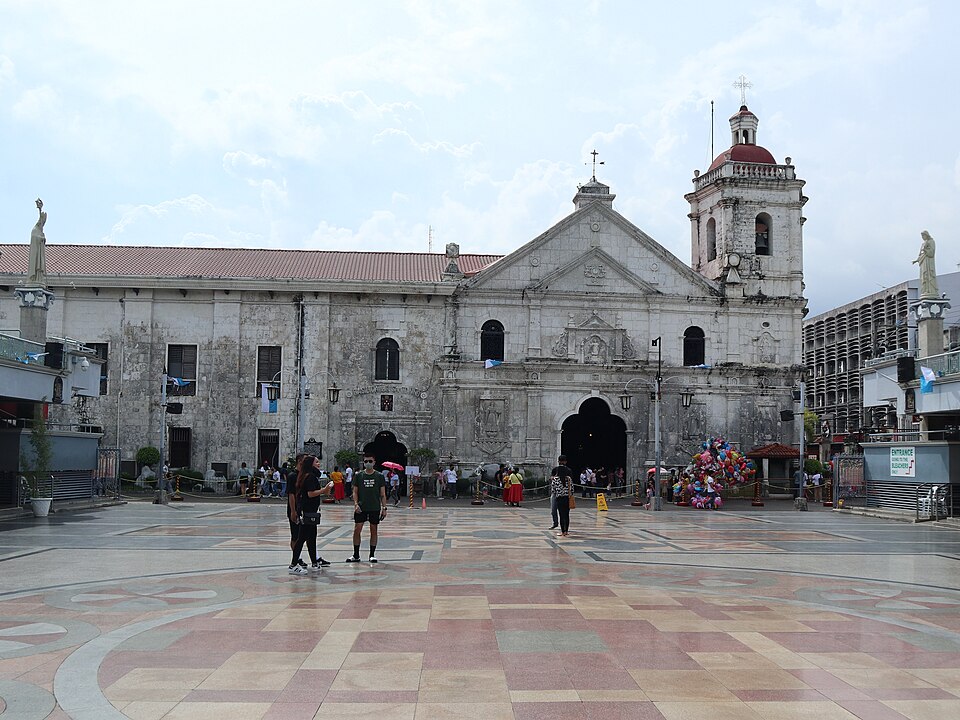
1740
Built in the baroque style and designated a National Cultural Treasure, it is recognized as the oldest standing church in the country, its history centered on a small image of the Child Jesus first gifted at a royal baptism in 1521 and rediscovered here decades later.
Originally founded in 1565 by Augustinian friars accompanying the Legazpi expedition, the church stands on the spot where a small image of the Child Jesus, given to a local ruler's household at a baptism in 1521 and lost for decades, was said to have been found again. The present building was completed in 1740 and was later designated the head church of the country's Catholic parishes. Pope Paul VI raised it to a minor basilica in 1965, and it remains administered by the Augustinian order.
- The image at the center of its founding story was reportedly recovered forty years after being given away, following the burning of a nearby settlement.
- The building was formally declared the "Mother and Head of all Churches" in the country by the Holy See.
Photo: Patrickroque01 (CC BY-SA 4.0)
Fort San Pedro
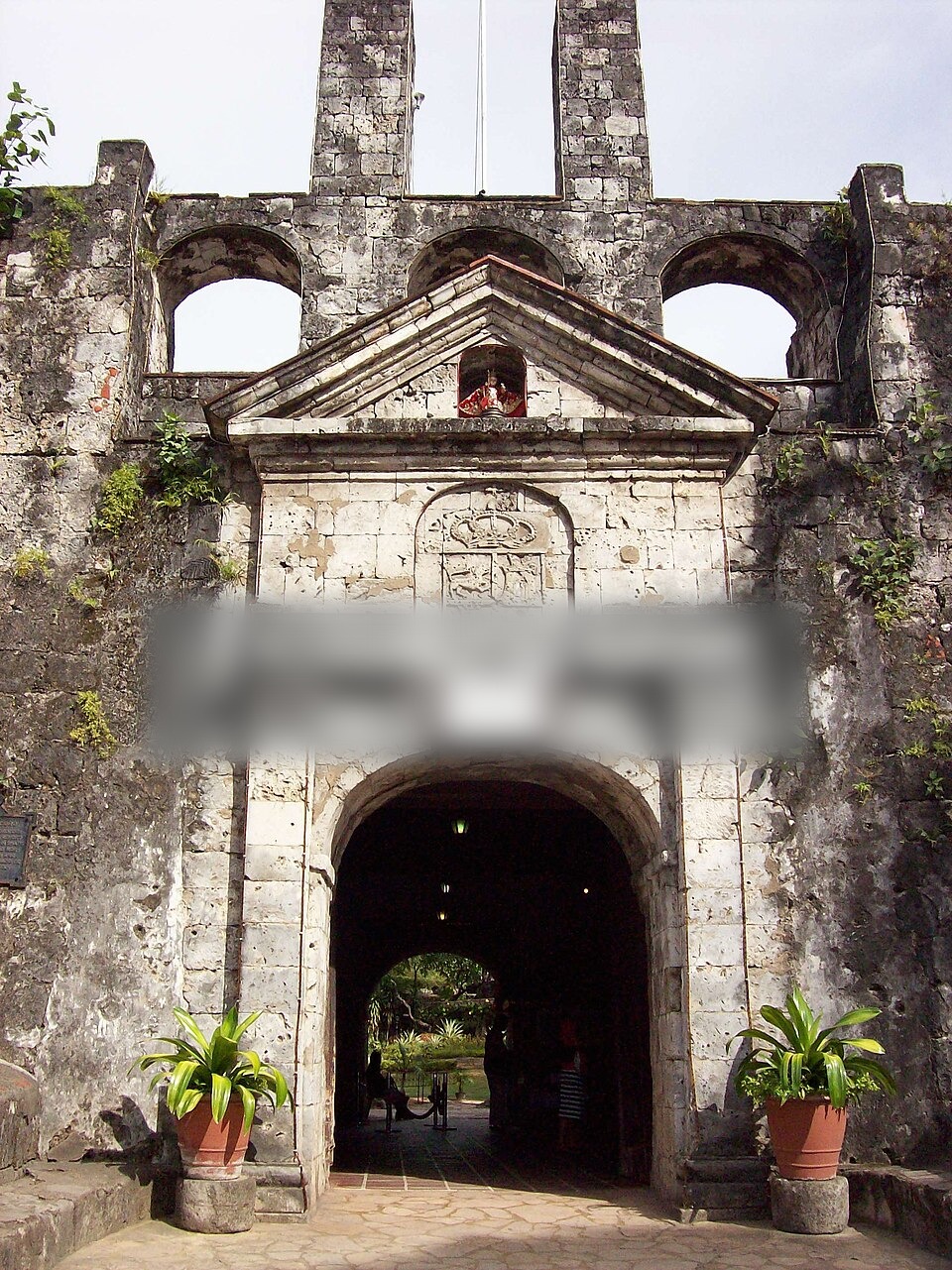
1738
Recognizable by its triangular ground plan, unusual among forts, with thick stone walls and bastions at each corner, standing on a harborside plaza and now housing a small military museum.
Spanish forces under Legazpi built a wooden fort here soon after landing in 1565, rebuilding it in stone in the early seventeenth century to repel raids. The structure standing today dates from 1738 and is the oldest triangular bastion fort in the country. It anchored the first Spanish settlement in the Philippines and, during the Philippine Revolution at the end of the nineteenth century, was captured by Filipino revolutionaries and used as a stronghold. It now functions as a military museum.
- Its triangular layout makes it the oldest fort of that shape in the country.
- It began as a wooden stockade before being rebuilt in stone.
Photo: Philip Nalangan (CC BY 4.0)
Cebu Metropolitan Cathedral
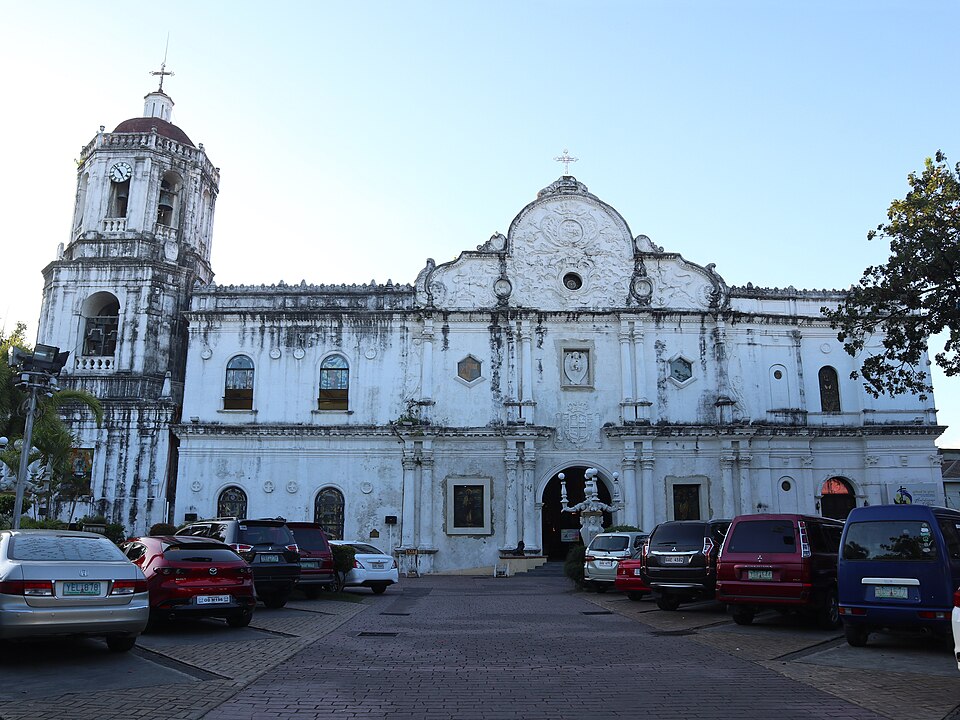
1836
Squat in proportion and thick-walled in the manner of Spanish colonial churches built to withstand typhoons, its facade rises to a trefoil-shaped pediment.
The cathedral traces its origins to a church built near the fort in 1565, one of the country's first, and became a diocese in 1595. Construction dragged on for years, hampered by shortages of funds, at one point diverted to finance conflict with Moro raiders, and by vacancies following the death of the bishop overseeing the work. The present building dates from 1836. In 1934 the diocese was elevated to a metropolitan archdiocese, with four other dioceses made suffragans.
- Funds meant for its construction were at one point diverted to pay for wars against Moro raiders.
Photo: Patrickroque01 (CC BY-SA 4.0)
Cebu Provincial Capitol
The seat of Cebu's provincial government, designed by architect Juan M. Arellano and erected in 1937, according to the inscription on its facade. Arellano also designed Manila's Metropolitan Theater and Central Post Office, and the building hosted President Gloria Macapagal Arroyo's second inauguration in 2004.
Cebu City Hall
The seat of Cebu City's government, made up of an Executive Building and a Legislative Building that house the mayor's office and city council. The Legislative Building underwent a ₱120 million renovation completed in 2008, inaugurated by President Gloria Macapagal Arroyo alongside Plaza Sugbo.
Marcelo Fernan Bridge
An extradosed cable-stayed bridge crossing the Mactan Channel to link Mandaue with Lapu-Lapu City on Mactan Island. It is the Philippines' second-longest cable-stayed bridge, one of three spanning the channel alongside the 1973 Sergio Osmeña Jr. Bridge and the 2022 Cebu–Cordova Link Expressway.
Mactan–Mandaue Bridge
A truss bridge officially named the Serging Veloso Osmeña Jr. Bridge, crossing the Mactan Channel to connect Mandaue and Lapu-Lapu City. It was the first of three bridges to span the channel, later joined by the Marcelo Fernan Bridge and the Cebu–Cordova Link Expressway.
Mandaue Church
A Roman Catholic parish church at the center of Mandaue City, officially the National Shrine of Saint Joseph, under the Archdiocese of Cebu. Its parish jurisdiction covers the barangays of Guizo, Centro, Looc, Cambaro and Mantuyong.
Archdiocesan Shrine of Santa Teresa de Avila
A Roman Catholic church in Talisay built between 1836 and 1848 in classical Graeco-Roman style, its facade featuring two bell towers linked by a porch. Declared an archdiocesan shrine on 15 October 2007, it offered pilgrims a year of plenary indulgence.
History
The city began in 1565 when Spanish forces under Miguel López de Legazpi landed near the site of a small image of the Christ child, founding the first Spanish settlement in the Philippines. A wooden fort went up immediately; it was rebuilt in stone in the early seventeenth century against raids, then rebuilt again in 1738 as the triangular bastion that still stands. Church building followed the same pattern: a church founded in 1565 became the Basilica del Santo Niño, completed in its present form around 1740, while a diocese established in 1595 eventually produced the Metropolitan Cathedral, finished in 1836 after decades of interrupted funding, and raised to an archdiocese in 1934. Trade and shipping grew around this colonial core rather than replacing it.