Landmarks in Chiba
A 12th-century shrine, a 1960s castle replica and a 1980s tower — little here is original.
Chiba's built landmarks span eight centuries without settling into a single style. The oldest, a shrine in the central ward of Chūō-ku, was founded in 1181 as a Buddhist temple and only later redesignated Shinto, changing its dedication rather than its site. The newest, a port tower completed in 1986, is a slender four-storey structure standing 125 metres tall in a harbourside park, built in a plain modern style with no ornament beyond its height. Between the two sits a castle rebuilt in 1967, a modern reconstruction standing in for whatever fortress came before it. The result is a small set of landmarks that read more as different eras set side by side than as one continuous history.
Chiba Port Tower
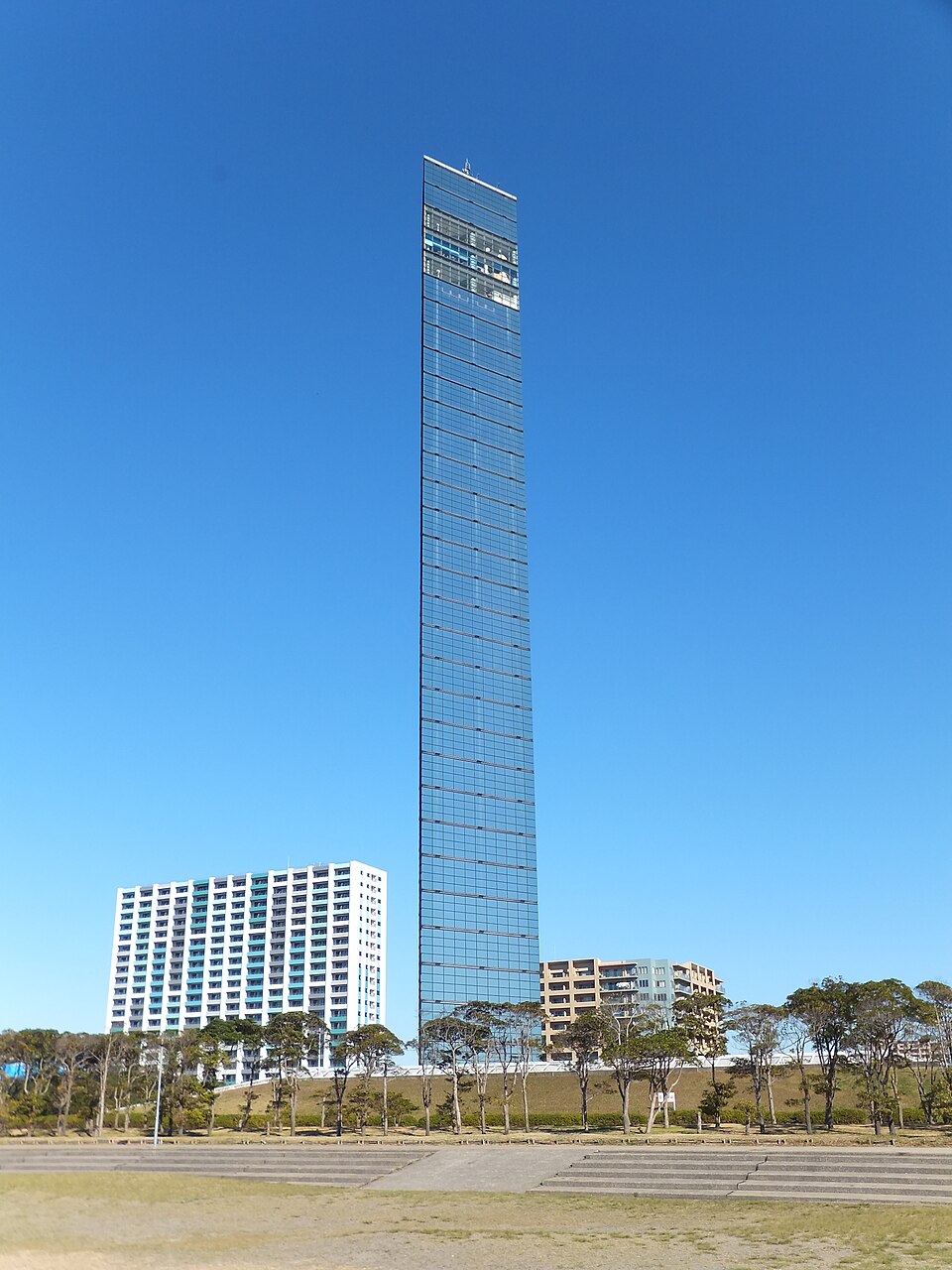
1986 · Nikken Sekkei
A slender, 125-metre observation tower with only four floors, standing alone in open parkland at the water's edge.
Chiba Port Tower is an observation tower in Chiba Port Park, in the city's Chūō-ku ward. Completed in 1986 to a design by Nikken Sekkei, it rises 125.1 metres over just four storeys, making it unusually slender for its height. Built in a plain modern style, it serves as a lookout over the harbour rather than a working or residential building, and remains the port district's principal landmark.
Photo: 掬茶 (CC BY-SA 3.0)
Chiba Castle
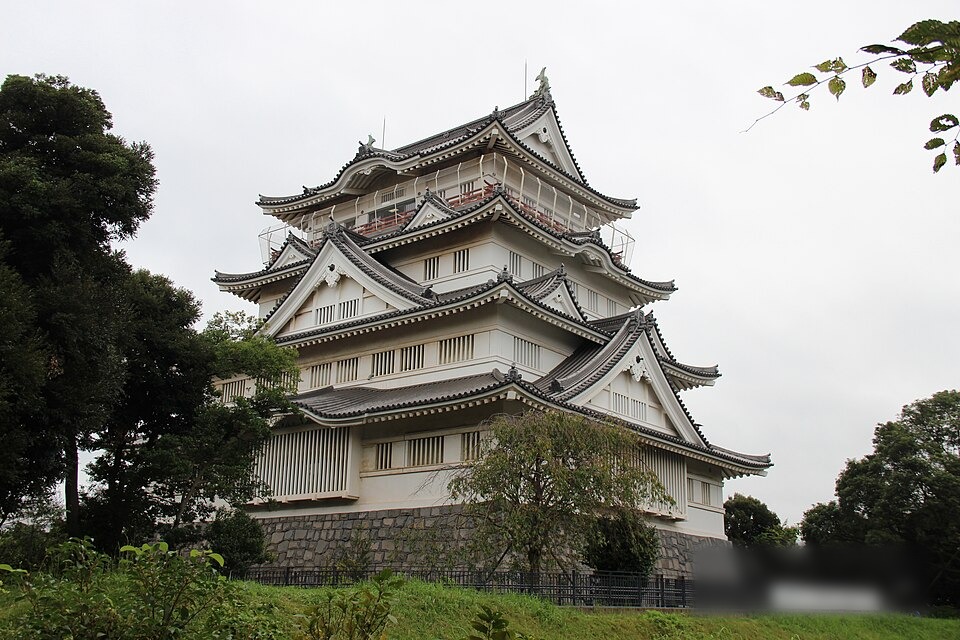
1967
It is a rebuild rather than a weathered original: the current structure dates only to 1967, with no earlier building on the same site described anywhere.
Chiba Castle is a Japanese castle whose present building dates only to 1967, a modern reconstruction rather than a structure that has stood since an earlier era. No architect is credited for the rebuild, and nothing is known of what occupied the site beforehand or in what state it survived to that point. It now stands as the city's castle landmark, distinguished chiefly by being a comparatively recent addition rather than a medieval survivor.
Photo: Gary Lee Todd, Ph.D. (CC0)
Chiba Shrine
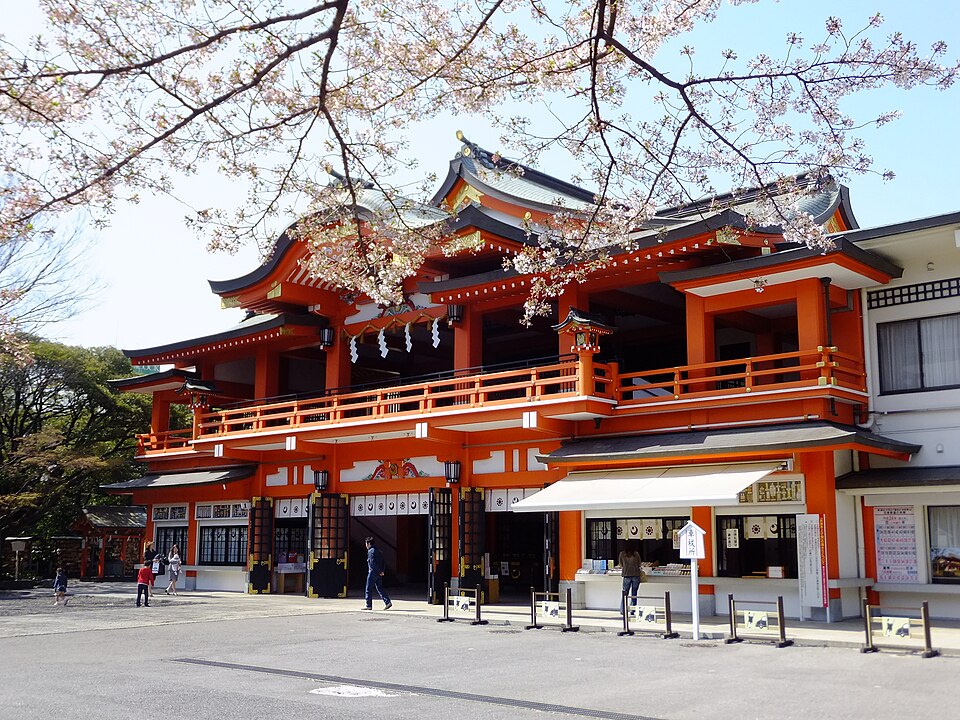
1181
A shrine known locally by several alternate names, its identity split between an earlier Buddhist dedication and the Shinto one it carries today.
Chiba Shrine traces its origins to 1181, when it was founded as a Buddhist temple dedicated to Myōken, patron deity of the Chiba clan. During the Meiji period it was reclassified as a Shinto shrine, its principal deity recast as Ame-no-Minakanushi, a kami long conflated with Myōken. It remained one of Chiba Prefecture's principal centres of Myōken worship, and is still popularly called Chiba Dai-Myōken, Myōken Hongū, or simply Myōken-sama.
- It has been known by several separate popular names, including Chiba Dai-Myōken and Myōken Hongū.
- It began as a Buddhist temple and was only redesignated as a Shinto shrine centuries later, under a different deity.
Photo: 掬茶 (CC BY-SA 3.0)
Chiba-dera
A Buddhist temple in Chiba's Chūō District, traditionally said to have been founded by the priest Gyōki, who lived from 668 to 749. It belongs to the Shingon sect and is the 29th stop on the Bandō Sanjūsankasho pilgrimage route.
Inohana Castle
The ruins of a lowland-hill castle commonly known as Chiba Castle, its earthworks and moats now preserved within Inohana Park. A replica castle building, the Chiba City Folk Museum, was erected on the site in 1967.
Chiba Prefectural Museum of Art
A museum of art that opened in Chiba in 1974. Its collection focuses on local artists and others connected to the prefecture, including Asai Chū, Millais, Corot and Antonio Fontanesi.
Zozo Marine Stadium
An outdoor baseball stadium that opened in 1990 with a capacity of about 30,000, home to the Chiba Lotte Marines. Its circular shape echoes now-demolished American stadiums, and it opened with a sold-out Madonna concert on the Blond Ambition tour.
Towatari Shrine
A Shinto shrine in the Nobuto area of Chiba, also known as Nobuto Shrine. Originally a Buddhist branch temple founded by the Chiba clan, it was converted to Shinto worship in the mid-19th century.
Fukuda Denshi Arena
A football stadium completed in 2005 on the site of a former Kawasaki Steel factory, home to J. League club JEF United Ichihara Chiba. Seating 19,781, it hosted its first international match in 2009, a 1-1 draw between Belgium and Chile.
History
The city's name is tied to the medieval Chiba clan: a temple founded in 1181 in their patron deity's honour was later redesignated a Shinto shrine, with a new principal deity, during the Meiji period, and its earlier Buddhist history survives mainly in the alternative names it still carries. What became of the clan's other buildings is not recorded; the city's castle, a separate case, stands today only as a 1967 reconstruction, with no original structure or architect on record and no description of what, if anything, preceded it. The one landmark built entirely in modern times is the port tower, raised in 1986 to a height of 125 metres, a plain civic structure with no medieval predecessor to answer to. The skyline is consequently a record of rebuilding and renaming more than of survival.