Landmarks in Da Nang
French colonial museums and a cathedral sit under a 2013 dragon-shaped steel bridge.
Da Nang's older landmarks date from the decades of French colonial administration that ran from 1884 to 1945: a cathedral built in 1923 and a museum built in 1919 to house Cham stone sculpture, its design borrowing motifs from the temples the collection came from. Both sit close to the Hàn River, in the older, low-rise core of a city that has otherwise rebuilt itself around trade and transport — it is Vietnam's fourth-largest municipality by population, and a port on National Route 1 and the North–South Railway. That newer identity is why the river's most recent addition, a 2013 bridge whose entire steel structure is shaped like a dragon, reads as engineering spectacle rather than colonial-era restraint.
Dragon Bridge
2013
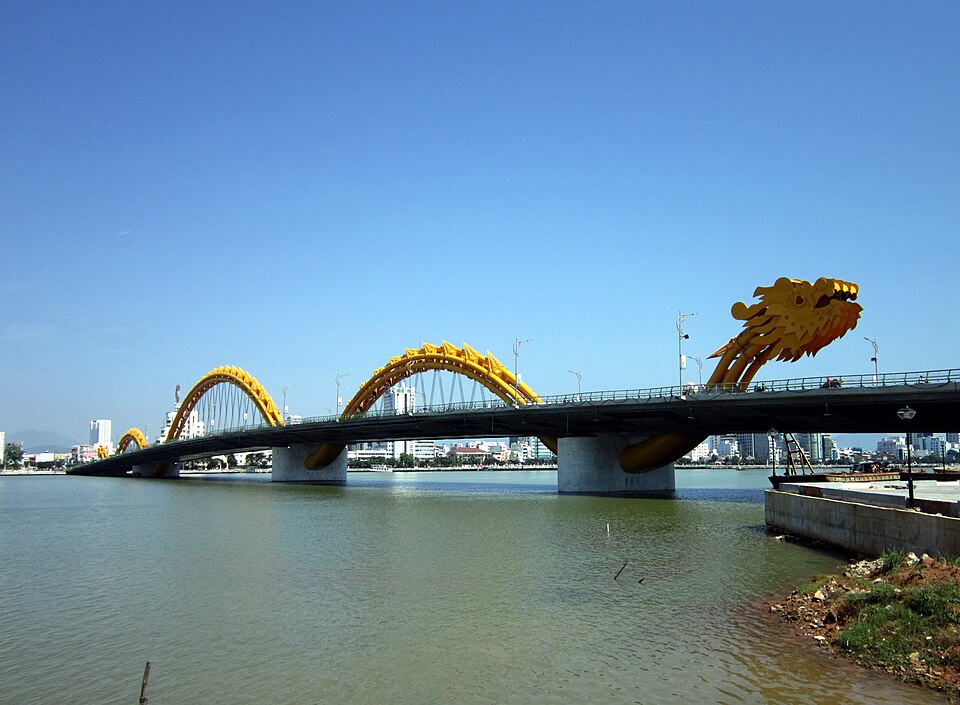
Its steel superstructure forms an unbroken dragon shape, arch, beam and cable elements combined into one coiling body with a raised head, said to be the largest dragon-shaped steel bridge anywhere. It crosses the Hàn River in a single sinuous span rather than the usual repeated girders of a road bridge.
The Dragon Bridge is a road bridge carrying traffic across the Hàn River, opened in 2013. Its steel superstructure combines arch, beam and cable ("wire") elements built continuously into the form of a dragon, turning an ordinary river crossing into a sculptural structure. It is credited as the world's largest dragon-shaped steel bridge, a distinction based on the scale of steelwork forming the creature's body rather than the bridge's overall length or span.
- It is credited as the world's largest dragon-shaped steel bridge.
Photo: Bùi Thụy Đào Nguyên (CC BY-SA 3.0)
Da Nang Cathedral
1923
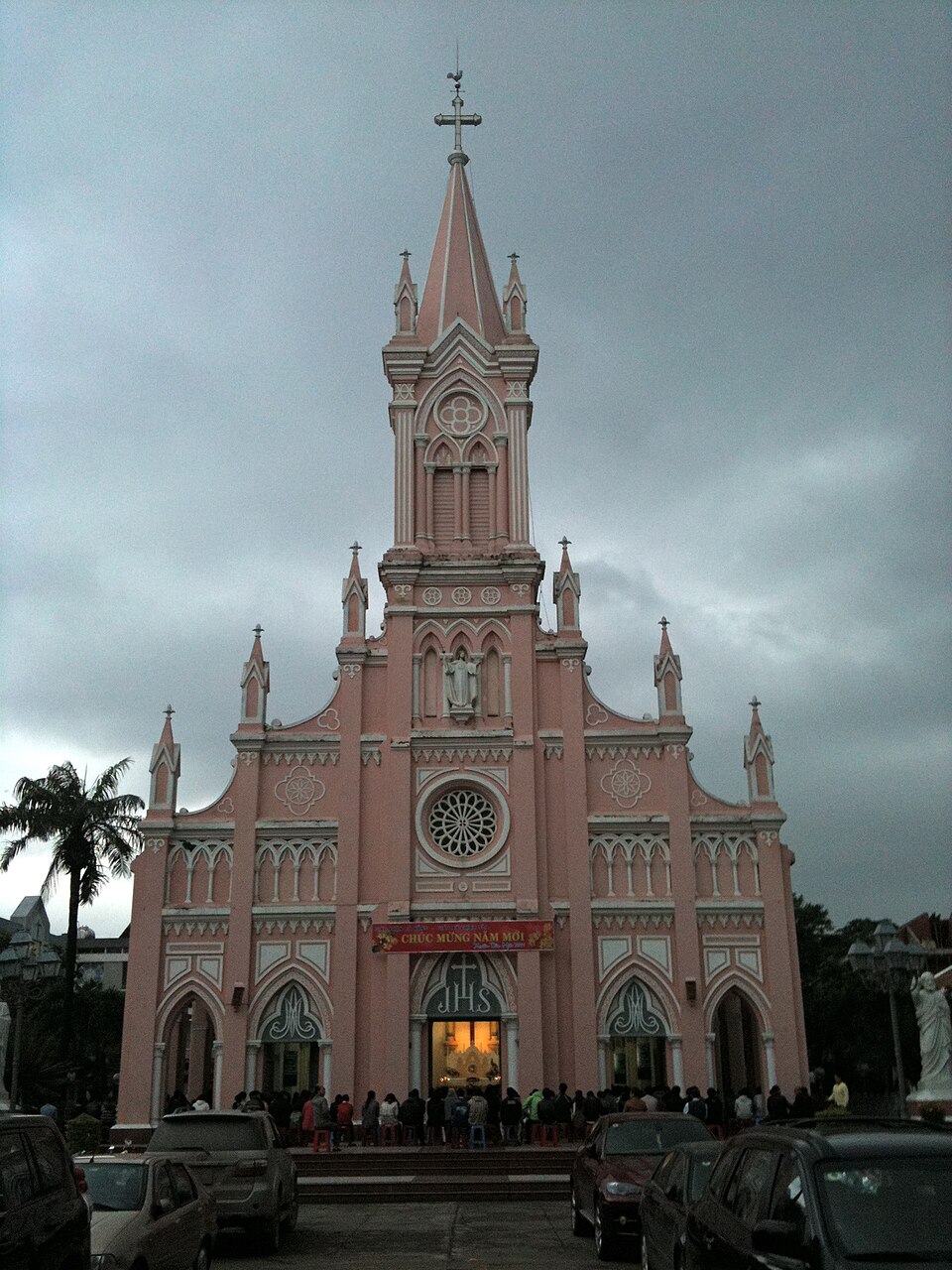
The available record does not describe the cathedral's facade, colour or materials — only that it was built in 1923 and serves as the seat of the local diocese.
Da Nang Cathedral is the cathedral of the Diocese of Da Nang. It was built in 1923, within the decades of French colonial administration in the city, which ran from 1884 to 1945, and it remains the diocese's seat today.
Photo: Dragfyre (CC BY-SA 3.0)
Museum of Cham Sculpture
1919 · M. Deleval and M. Auclair
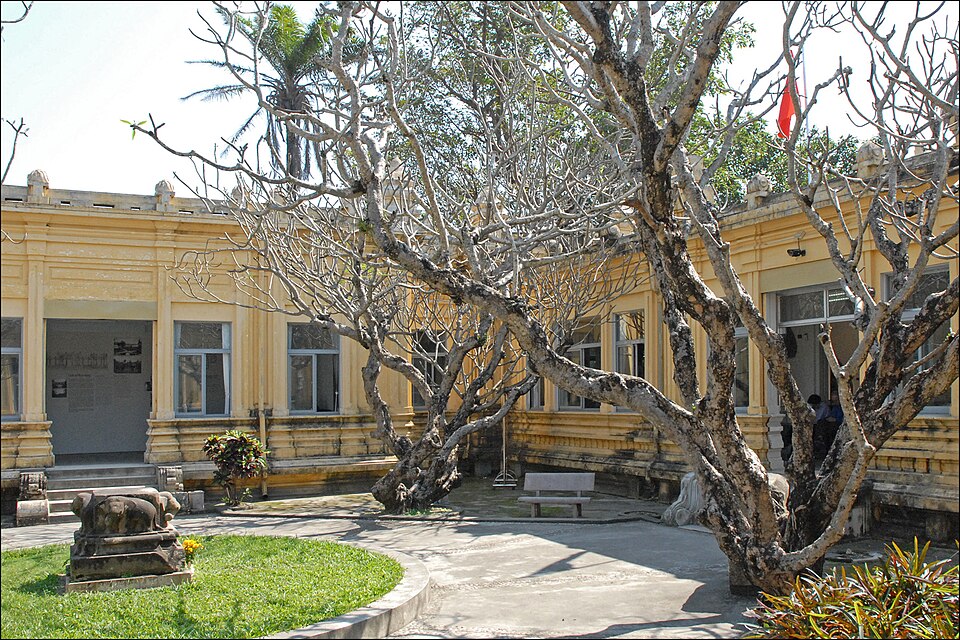
Its 1919 building was designed to incorporate elements taken from Cham temple architecture directly into its structure, so the museum itself echoes the carved stone it was built to display.
The museum was first proposed in 1902 by the Department of Archaeology of EFEO, largely on the initiative of Henri Parmentier, and opened its first building in 1919 under the name Musée Henri Parmentier. French architects M. Deleval and M. Auclair designed it to incorporate elements drawn from Cham temple architecture. It houses sculpture gathered from sites across the region over the preceding decades. The collection outgrew the original building twice: new galleries were added in the mid-1930s, organised by the archaeological site each piece came from, and a further two-storey wing was added in 2002.
- It was proposed in 1902 but not founded until 1915, and its first building did not open until 1919 — a seventeen-year gap between idea and building.
- Its mid-1930s galleries were arranged by archaeological site of origin, covering finds from Mỹ Sơn, Trà Kiệu, Đồng Dương, Tháp Mẫm, Quảng Trị, Quảng Ngãi, Bình Định and Kon Tum.
Photo: Jean-Pierre Dalbéra from Paris, France (CC BY 2.0)
Ngũ Hành Sơn
A cluster of five marble and limestone hills south of the city, each named for an element: metal, water, wood, fire and earth. Their caves and tunnels shelter several Buddhist sanctuaries, and the area is known for stone sculpture and stone-cutting crafts.
Hàn River Bridge
A cable-stayed swing bridge in the city center, the first bridge there both engineered and built by Vietnamese engineers, and Vietnam's only operating swing bridge. It swings open on its axis after midnight to let ships pass along the river, and lights up after dark.
Thuận Phước Bridge
A suspension bridge spanning the mouth of the Han River, 1,850 metres long with a 405-metre main span and two 80-metre towers. It is Vietnam's longest suspension bridge, built from 2003 and inaugurated on 19 July 2009 by Prime Minister Nguyen Tan Dung.
Zone 5 Military Museum
A military museum covering Vietnamese resistance to foreign occupation, from Chinese rule and the French Indochina War to the Vietnam War and today's dispute over the Spratly and Paracel Islands. It opens daily except Monday, free for Vietnamese and a small fee for foreigners.
History
The city grew from a small settlement known as Cửa Hàn, at the mouth of the Hàn River, during the Đại Việt period. French colonial administration, which held the area from 1884 to 1945 under the name Tourane, left the institutional buildings that still anchor the older riverside districts today, including a cathedral and a museum built to house Cham sculpture, both dating from the 1920s. After decades as part of Quảng Nam province, Da Nang became a separate, centrally controlled municipality on 1 January 1997 and was designated a first-class city. Its economy as a port and rail hub funded a wave of newer river crossings, including the dragon-shaped steel bridge finished in 2013, ahead of the city hosting the APEC summit in 2017.