Landmarks in Ho Chi Minh City
Nineteenth-century French colonial buildings stand blocks from the newest glass towers.
Most of the built landmarks associated with Ho Chi Minh City date from the French colonial period of the late nineteenth century, when administrators raised a Romanesque Revival cathedral and a post office within a few blocks of each other near what became Paris Commune Square. The twentieth century added a different layer: the Independence Palace, home to the president of the Republic of Vietnam and finished in 1955, decades before it became the site of the Fall of Saigon in 1975. These older structures now stand alongside the contemporary skyline the city is known for, where towers such as the Bitexco Financial Tower and Landmark 81 rise along the Saigon River near the older commercial core.
Saigon Notre-Dame Basilica
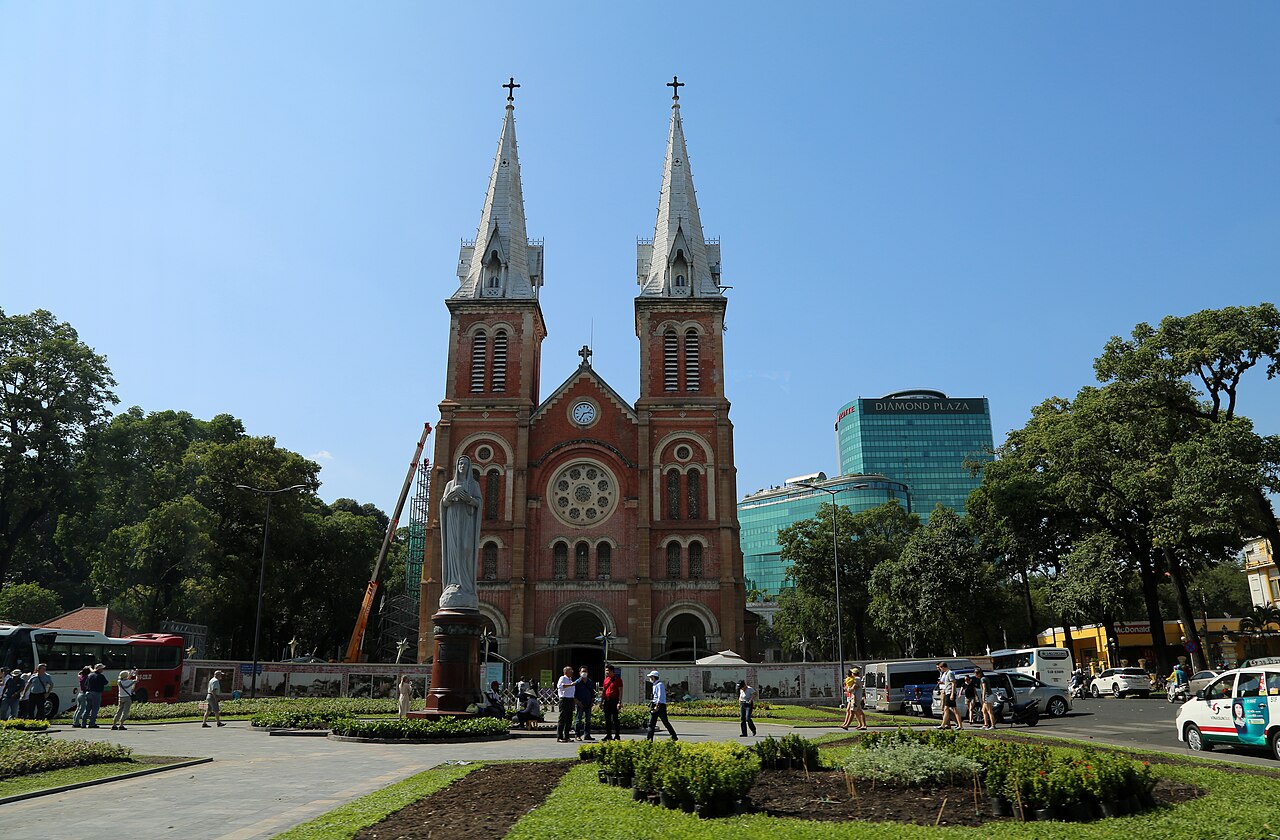
1877–1880
Two square bell towers rise to 58 metres above the facade, and a statue of Our Lady of Peace has stood in the forecourt since 1959.
The cathedral was constructed between 1877 and 1880 by French colonial administrators, who first named it the Church of Saigon. It served the Catholic community and today holds the rank of minor basilica, built in the Romanesque Revival style with two square bell towers reaching 58 metres. The name Notre-Dame Cathedral came into use only in 1959, after a statue of Our Lady of Peace was placed in the forecourt; the building is now formally titled the Cathedral Basilica of Our Lady of the Immaculate Conception.
Photo: flowcomm (CC BY 2.0)
Saigon Central Post Office
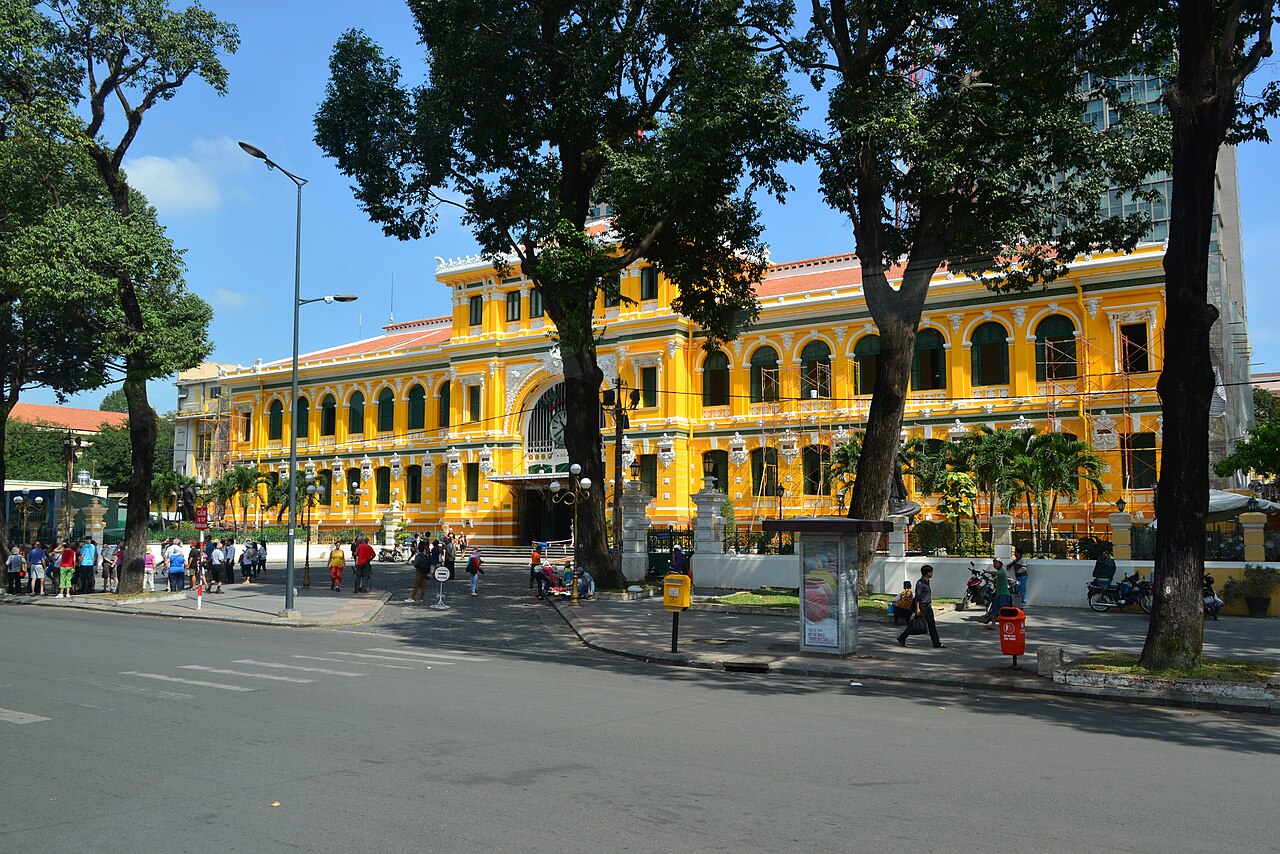
1891 · Marie-Alfred Foulhoux, Auguste Henri Vildieu and Gustave Eiffel
It faces the twin-towered basilica across a small square, and its 1891 construction is credited to three architects, including Gustave Eiffel.
The post office occupies Paris Commune Square, in the ward of Saigon, next to the city's cathedral, the Notre-Dame Basilica. Known in Vietnamese as Bưu điện Trung tâm Sài Gòn and in French as Poste centrale de Saïgon, it was completed in 1891 under French colonial administration. Three architects are credited with its design: Marie-Alfred Foulhoux, Auguste Henri Vildieu and Gustave Eiffel. It remains in operation today as a working post office in present-day Ho Chi Minh City.
Photo: Андрей Бобровский (CC BY 3.0)
Independence Palace
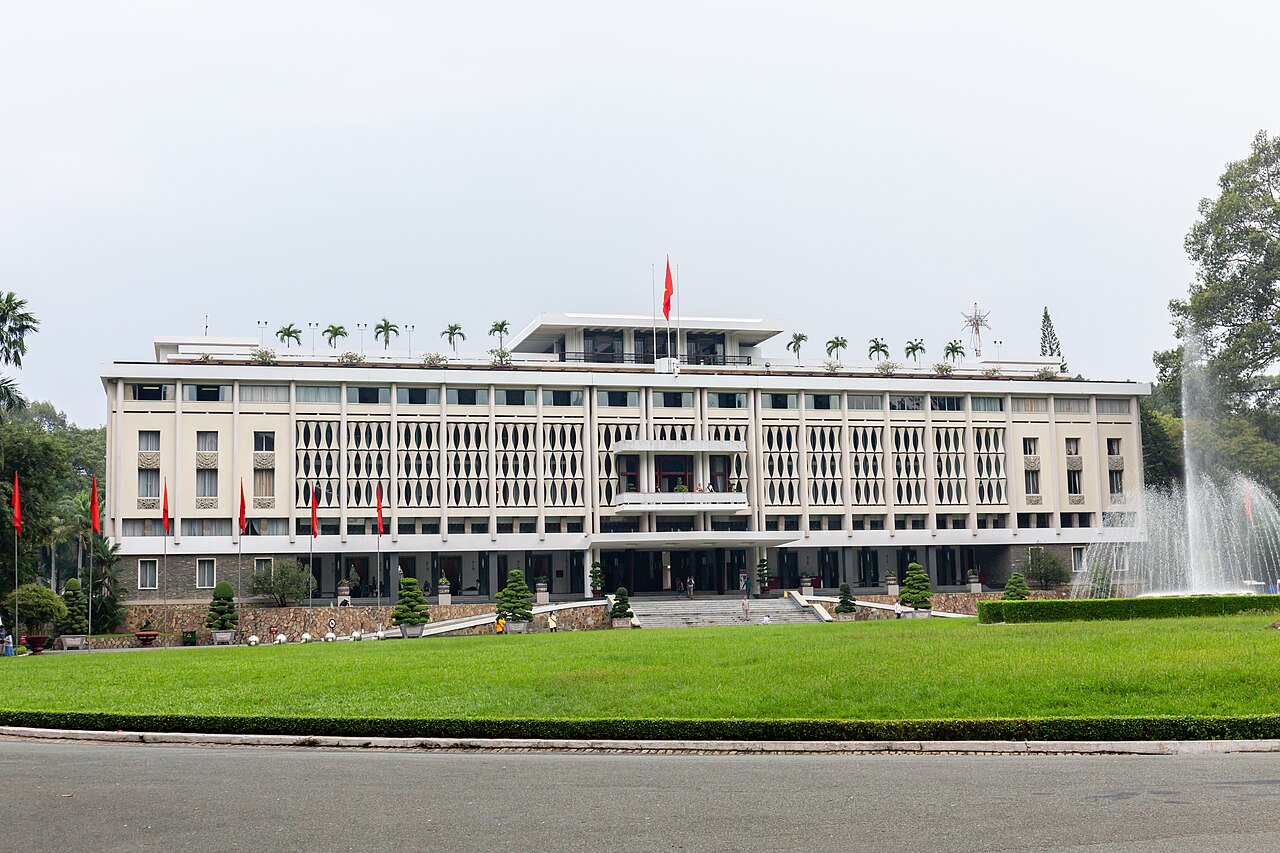
1955 · Ngô Viết Thụ
Photographs from 30 April 1975 show a tank breaking through the palace's front gates; the building has since been preserved as a public convention hall and museum.
The palace was designed by Ngô Viết Thụ and served as the residence and workplace of the president of the Republic of Vietnam. On 30 April 1975 it became the site of the Fall of Saigon, when a tank broke through its gates and ended the government based there. The building continued to serve government functions for another year, until 1976, when the capital moved to Hanoi. It is now preserved as the Reunification Convention Hall, officially the Independence Palace or Reunification Hall, and operates as a public museum and tourist attraction.
Photo: Balon Greyjoy (CC0)
Xá Lợi Pagoda
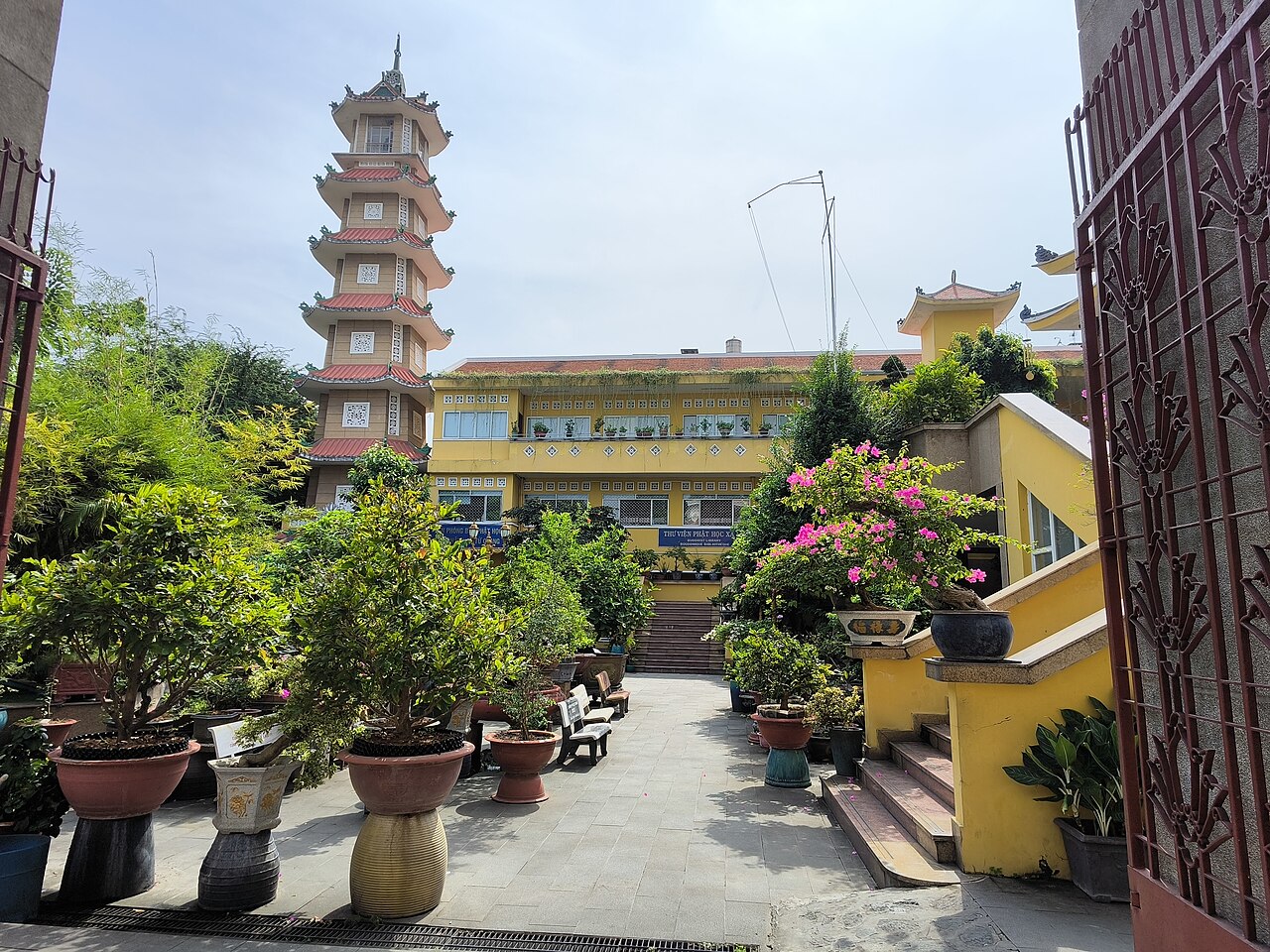
1956–1958 · Trần Văn Đường and Đỗ Bá Vinh
A gated compound centres on a two-storey hall reached by twin staircases, fronted by a statue of a bodhisattva holding a vial of elixir; inside, a large gilded seated Buddha statue, gold-plated since 1969, sits before a small stupa holding the relics that give the building its name.
Construction began on 5 August 1956 to a design by Trần Văn Đường and Đỗ Bá Vinh, with Dư Ngọc Ánh and Hồ Tố Thuận as directing engineers, and the building opened on 2 May 1958 to enshrine a relic of Gautama Buddha. It served as headquarters of the Vietnamese Buddhist Association until 1981, and as its secondary office until 1993. On 21 August 1963, Special Forces raided the compound at night, vandalised the main altar and confiscated the preserved heart of a monk who had self-immolated in protest, while attacking monks and nuns barricaded inside.
- Two monks escaped over the compound's back wall into a neighbouring United States aid mission, where they were granted asylum.
- The gold coating on the main Buddha statue was applied only in 1969, more than a decade after the statue itself was made.
- Fourteen wall panels depicting the Buddha's life are arranged high on the hall's side walls, echoing the Stations of the Cross found in some Christian churches.
Photo: 源義信 (CC BY 4.0)
Tomb of Lê Văn Duyệt
A tomb in Bình Thạnh District, also known as the Tomb of the Marshal in Ba Chieu, originally built for Marshal Lê Văn Duyệt and his wife. It later became a worship house for other mandarins of the Nguyễn dynasty.
Museum of Ho Chi Minh City
A historical site and museum formerly known as Gia Long Palace, at the corner of Lý Tự Trọng and Nam Kỳ Khởi Nghĩa streets. It sits on a two-hectare block near the Independence Palace.
Ho Chi Minh City Museum of Fine Arts
The city's major art museum, second in the country only to the Vietnam National Museum of Fine Arts in Hanoi. Its main building, a 1929–1934 villa for the Hui-Bon-Hoa family designed by French architect Rivera, displays Vietnamese art, ceramics and Champa and Óc Eo relics.
Mariamman Temple, Ho Chi Minh City
A temple dedicated to the Hindu goddess Mariamman, built in the late 19th century by the Nagarathar, a trade community from Tamil Nadu, India. It is now managed by the Vietnamese Indian Children, a group raised by the temple's late priest, Attangudi Lakshmanan Chettiar.
Phú Mỹ Bridge
A cable-stayed road bridge over the Saigon River, built from March 2007 to September 2009 by an international consortium and designed by French firm Arcadis. It spans 705 metres with a 380-metre main span, carried by 145-metre H-shaped towers and six lanes of traffic.
Saigon Centre
A mixed-use complex on Lê Lợi Boulevard in District 1. It was developed by Keppel Land Watco, a joint venture between Singapore's Keppel Land and Vietnamese companies Real Estate Saigon Corporation and Southern Waterborne Transport Corporation.
History
The area now covered by the city was part of Cambodian polities before it passed to the Vietnamese Nguyễn lords in 1698, part of Đại Việt's southward expansion, and it served as their capital in the years before the Nguyễn dynasty was founded in 1802. Little from that period survives above ground; the buildings that shape the present skyline date mostly from French colonial rule, when the Notre-Dame Basilica was raised between 1877 and 1880 and the Central Post Office followed in 1891, both near what became Paris Commune Square. The twentieth century added a different kind of landmark: the Independence Palace, built in 1955 as the seat of the Republic of Vietnam's president and, on 30 April 1975, the scene of the tank assault that ended the government housed inside it.