Landmarks in Dessau
1920s Bauhaus buildings share the town with 18th-century ducal palaces and gardens.
Dessau's landmarks fall into two distinct groups from different eras. On the edges of the town lie the palaces and landscaped parks built for the dukes of Anhalt-Dessau in the late eighteenth century: the classicist Georgium, set in its own sculpture garden, and Luisium, built in the style of an English country house, both now part of a wider protected garden network. Within the town stands a second, more recent group: the school building and Masters' Houses raised for the Bauhaus in 1925 and 1926, after the school relocated. St. Mary's Church, dating from about 1523, is older than either group, evidence that the town's core predates both the ducal gardens and the modernist school by centuries.
Bauhaus Dessau
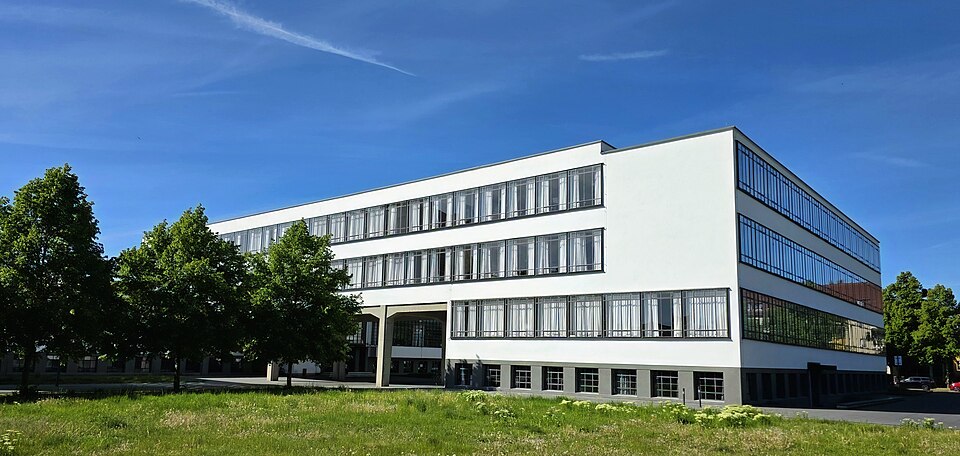
1925–1926 · Walter Gropius
The complex reads as a cluster of connected structures rather than one single building — the school itself plus the neighbouring Masters' Houses — a layout kept close to its 1920s design through several later rounds of restoration rather than replacement.
Built between 1925 and 1926 to plans by Walter Gropius, the building served as the school for the Bauhaus School of Art, Design and Architecture. Alongside the neighbouring Masters' Houses, it established the school's reputation across Europe. War damage and later alterations were largely undone from 1965 onwards, and the complex was restored again in 1976 and once more between 1996 and 2006, this time to historic-preservation standards. It has been part of a shared UNESCO World Heritage Site since 1996.
- The school built here existed only because an earlier Bauhaus school in Weimar had been dissolved, with local politicians hoping the new campus would fuse the town's industrial character with a cultural one.
- The UNESCO listing covering this site did not reach its final shape until 2017, when a trade union school and a set of housing blocks elsewhere were added to it.
Photo: JensKunstfreund (CC BY-SA 4.0)
Masters' Houses
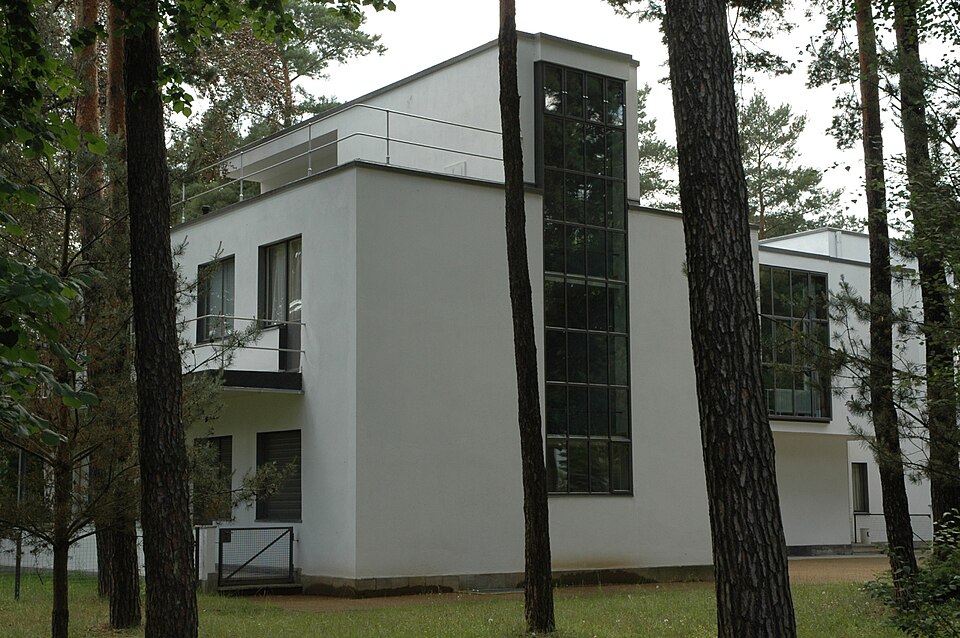
1926 · Walter Gropius
Seven dwellings that read as a single coordinated design rather than individual houses, standing immediately beside the school building they were built to accompany, and open today as a museum rather than lived in.
The Masters' Houses are a group of seven dwellings that Walter Gropius built in 1926 beside the Bauhaus Dessau school building, as housing connected to the school itself. They were designed as a single architectural ensemble rather than as separate villas. Today they operate as a museum and, together with the Bauhaus building and related Bauhaus sites in Weimar, Dessau and Bernau, form part of a shared UNESCO World Heritage listing.
Photo: Harald (CC BY-SA 3.0)
Georgium Palace
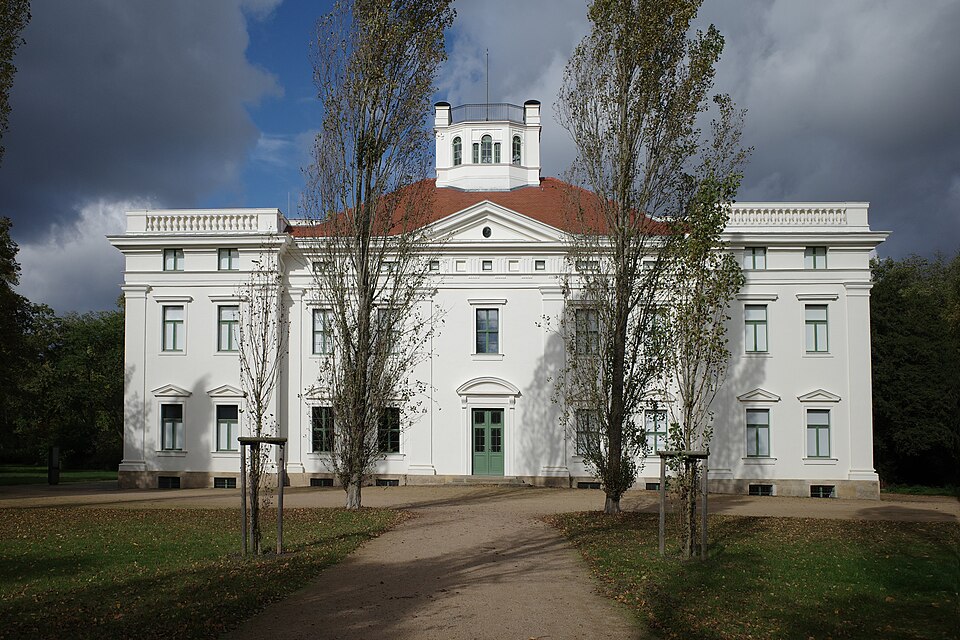
1780 · Friedrich Wilhelm von Erdmannsdorff
The palace sits inside its own park, laid out as a sculpture garden dotted with statuary rather than plain lawns — a landscape setting that sets it apart from a conventional formal garden.
The Georgium is a classicist palace built around 1780 for Johann Georg von Anhalt-Dessau, younger brother of Leopold III, Duke of Anhalt-Dessau, to plans by Friedrich Wilhelm von Erdmannsdorff. It stands within its own landscaped grounds, laid out as a sculpture garden rather than a plain formal park. The building no longer serves as a residence: it now houses the Anhaltische Gemäldegalerie, an art gallery whose name translates as painting gallery.
Photo: M_H.DE (CC BY-SA 4.0)
St. Mary's Church
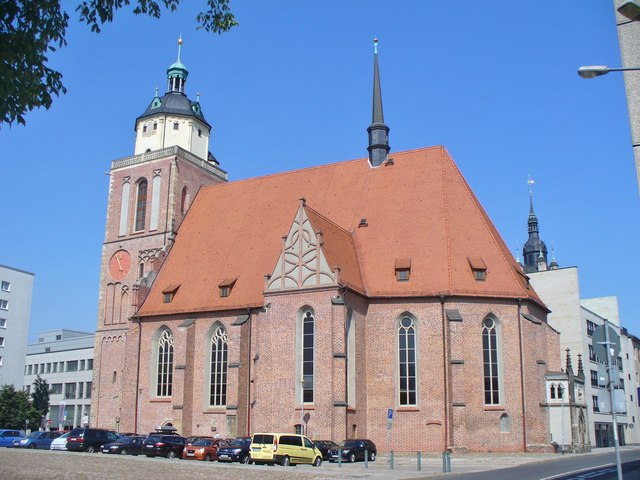
1523
A parish-type church building whose fabric goes back to about 1523, protected specifically as a heritage monument of Saxony-Anhalt.
St. Mary's Church is a church building dating from about 1523, placing its origin in the early sixteenth century. It is registered as a heritage monument in Saxony-Anhalt, one of the protected structures from that period in the area.
Photo: Colin Smith on geo.hlipp.de (CC BY-SA 2.0)
Luisium Castle
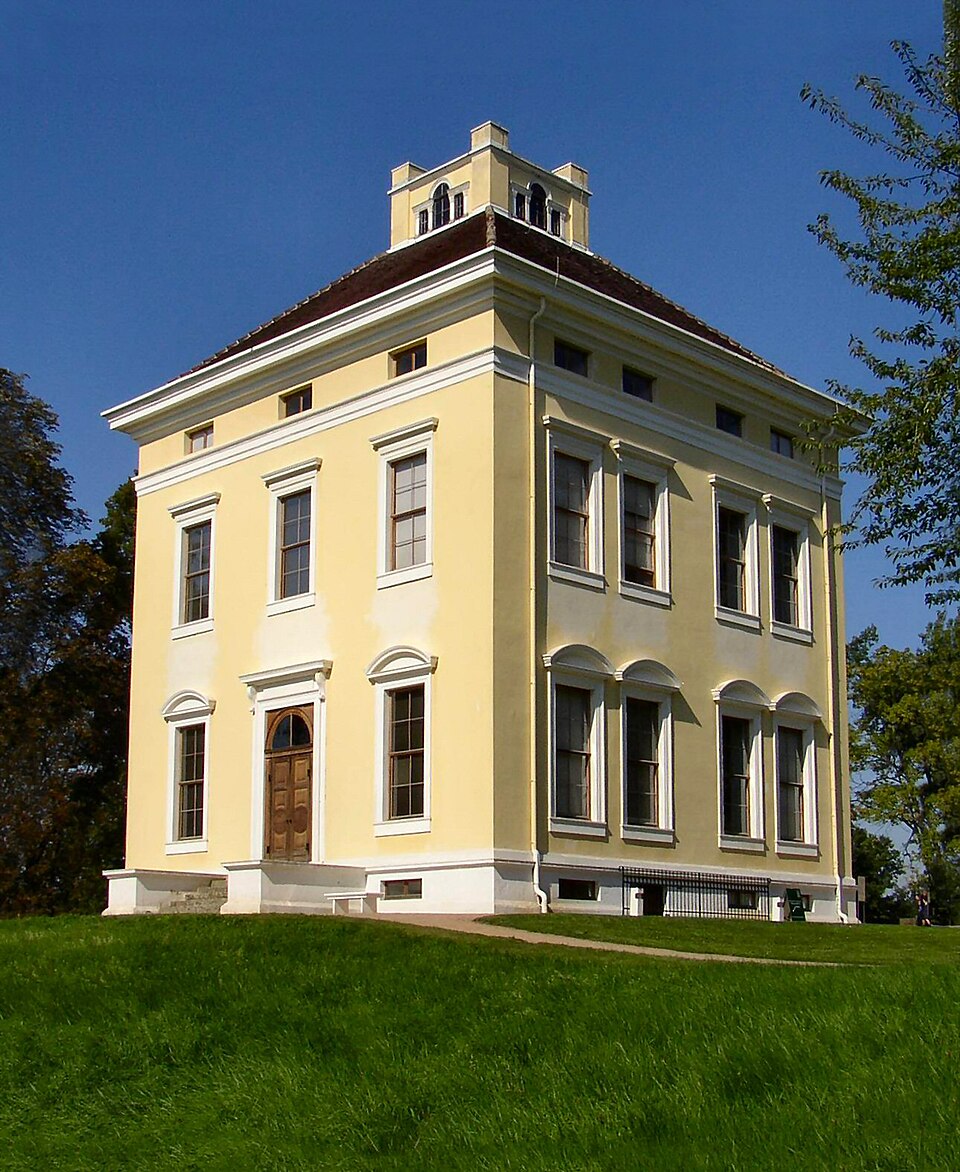
1774–1778 · Friedrich Wilhelm von Erdmannsdorff
Rather than a grand symmetrical facade, the building has the informal, domestic massing of an English country house, standing inside its own landscape garden within a wider protected network of sites.
Work on Luisium began in 1774, when Leopold III, Duke of Anhalt-Dessau, commissioned a small palace in the style of an English country house for his wife, Margravine Louise of Brandenburg-Schwedt, after whom it is named. Built to designs by Friedrich Wilhelm von Erdmannsdorff and largely complete by 1778, it stands with its landscape garden in the Waldersee district. It now forms part of the Dessau-Wörlitz Garden Realm, a UNESCO World Heritage Site.
Photo: Doris Antony, Berlin (CC BY-SA 3.0)
Anhaltisches Theater
A multi-genre theatre known as Landestheater Dessau until 1984, staging drama, opera, musicals, ballet and concerts by the Anhaltische Philharmonie. It seats around 1,100 and has one of Germany's largest revolving stages, though it was listed as endangered by the Deutscher Kulturrat in 2013.
Bauhaus Museum Dessau
A museum dedicated to the Bauhaus design movement, opened in 2019 and operated by the Bauhaus Dessau Foundation. Its building, designed by the Spanish firm Addenda Architects, houses the world's second-largest collection of Bauhaus-related objects, some 49,000 items.
Dessau Palace
A princely palace originally built in 1341 with stones from the destroyed Waldeser Castle, serving as residence for the princes of Anhalt-Dessau. Rebuilt after fires in 1405 and 1467 and again from 1529, only its Johannbau wing survives today, housing the City History Museum.
Kurt Weill Centre
A cultural site in the city, combining a museum and information center on the life and work of composer Kurt Weill. Weill, born in Dessau in 1900 and active until his death in 1950, is the subject of its collection.
History
St. Mary's Church, the oldest confirmed landmark, goes back to about 1523, before Dessau's rulers reshaped the town's surroundings. From 1774, Leopold III, Duke of Anhalt-Dessau, and his architect Friedrich Wilhelm von Erdmannsdorff built a series of small classicist palaces inside landscaped gardens — Luisium first, then the Georgium around 1780 — which later formed the core of a wider protected garden network. The town's more recent identity dates to 1925 and 1926, when the Bauhaus school, forced out of Weimar, put up a new school building and adjoining Masters' Houses nearby. War damage to that complex was not properly repaired until 1965, with further restoration in 1976 and again between 1996 and 2006. UNESCO recognition, granted in 1996, later grew to cover related sites elsewhere.