Landmarks in Helsinki
Neoclassical Russian-era monuments stand near granite National Romantic landmarks.
Helsinki's landmarks span less than a century, from an 1852 neoclassical cathedral raised as a tribute to a Russian emperor to a 1919 granite railway terminus built after the design language had turned toward Finnish National Romanticism. Between those dates stands a Byzantine and Russian Revival Orthodox cathedral, evidence of the city's decades under Russian rule, and a National Romantic museum built to hold the nation's own history rather than an imperial one. All four buildings sit close to the city centre, near Senate Square and the railway station, and together trace a shift in architectural allegiance: from styles imported to assert imperial authority toward a homegrown idiom developed as the country moved toward independence.
Helsinki Cathedral
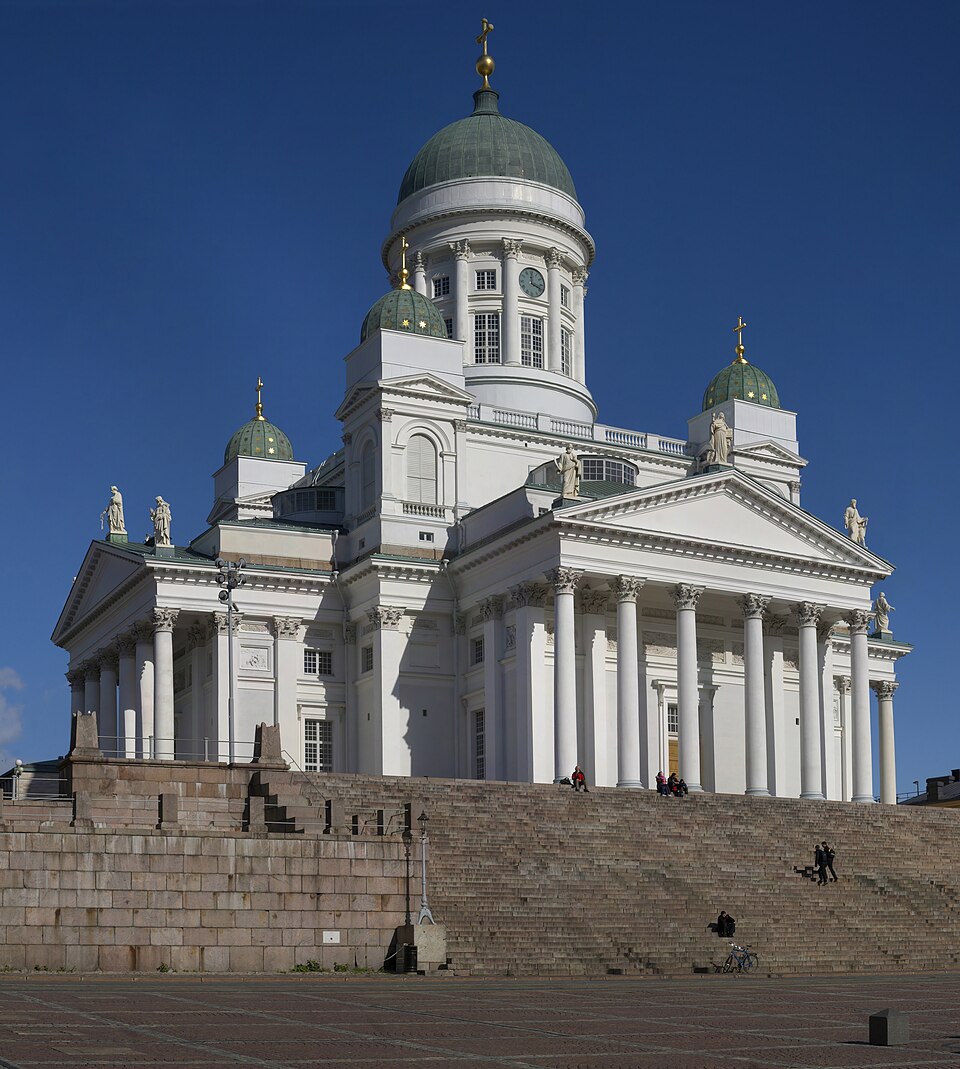
1830–1852 · Carl Ludvig Engel
Set at the head of a large public square in a strict, symmetrical neoclassical style, the church gives the square its dominant architectural note and sits above it on a raised platform.
Built between 1830 and 1852, this Lutheran cathedral was raised as a tribute to Grand Duke of Finland Nicholas I of Russia and, until the country's full independence in 1917, carried his name as St Nicholas's Church. Designed by Carl Ludvig Engel in a neoclassical style, it stands at the head of Senate Square in the Kruununhaka district and now serves as the cathedral of the Diocese of Helsinki. It ranks among the most famous historical structures in the country.
- Its architect, Carl Ludvig Engel, died in 1840, twelve years before the cathedral he designed was finished.
- It carried the name St Nicholas's Church until Finland's full independence in 1917.
Photo: Hans Hillewaert (CC BY-SA 3.0)
Uspenski Cathedral
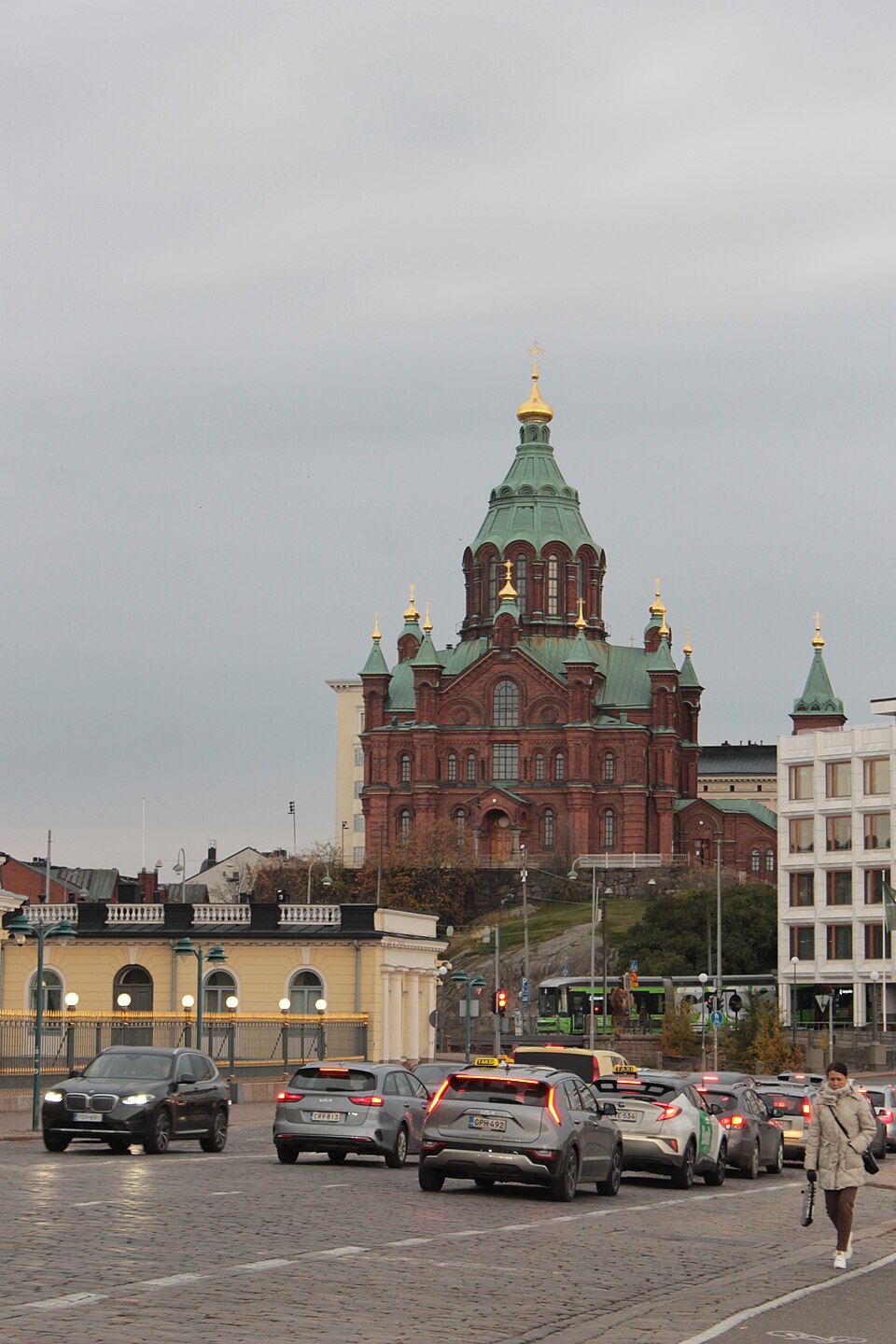
1868 · Aleksey Gornostaev
Built in the Byzantine and Russian Revival styles, its scale marks it out as the largest Orthodox church in both Northern and Western Europe, distinct from the plainer Lutheran cathedral elsewhere in the city.
Completed in 1868 to a design by Aleksey Gornostaev, who did not live to see it finished, this is the main cathedral of the Orthodox Church of Finland. Built in the Byzantine and Russian Revival styles, it is dedicated to the Dormition of the Theotokos, the Virgin Mary's falling asleep, from which its name derives via the Old Church Slavonic word uspenie. It stands as the largest Orthodox church in both Northern and Western Europe.
- It is the largest Orthodox church in both Northern and Western Europe.
- Its architect, Aleksey Gornostaev, died six years before the building was completed.
Photo: DemieK07 (CC BY-SA 4.0)
Helsinki Central Station
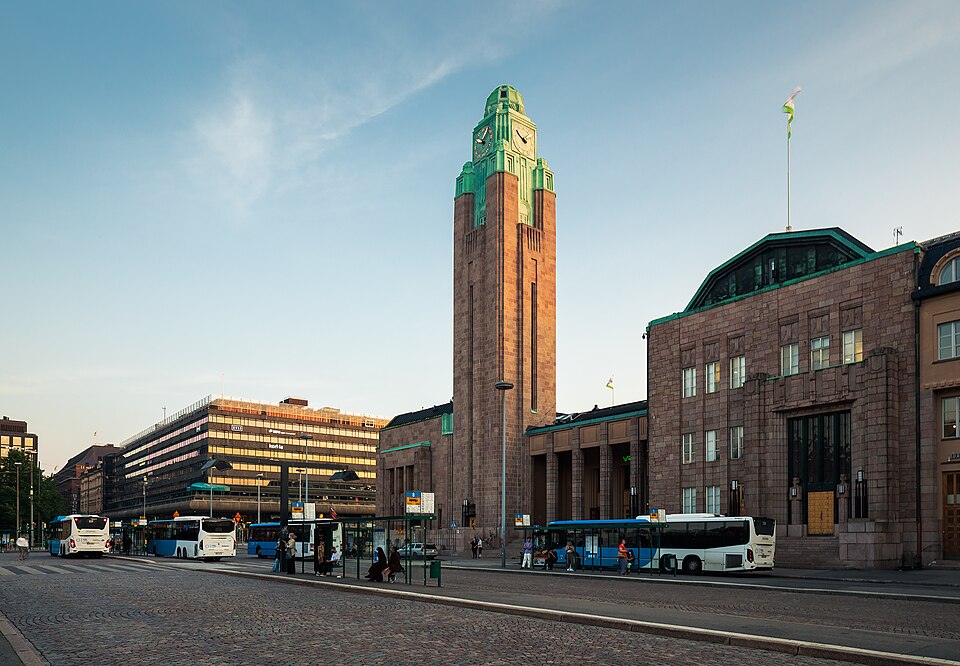
1919 · Eliel Saarinen
A tall clock tower rises over the granite façade, flanked by two pairs of monumental stone figures holding illuminated lamps beside the main entrance.
Designed by Eliel Saarinen and inaugurated in 1919, this granite-clad terminus is the endpoint for every commuter train in the network and every long-distance service bound for the capital, with a metro station sharing the same building. About 200,000 people pass through daily, roughly half of them travellers. Its clock tower and the flanking Lantern Bearers statues by Emil Wikström have made the building the visual symbol of the national railway, an image the state operator uses in its own advertising.
- Named one of the world's most beautiful railway stations by the BBC in 2013.
- The railway tracks it serves were laid in the 1860s, decades before the current building went up.
- A metro station occupies the same building as the mainline platforms.
Photo: Ximonic (Simo Räsänen) (CC BY-SA 4.0)
National Museum of Finland
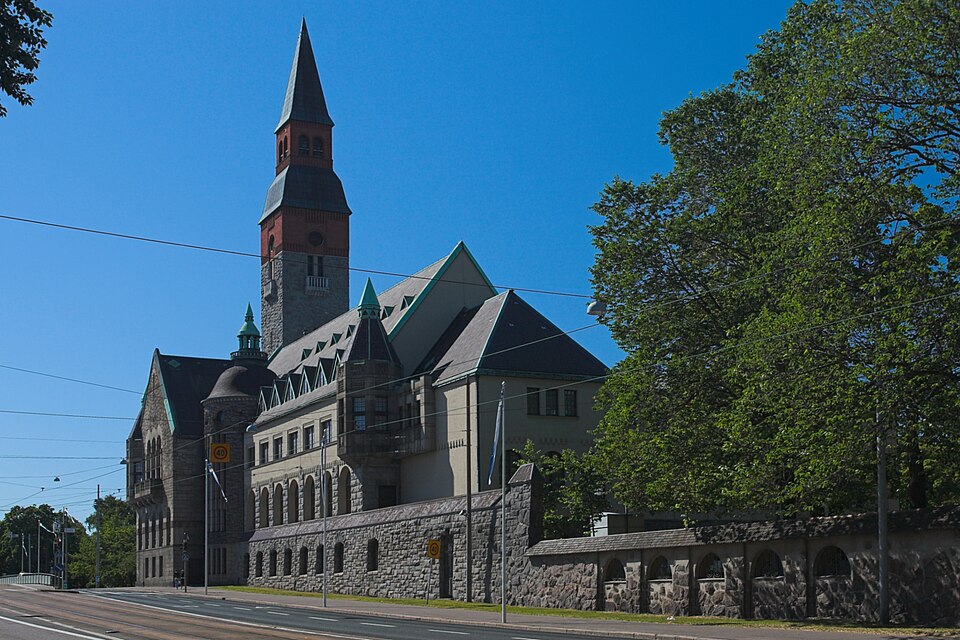
1916 · Gesellius, Lindgren, and Saarinen
Standing on Mannerheimintie, the building's National Romantic design sets it apart from the older, plainer civic architecture built earlier under foreign rule.
Opened in 1916 to a design by the firm of Gesellius, Lindgren, and Saarinen, this museum presents the country's history from the Stone Age to the present through its collections of objects and cultural artefacts. Built in the National Romantic style at Mannerheimintie 34, it is administered by the Finnish Heritage Agency, formerly the National Board of Antiquities, under the Ministry of Culture and Education. The museum is currently closed for renovation and expansion.
- The museum has been closed for a renovation and expansion project, with reopening estimated for 2027.
- Before 2018 it was governed by an agency called the National Board of Antiquities.
Photo: No machine-readable author provided. Thermos assumed (based on copyright claims). (CC BY-SA 2.5)
Sibelius Monument
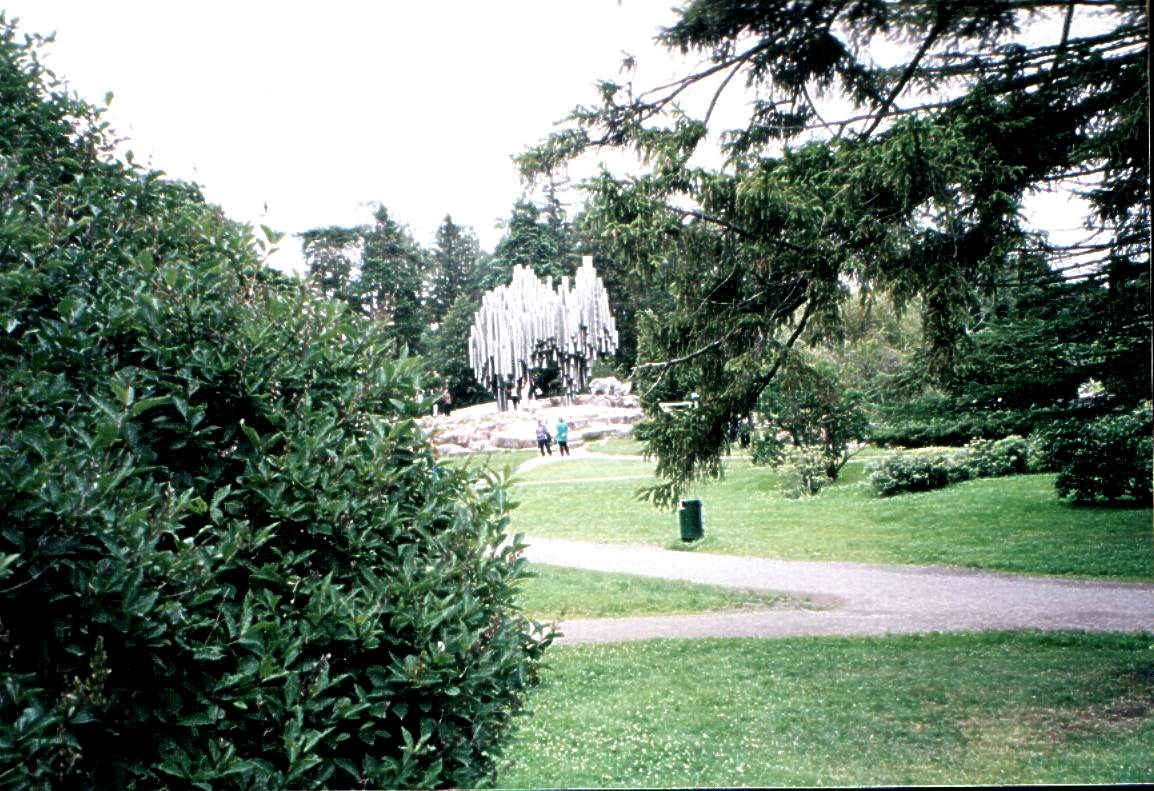
1962–1967 · Eila Hiltunen
An undulating mass of hundreds of narrow, unpatinated stainless steel pipes, decoratively textured and clustered into a wave-like form that visitors can step inside, standing beside a separate polished portrait relief of a man's face set among angular steel shards.
This memorial to composer Jean Sibelius stands in a park in the Töölö district, unveiled on 7 September 1967 after sculptor Eila Hiltunen's design, Passio Musicae, won a two-round competition run in 1961 and 1962. Its main element is an abstract welded cluster of 569 stainless steel pipes arranged in an undulating pattern, with a separate high-relief portrait of the composer added at the sponsoring society's request. Both pieces were pickled and passivated, so neither has corroded or gained a patina since installation.
- Hiltunen's design placed only sixth in the first round of the competition before she reworked it into the winning version.
- Although not built as a sound sculpture, the pipe cluster can generate sounds from wind, rain, and echoing voices and birdsong.
- Finland donated studies related to the monument to UNESCO in 1967 and to the United Nations Headquarters in 1983.
Photo: KELE118 (CC BY 3.0)
Havis Amanda
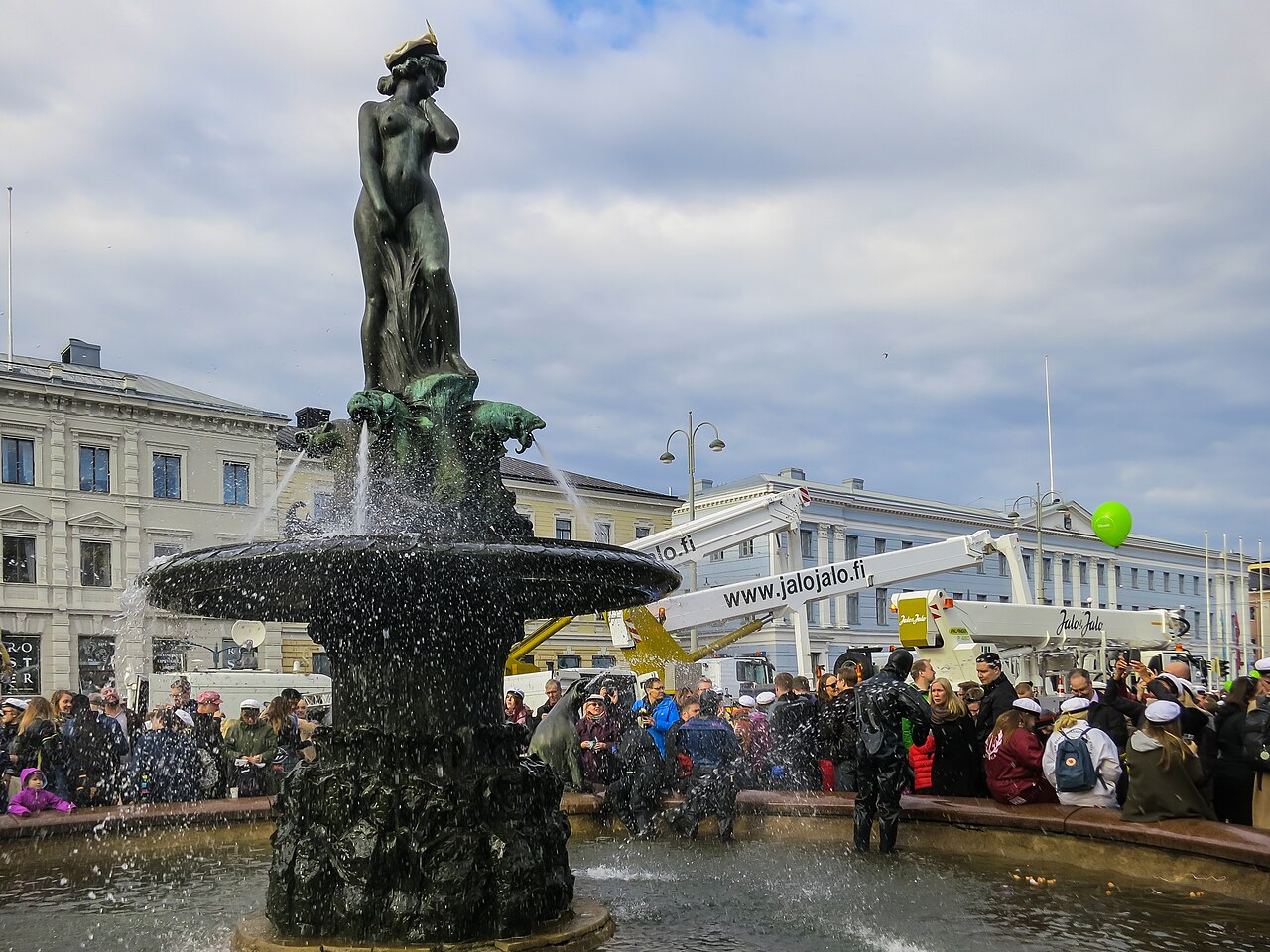
1906–1908 · Ville Vallgren
A bronze figure of a woman standing on seaweed as she emerges from the water, ringed by four water-spouting fish and four sea lions, set on a granite fountain basin in an open paved square facing the harbour.
This bronze fountain statue depicts a woman rising from the sea on a bed of seaweed, surrounded by four water-spouting fish and four sea lions, sculpted by Ville Vallgren in Paris in 1906 and installed at Market Square in 1908, when it was unveiled to strong public criticism over its nudity. Vallgren intended the bronze figure, set on a granite basin, to symbolise the rebirth of the city. Long known by the nickname Manta, it is now regarded as one of the most recognised works of public art in Helsinki.
- According to Vallgren's own letters, his model was a 19-year-old Parisian woman named Marcelle Delquini.
- Every Vappu, university students place a student cap on the statue's head in a ceremony called "Mantan lakitus".
- Early critics called the figure a "common French whore" for what they saw as a lack of innocence.
Photo: Ninara from Helsinki, Finland (CC BY 2.0)
Market Square
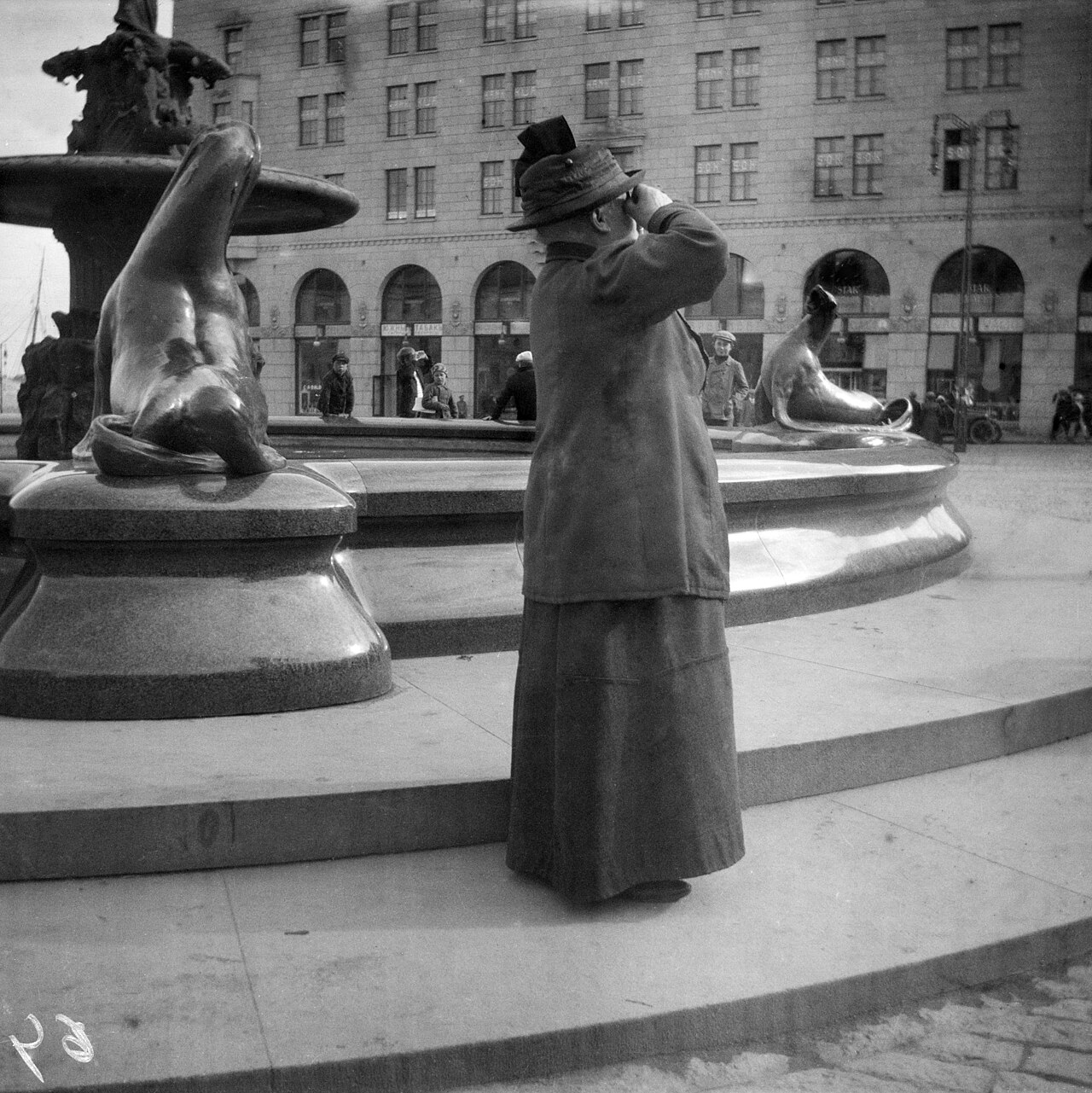
1830s
An open paved square facing the water, lined with market stalls and awnings from spring to autumn and framed on one side by grand government buildings, with ferry piers running along the harbour edge.
This harbourside square sits at the eastern end of the Esplanadi, bordering the Baltic Sea and facing Katajanokka across the water. Once the muddy bottom of a bay used by local fishermen, it was filled and paved with cobblestones in the early 1830s. The Presidential Palace, City Hall and the Stora Enso headquarters, designed by Alvar Aalto, all stand nearby. From spring to autumn, vendors sell fresh food and souvenirs from stalls, and a year-round ferry links the square to the sea fortress of Suomenlinna.
- On the first Friday of every month, owners of old American cars gather to display them at the square.
- Seagulls at the square have become known for swooping down to snatch snacks and ice cream from tourists' hands.
- A British monarch has arrived here twice by royal yacht, and a French president once stopped for coffee at the market in 2018.
Photo: Ivan Timiriasev (Public domain)
Senate Square
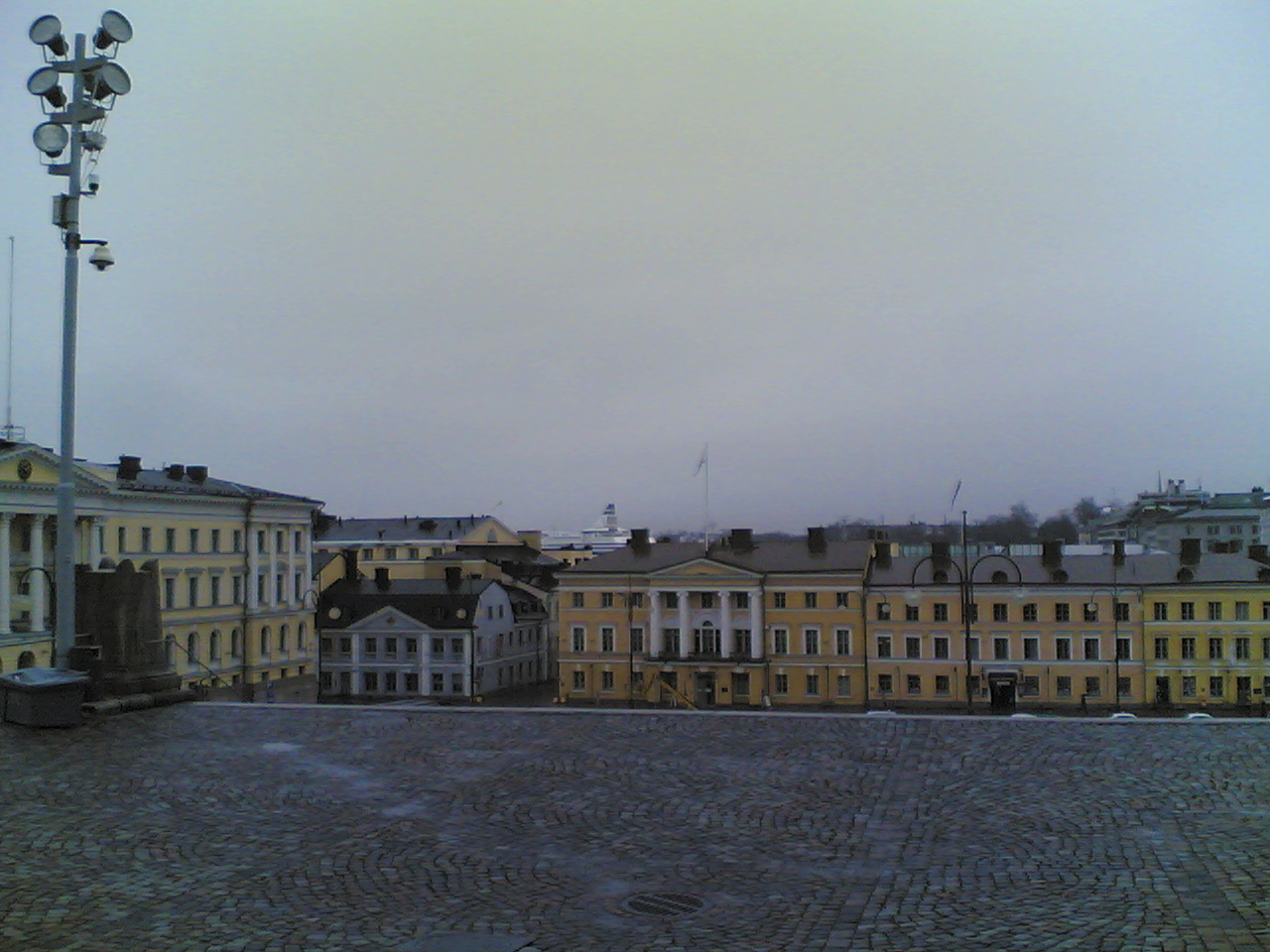
1812–1852 · Carl Ludvig Engel
An open paved square framed by matching neoclassical facades on three sides - a church reached by raised steps, a government building and a university building - with a bronze statue on a pedestal at its centre and, bordering one edge, a low historic merchant's house far older than the buildings around it.
Laid out under Johan Albrecht Ehrenström's 1812 city plan and framed by buildings designed by Carl Ludvig Engel, this is the oldest part of central Helsinki. It is bordered by a church, the Government Palace, completed in 1822 as seat of the Senate of Finland and now home to the Prime Minister's office, and the University of Helsinki's main building of 1832. A bronze statue of Emperor Alexander II, erected in 1894, stands at its centre, and the square borders merchant Johan Sederholm's house of 1757, the oldest building in central Helsinki.
- A digital carillon composed for the square plays daily at 17:49.
- Scenes from several films, including Reds and Night on Earth, were shot on the square, with it standing in for Saint Petersburg in one of them.
- A bid for World Heritage status has been held back by a single building in the square's southwest corner.
Photo: jampe (CC BY-SA 3.0)
Finlandia Hall
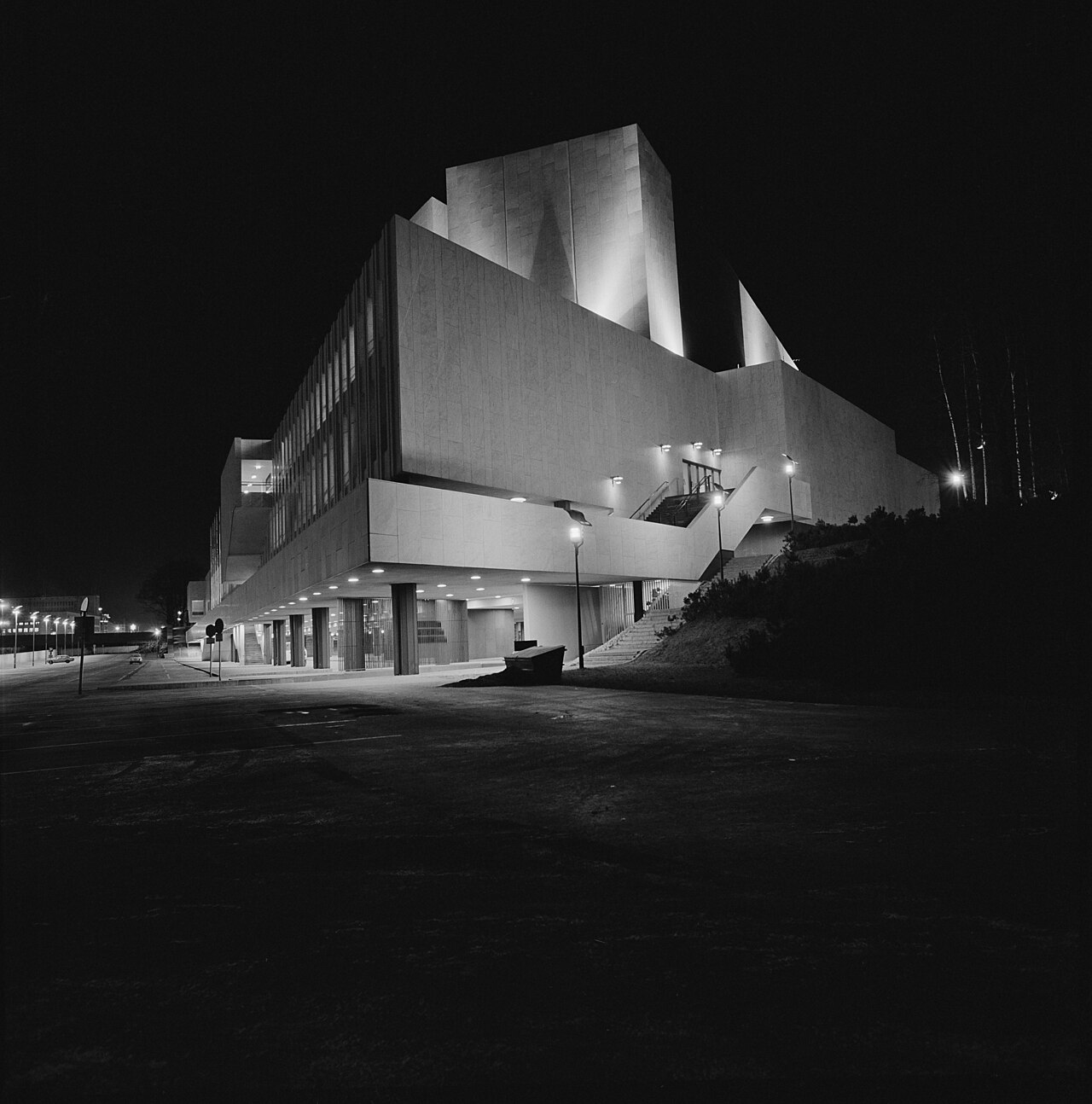
1967–1971 · Alvar Aalto
A tower-like white marble hall with a sloping roof stands against contrasting black granite; viewed from across the bay, a black trapezium shape on its facade lines up so a nearby museum tower appears to rise directly out of it.
This congress and concert venue on Töölönlahti Bay was designed by Alvar Aalto, with the design completed in 1962 and the building finished in 1971. Its inaugural concert took place on 2 December 1971, premiering works by Einojuhani Rautavaara and Aulis Sallinen alongside Sibelius's violin concerto, with Isaac Stern as soloist. Aalto specified white Carrara marble for the cladding, but it weathered badly, and between 2022 and 2023 the entire facade was rebuilt using roughly 6,800 square metres of a different Italian marble, reopening in January 2025.
- In July 2026 the hall, together with twelve other buildings by Aalto, was designated a UNESCO World Heritage Site.
- In August 1975 it hosted an OSCE summit attended by 35 world leaders, including Soviet leader Leonid Brezhnev and US President Gerald Ford.
- Its stage curtain was designed by textile artist Dora Jung, and Aalto himself designed the front section of the hall's organ, the first concert-hall organ built in Finland.
Photo: Volker von Bonin (CC BY 4.0)
Helsinki Central Library Oodi
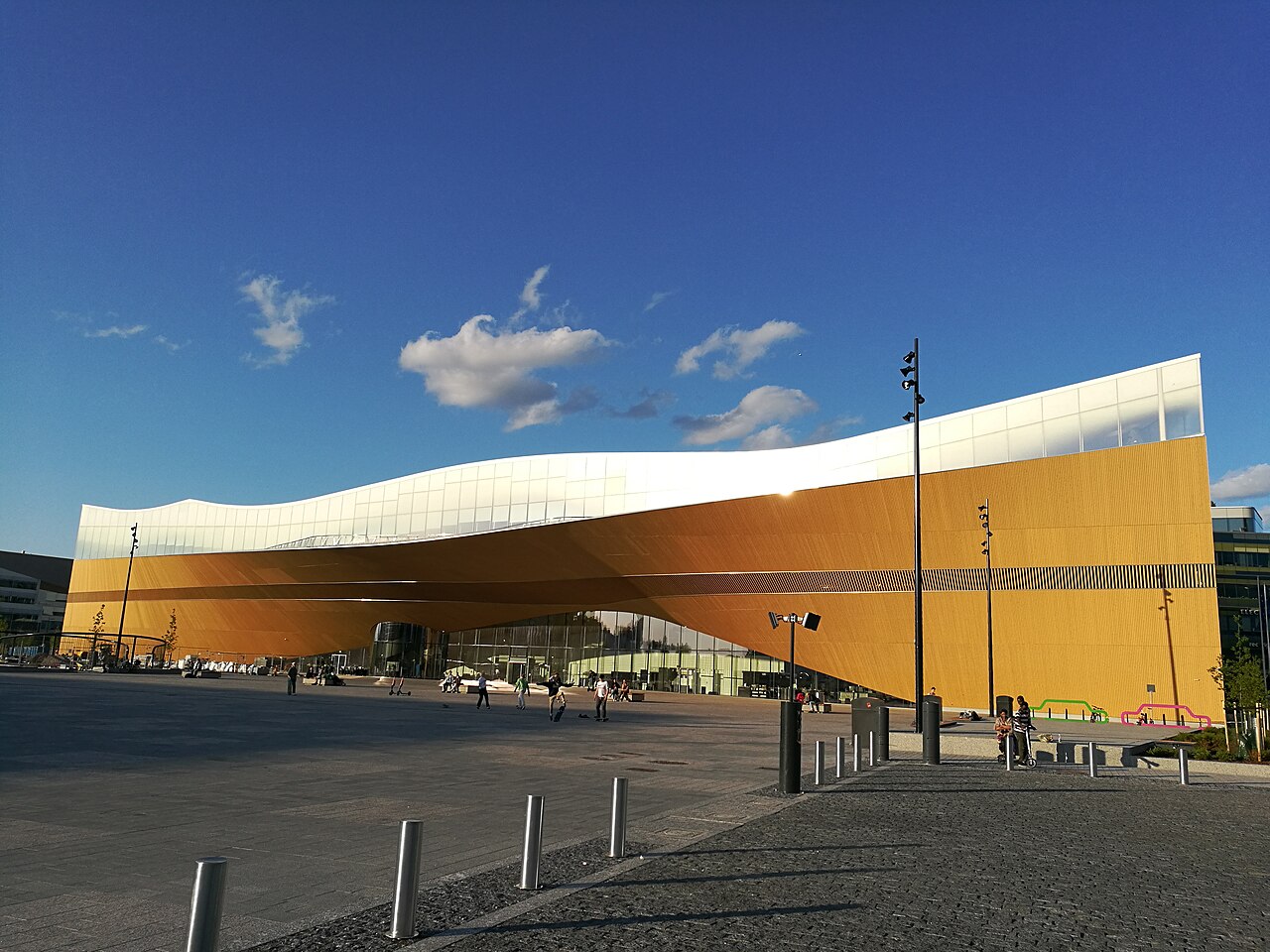
2018 · ALA Architects
The building's top floor holds a wide, open hall for browsing books, reached from a ground-floor cinema and served by automated robots that ferry books up to it; it stands beside Helsinki Music Centre and the Kiasma museum in the Töölönlahti area.
Despite its name, Oodi is not the main library in Helsinki's library system, which is based in Pasila; "central" refers only to its location by the Central Railway Station in the Kluuvi district. A 2012 design competition, won by ALA Architects over 543 other entries, led to a building budgeted at €98 million, funded partly to mark the centenary of Finland's independence. Inaugurated on 5 December 2018, the eve of Independence Day, it was named Oodi ("ode") from around 1,600 publicly submitted suggestions, deliberately not after a person, and was named the world's best public library by IFLA in 2019.
- A planned sauna, part of the original design, still had not been built as of 2021.
- Books reach the third-floor reading hall by way of specially designed transport robots.
- The selection jury favoured the name Oodi partly because it was easy to say, easy to remember, and easy to translate.
Photo: Sino Yu (CC0)
Olympic Stadium
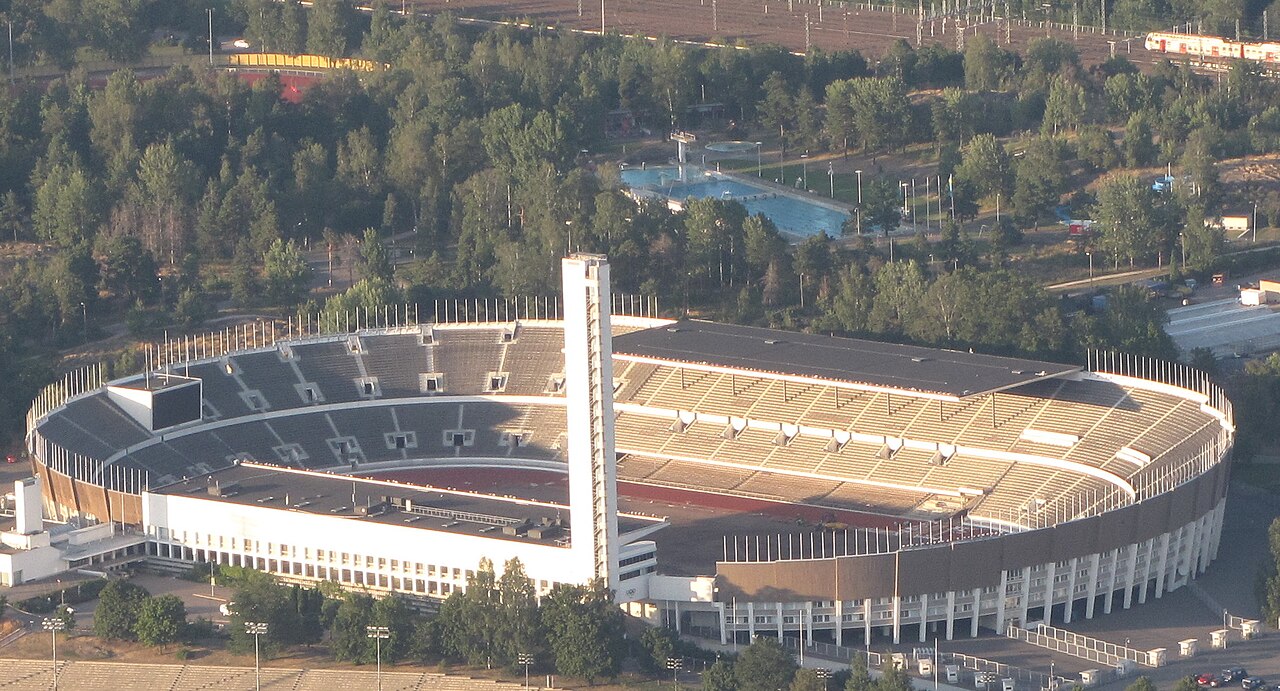
1934–1938 · Yrjö Lindegren and Toivo Jäntti
A tower 72.71 metres tall, deliberately built to match a specific javelin-throw distance, rises above stands that now seat around 36,000 under lightweight canopies added in a 2020 renovation, all in a spare, unornamented functionalist style.
The country's largest stadium was designed by Yrjö Lindegren and Toivo Jäntti in a stripped functionalist style and built between 1934 and 1938, originally intended for the 1940 Games before these were cancelled by the Second World War; it eventually hosted athletics, show jumping and the football finals of the 1952 Summer Olympics. Spectator capacity peaked above 70,000 for those games and now stands at 36,251. A renovation completed in 2020, costing €337 million, added canopies over every stand and renewed the field and track.
- The stadium's 72.71-metre tower was built to match the winning distance of Matti Järvinen's gold-medal javelin throw at the 1932 Olympics.
- In 2007 a Eurasian eagle-owl nicknamed Bubi delayed a match by perching on a goalpost; Finland won 2–0, and the national football team has been nicknamed the Eagle-Owls ever since.
- Architect Yrjö Lindegren later won an Olympic gold medal himself, for architecture, at the 1948 London Games.
Photo: MKFI (Public domain)
Parliament House
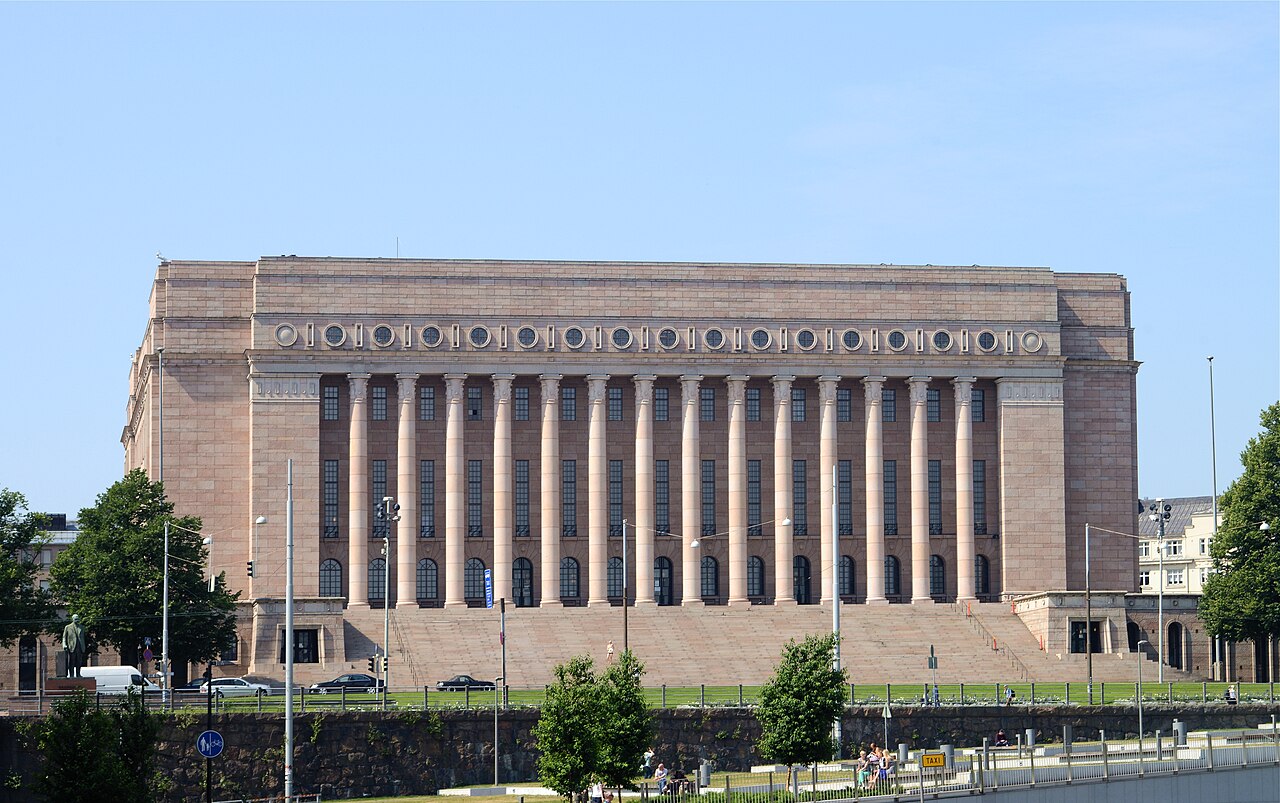
1926–1931 · J. S. Sirén
Fourteen simplified columns with stylised Corinthian capitals, cut from red granite quarried at Kalvola, line the main facade; inside, a white marble staircase and paternoster lifts connect six floors, including the plenary chamber and a ceremonial reception room known as the Hall of State.
Built between 1926 and 1931 to a design by J. S. Sirén, the winning entry in a 1924 competition held after Arkadianmäki hill was chosen as the site, this is the seat of the Parliament of Finland in the Etu-Töölö district. Sirén combined simplified Neoclassical forms with early modernist planar geometry; the facade is lined with fourteen columns of red granite from Kalvola. The building was inaugurated on 7 March 1931 and later gained a 1978 library annex and a separate 2004 office block.
- Statues of former presidents Kaarlo Juho Ståhlberg (1959) and Pehr Evind Svinhufvud (1961), both by sculptor Wäinö Aaltonen, flank the lawn outside.
- A nearby statue of president Kyösti Kallio, unveiled in 1962, was carved by his own son, Kalervo Kallio.
- In September 2024, protesters sprayed red paint on the building's columns.
Photo: Alvesgaspar (CC BY-SA 3.0)
Temppeliaukio Church
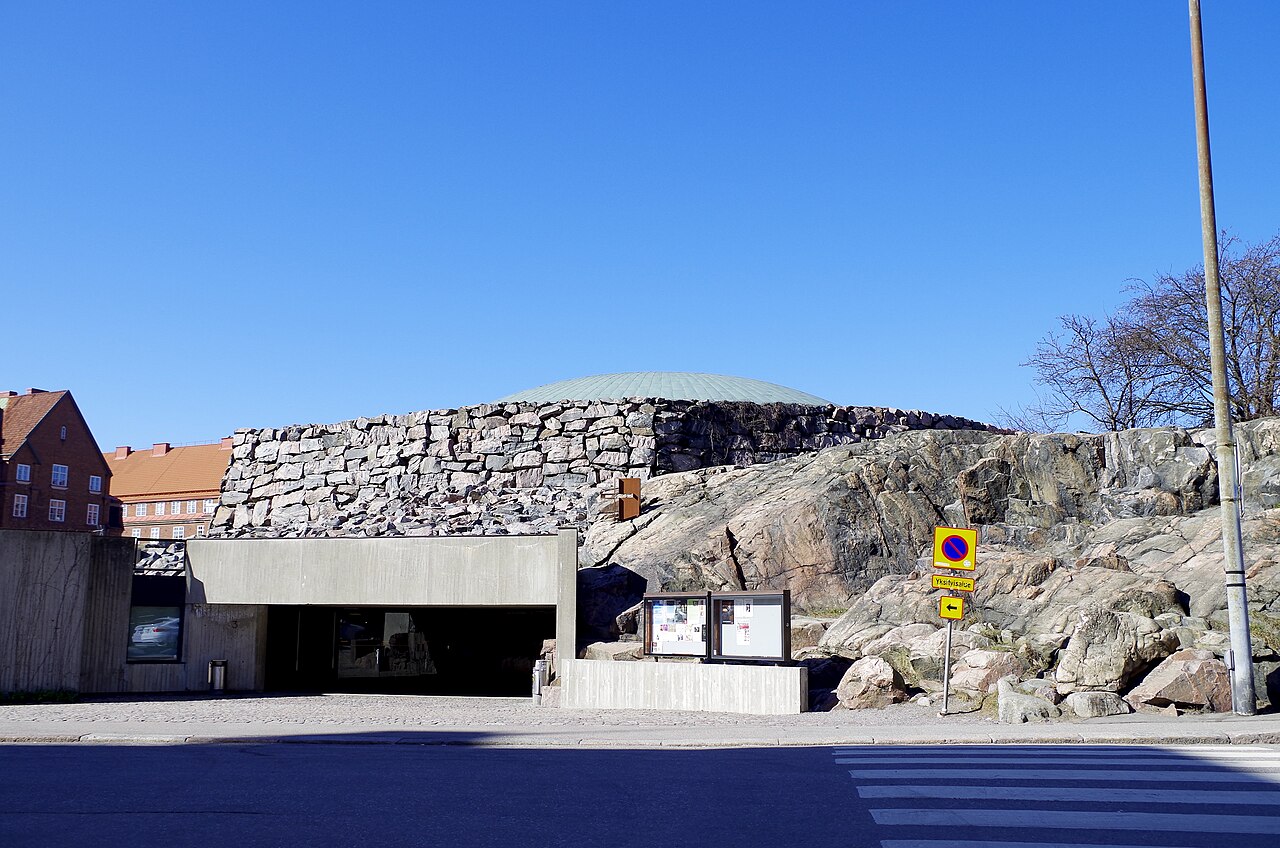
1968–1969 · Timo and Tuomo Suomalainen
Set below street level, the church's interior walls are raw, unworked rock face rather than plaster or stone cladding, ringed at the top by a skylight beneath a shallow copper dome that lets daylight wash down the granite.
Designed by architect brothers Timo and Tuomo Suomalainen after they won a 1961 competition, this Lutheran church replaced an earlier 1930s design interrupted by the Second World War. Reduced to about a quarter of its planned size for cost reasons, construction began in February 1968 and the church was consecrated in September 1969. Excavated directly from solid granite bedrock and left with its rough surfaces exposed, it is prized for its acoustics and hosts frequent concerts; its organ has 43 stops and 3,001 pipes.
- The rock walls were kept exposed only after a conductor and an acoustic engineer confirmed the raw surfaces would give the space excellent acoustics; the architects had feared the look was too radical for the competition jury.
- The church has no bells; a recording composed by Taneli Kuusisto plays through loudspeakers instead.
- Before construction was even finished, students spray-painted "BIAFRA" on its exterior walls in July 1968 to protest the famine in Nigeria's breakaway region.
Photo: sandexx (CC BY 3.0)
Kiasma
A contemporary art museum on Mannerheimintie, designed by architect Steven Holl, whose name comes from the Finnish word for chiasma, echoing his design concept. It is part of the Finnish National Gallery and holds its contemporary art collection.
Presidential Palace
One of three official residences of the President of Finland, situated on the north side of the Esplanadi and overlooking Market Square.
Pohjola Insurance building
The former headquarters of the Pohjola Insurance Company, built in 1899-1901 and designed by Gesellius, Lindgren and Saarinen as a prominent example of Finnish National Romantic architecture. Kansallis-Osake-Pankki, now part of Nordea, acquired the building in 1972.
Helsinki Music Centre
A concert hall in Toolonlahti, between Finlandia Hall and Kiasma, home to the Sibelius Academy and two symphony orchestras. Its vineyard-style main hall seats 1,704 people, alongside five smaller rooms, including a chamber music hall and an organ hall.
Stora Enso headquarters
An office building in the Katajanokka neighborhood, completed in 1962 and designed by the Finnish architect Alvar Aalto.
National Library of Finland
Finland's foremost research library, administratively part of the University of Helsinki and known as the Helsinki University Library from 1919 until 2006. As the country's legal deposit library, it receives copies of all printed matter produced in Finland and archives material published online.
Ateneum
An art museum on the south side of Rautatientori square, near the Central Railway Station, one of the Finnish National Gallery's three museums. It holds the country's largest collection of classical art and, until 1991, also housed the Finnish Academy of Fine Arts.
Hotel Kämp
Finland's first luxury hotel, founded in 1887 in Kluuvi and demolished in the 1960s, though its facade facing the Pohjoisesplanadi was rebuilt into the new structure. After decades as a bank headquarters, hotel operations resumed in 1999 as part of Marriott's Luxury Collection.
Government Palace
The executive office building of the Finnish government, overlooking Senate Square and formerly known as the Senate House. It houses the Prime Minister's Office and most of the Ministry of Finance, and is normally closed to the public except on occasional open days.
Linnanmäki
An amusement park opened on 27 May 1950 and owned by the non-profit Children's Day Foundation, which uses its proceeds for Finnish child welfare work, having donated over 130 million euros in total. It is the oldest and most popular amusement park in Finland.
Hakaniemi market hall
A market building at Hakaniemi square in the Kallio district, built in 1914 at the start of the street Hameentie. It underwent renovations from 2018 to 2023, operating from a temporary heated building until the work was complete.
Korkeasaari Zoo
The largest zoo in Finland, opened in 1889 on Korkeasaari island and now run by a nonprofit foundation. The Crown Bridges connect the island to the mainland districts of Nihti and Laajasalo, with an additional bridge from Mustikkamaa.
Hietaniemi Cemetery
Established in 1829, the cemetery hosts Finnish state funerals and includes a military section for soldiers of the Winter, Continuation and Lapland Wars. At its centre lie the tomb of the unknown soldier and that of Marshal Mannerheim, commander-in-chief and Finland's sixth president.
Finnish National Theatre
Finland's oldest Finnish-speaking professional theatre, established in 1872 and known as the Finnish Theatre until its renaming in 1902. After thirty years touring, it moved into its current home beside the Central Railway Station, designed by Onni Tarjanne in the National Romantic style.
Kaapelitehdas
A former cable factory in Salmisaari, near the Lauttasaari bridge, redeveloped into a cultural centre. It now hosts artists' studios, three museums, and a range of activities and events.
History
Helsinki's religious architecture reflects two periods of foreign rule and their aftermath. The Lutheran cathedral overlooking Senate Square was built between 1830 and 1852 under Carl Ludvig Engel as an offering to Grand Duke of Finland Nicholas I of Russia, and carried his name, St Nicholas's Church, until Finnish independence in 1917. The Orthodox community completed the Uspenski Cathedral in 1868, a Byzantine and Russian Revival building that remains the largest Orthodox church in Northern and Western Europe. By the early twentieth century, as national sentiment grew, architects turned to a homegrown idiom: the National Museum of Finland opened in 1916 to house the country's own history, and Eliel Saarinen's granite railway station followed in 1919, its clock tower and lantern-bearing statues becoming a symbol of the state railway itself.