Landmarks in Panama City
Rebuilt in 1673 after a pirate's fire, its old quarter stands near the ruins it replaced.
Panama City's oldest standing landmarks cluster in the town rebuilt in 1673 on a peninsula 8 kilometres from the original 1519 settlement, which the privateer Henry Morgan had burned two years earlier; that first site survives only as ruins, now a World Heritage Site. Within the rebuilt town stand a cathedral begun in 1688 but not consecrated until 1796, a presidential palace dated to the same 1673 founding, and a fragment of colonial masonry preserved as a national monument. The mix reflects a capital that has functioned continuously as Panama's administrative and commercial centre, its population since grown well beyond this historic nucleus into a metropolitan area of over two million people.
Metropolitan Cathedral of Panama City
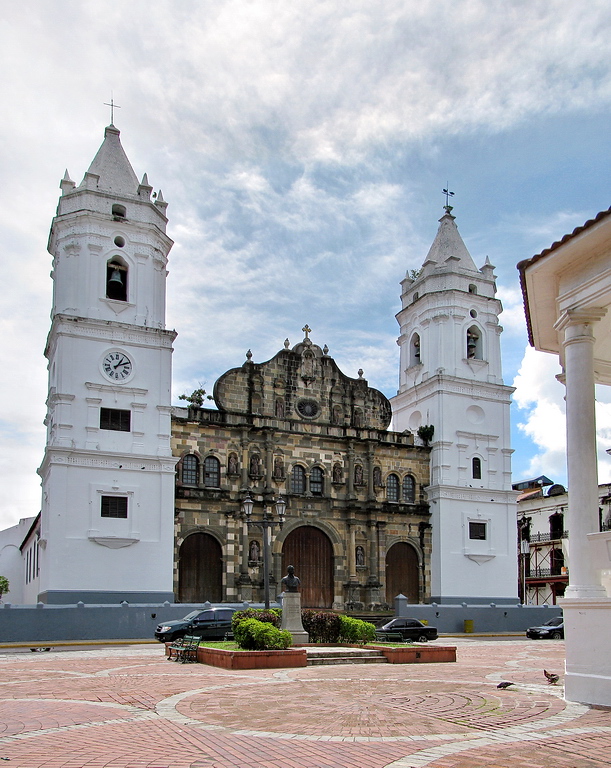
1688–1796 · Nicolás Rodríguez
It stands in the old town as the seat of the Metropolitan Archdiocese, its design credited to Nicolás Rodríguez, a military engineer rather than a specialist church architect.
The archcathedral is a Catholic church in the old town of Panama City and the episcopal see of the Metropolitan Archdiocese of Panama. Construction began in 1688, but the building was not consecrated for another 108 years, in 1796. It was designed by Nicolás Rodríguez, a military engineer rather than a specialist church architect. Formally titled the Metropolitan Archcathedral Basilica of Santa María la Antigua, it remains the seat of the archdiocese and one of the principal religious buildings of the historic quarter it stands in.
- Construction began 108 years before the building was finally consecrated in 1796.
- Its design is credited to a military engineer rather than a specialist church architect.
Photo: Editorpana (CC BY 3.0)
Arco Chato
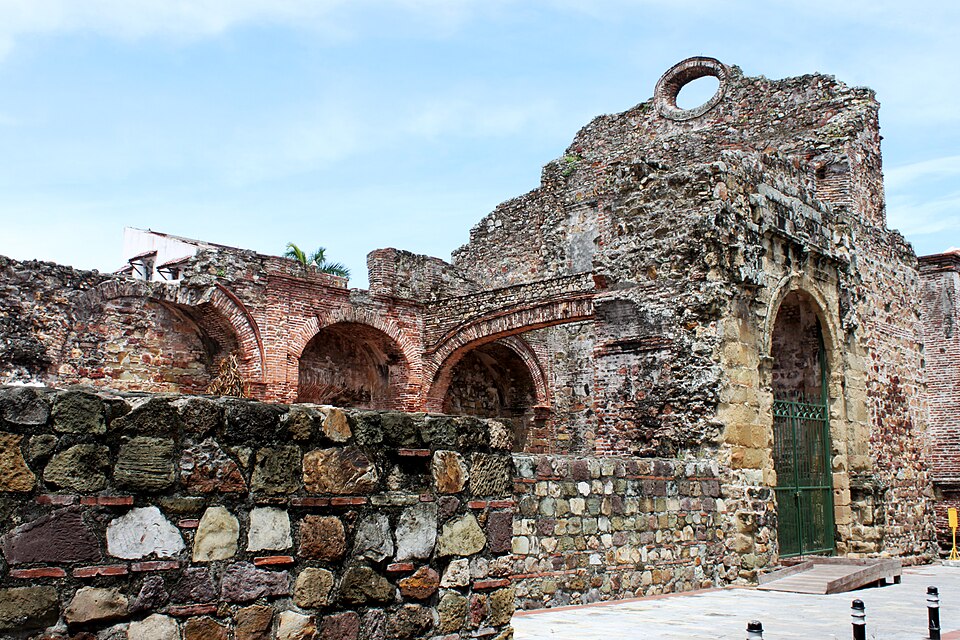
1678
It survives as a masonry fragment rather than an intact building, officially registered as a monument of Panama among the city's protected ruins.
Arco Chato is registered as a monument of Panama and classified by Wikidata as a piece of cultural property among the city's ruins. The municipal catalogue dates it to 1678. It is catalogued as a building, yet its Wikidata classification as ruins indicates it survives only as a fragment rather than a complete structure. Beyond its date and its protected status under national heritage rules, no further detail on its original function or design is recorded in the available sources.
Photo: Oray27s (CC BY-SA 3.0)
Palacio de las Garzas
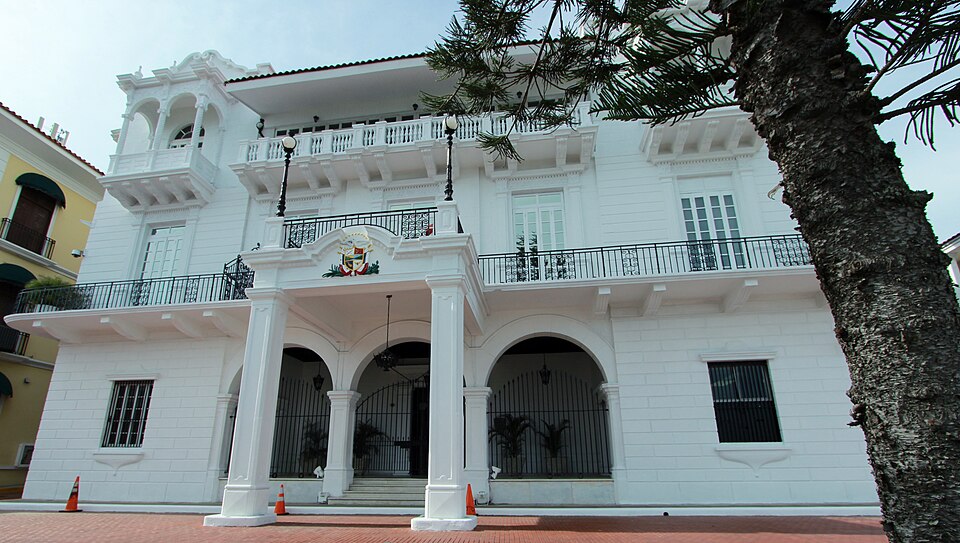
1673
Herons wander freely through its courtyard, a tradition begun in 1922 when a Panamanian president introduced them at a poet friend's suggestion — the source of the building's popular nickname, Heron's Palace.
The Palacio de las Garzas is the governmental office and residence of the President of Panama, dated to 1673, the year Panama City itself was reestablished after being burned. Its popular name, Heron's Palace, comes from the herons that roam freely through its courtyard, introduced in 1922 by then-president Belisario Porras Barahona at the suggestion of his friend, the poet Ricardo Miró. Leonardo Villanueva Meyer, who died in 1981, is credited as its architect.
- The palace's Spanish name, Palacio de las Garzas, translates to "Heron's Palace."
- The herons were introduced not by an architect or naturalist, but at the suggestion of a poet.
Photo: Anelita Cocoa Celis (CC BY-SA 3.0)
JW Marriott Panama
A 70-floor waterfront hotel and condominium tower in Punta Pacifica, opened in 2011 as the Trump Ocean Club, the Trump Organization's first internationally branded development. At 284.4 metres, it is the tallest building in both Panama and Central America.
Biomuseo
A museum on the Amador Causeway devoted to the natural history of Panama, designed by Frank Gehry in his first project for Latin America. Conceived in 1999, it opened on 2 October 2014 and tells how the isthmus's recent rise reshaped the region's ecology.
Panama City Panama Temple
A temple of the Church of Jesus Christ of Latter-day Saints in Cárdenas, announced in 2002 as Panama's first and the 127th worldwide. Its single spire carries a statue of the angel Moroni above walls of China stone and art-glass windows on a hillside site.
Panama Canal Museum
A museum on Independence Plaza established in 1997, covering the Panama Canal's construction from the French attempt to the American project and transfer to Panama. It occupies the former Grand Hotel, built in 1874–1875 by George Loew and later headquarters of the French canal company.
History
The city was founded on 15 August 1519 by Spanish conquistador Pedro Arias Dávila, becoming the starting point for expeditions that conquered the Inca Empire and a stopover on the trade route carrying gold and silver from Spain's American colonies to the fairs of Nombre de Dios and Portobelo. On 28 January 1671 the privateer Henry Morgan sacked and burned the settlement; the ruins of that first city still stand today as a World Heritage Site. The city was formally reestablished on 21 January 1673 on a peninsula 8 kilometres away, the site still occupied today. Construction on the new town's cathedral began in 1688, under the military engineer Nicolás Rodríguez, though it was not consecrated until 1796. The presidential palace also dates from the 1673 refounding, later gaining its popular name from herons introduced to its courtyard in 1922.