Landmarks in Speyer
Its skyline pairs a red sandstone imperial cathedral with a 55-metre medieval gate tower.
Speyer's landmarks sit close together on the west bank of the Rhine, strung along the old town's east-west axis. At one end stands the red sandstone bulk of the cathedral, an eleventh-century Romanesque basilica and the oldest structure of any size; at the other, a single 55-metre gate tower marks where the medieval walls once ran. Between them rise a Gothic Revival memorial church with the tallest bell tower in the region and a late Baroque parish church, each built centuries after the cathedral in the styles then current. Beneath a modern square lie the excavated stone remains of a medieval Jewish quarter, among the oldest of their kind in northern Europe. The landmarks together span roughly a thousand years of building.
Speyer Cathedral
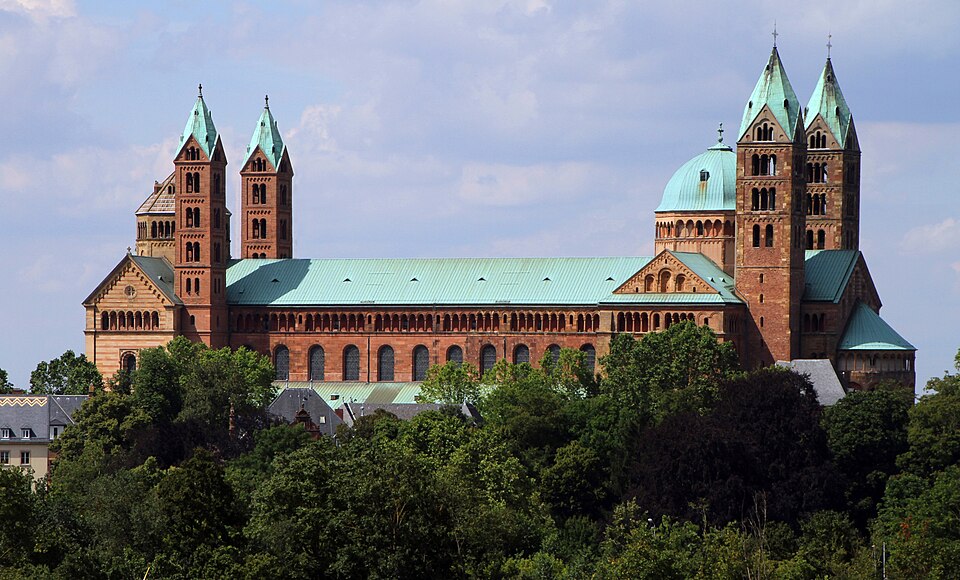
1030–1103 · Otto of Bamberg
A triple-aisled basilica of red sandstone, its vaulted nave and imposing bulk making it the largest Romanesque church left standing anywhere, now that the Abbey of Cluny lies in ruins.
Begun in 1030 under Conrad II as a dynastic mausoleum, the building's east end and high vault were completed between 1090 and 1103, producing a triple-aisled red sandstone basilica. With the Abbey of Cluny long since ruined, it survives as the largest Romanesque church anywhere and is regarded as a symbol of imperial power. Eight Holy Roman Emperors and German kings lie buried beneath its high altar. Pope Pius XI raised it to the rank of minor basilica in 1925, and UNESCO listed it as a World Heritage Site in 1981.
- Eight Holy Roman Emperors and German kings are buried beneath the high altar.
- It ranks as the largest Romanesque church anywhere, now that the Abbey of Cluny lies in ruins.
Photo: Gerd Eichmann (CC BY-SA 4.0)
Old Gate
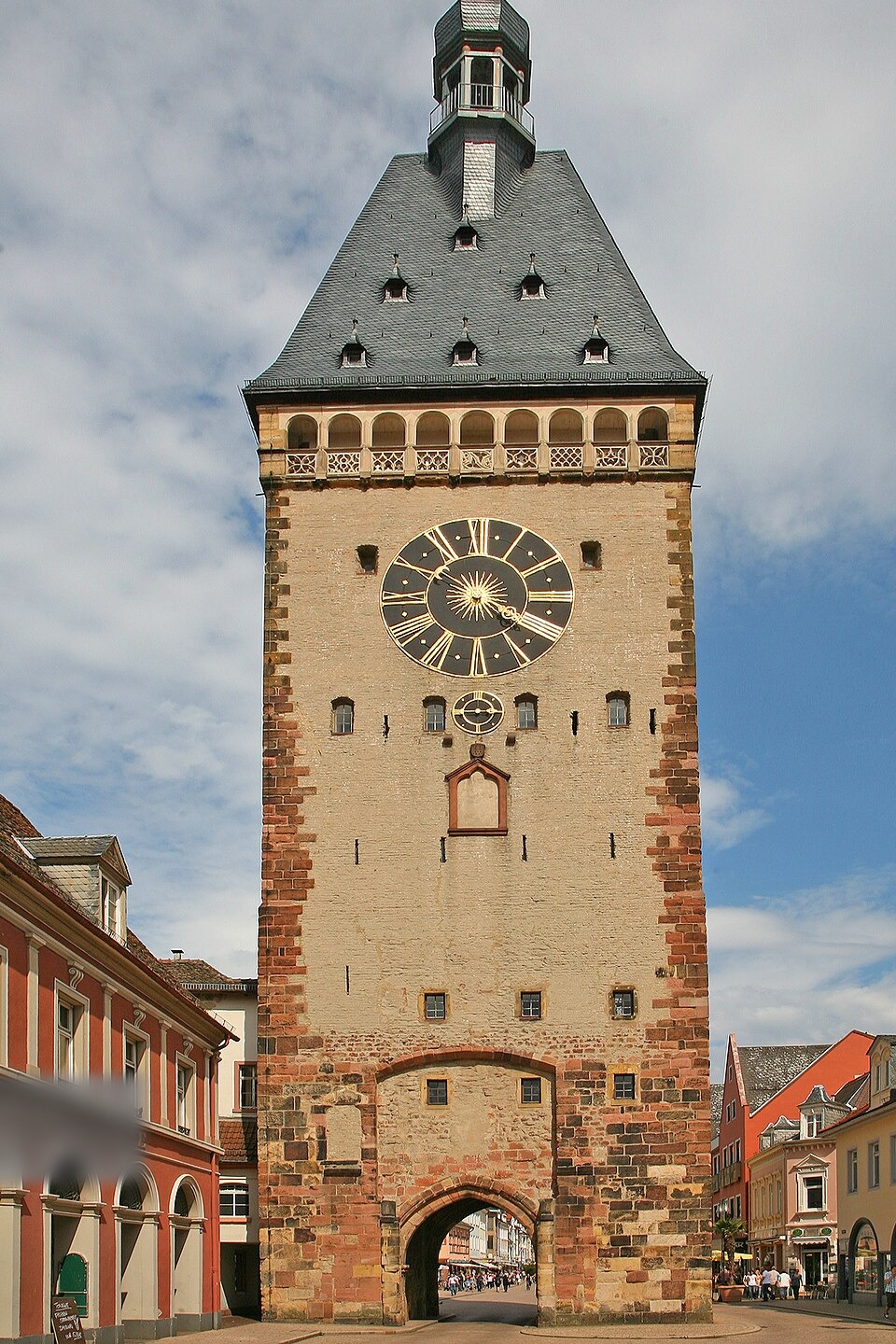
1250
A single 55-metre gate tower rising sheer above the old town's main street, its height and bulk marking it as one of the largest and most architecturally significant city gates left standing anywhere.
The gate was one of sixty-eight towers built into Speyer's medieval walls, guarding the western approach to the town. Standing 55 metres tall, it now ranks among the largest and most architecturally significant of Germany's surviving city gates. Most of the accompanying wall and its other towers were lost over time, leaving this single structure as the principal reminder of the medieval fortification that once encircled the town.
- It was one of 68 towers that once studded the town's medieval walls and gates.
- At 55 metres, it ranks among the tallest surviving city gates in Germany.
Photo: W. Bulach (CC BY-SA 4.0)
Memorial Church
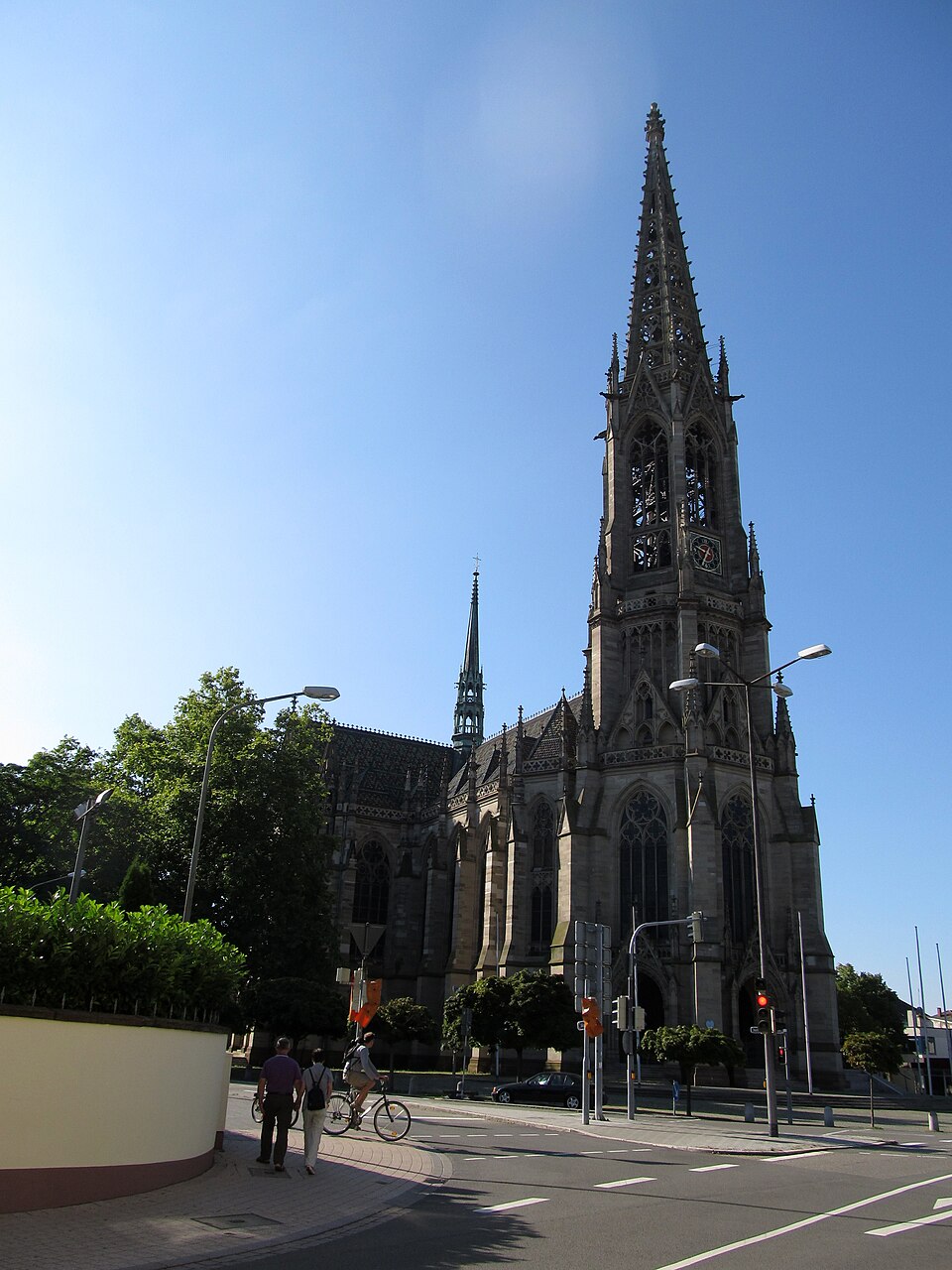
1893–1904 · Carl Nordmann and Julius Flügge
A single tower rises 100 metres above this Gothic Revival church, the tallest bell tower in the Palatinate.
Built between 1893 and 1904 to commemorate the Protestation at Speyer, in which Lutheran rulers of the Holy Roman Empire formally protested at the 1529 Diet of Speyer, the church serves a United Protestant (Lutheran and Reformed) congregation. Its bell tower, 100 metres tall, is the tallest in the Palatinate. The Gothic Revival design was the work of architects Carl Nordmann and Julius Flügge.
- Its bell tower, at 100 metres, is the tallest in the whole Palatinate.
Photo: atreyu (CC BY-SA 3.0)
Trinity Church
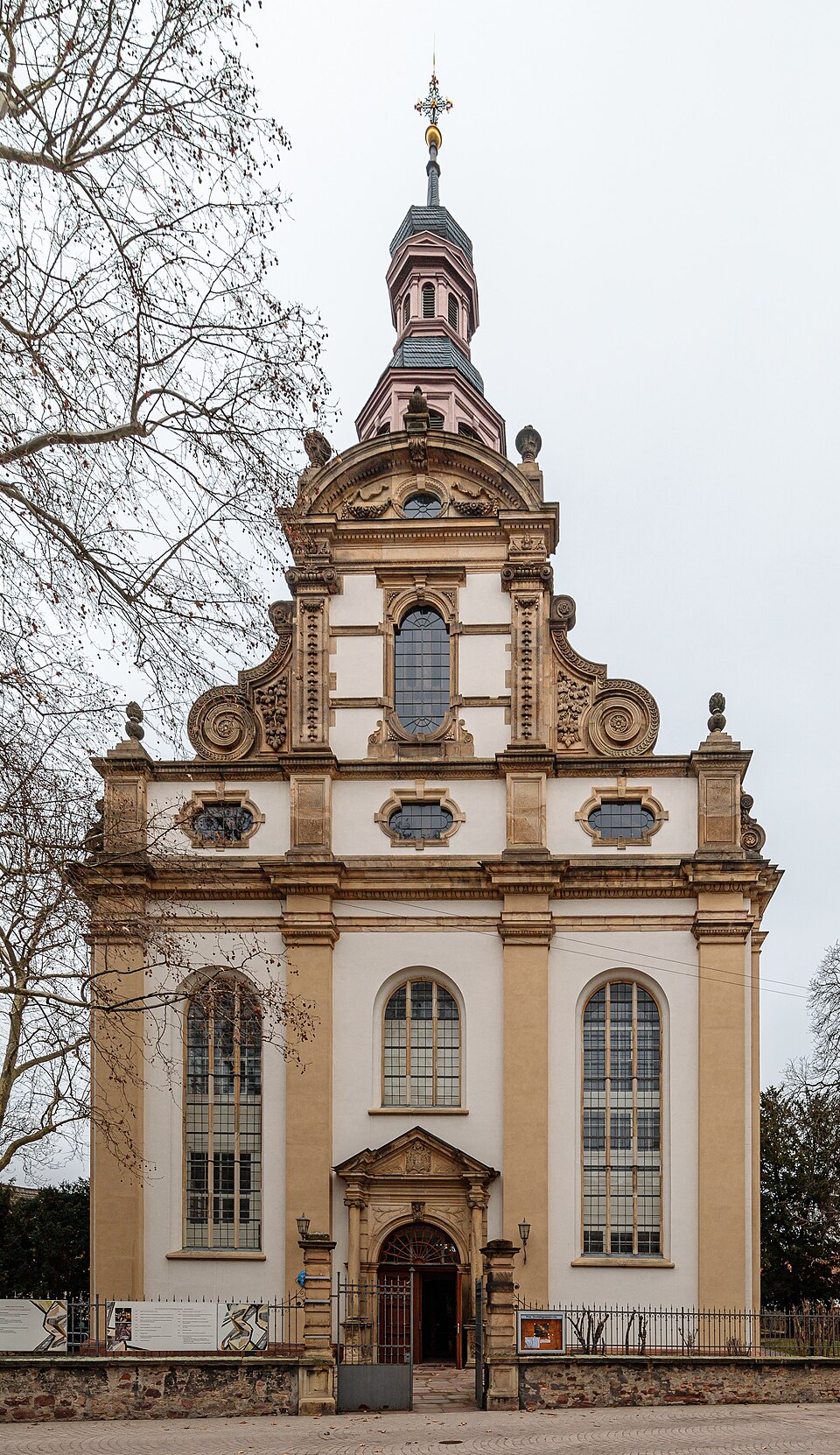
1717
A late Baroque church, its ornamented, curving facade unlike the plainer Romanesque and Gothic Revival landmarks that dominate the rest of the city.
The Dreifaltigkeitskirche is a late Baroque Protestant parish church, built in 1717 to serve Speyer's Reformed and Lutheran congregations. Since 1988 it has been recognised as a cultural property meriting protection under the Hague Convention for the Protection of Cultural Property in the Event of Armed Conflict. Its architects are only partly documented: Melchior Heßler, one of two named designers, died in 1690, well before the church as it now stands was completed.
- It has been legally protected since 1988 under the Hague Convention for the Protection of Cultural Property in the Event of Armed Conflict — a wartime safeguard, not just an ordinary heritage listing.
Photo: Friedrich Haag (CC BY-SA 4.0)
Speyer Jewry-Court
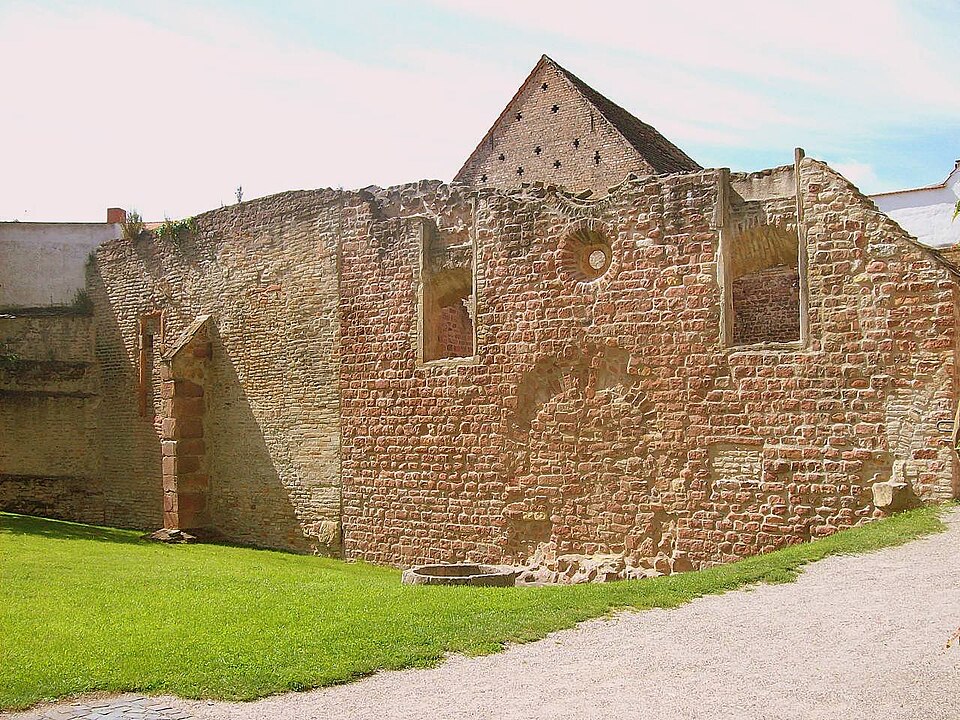
1104–14th century
An open-air archaeological site of roofless stone walls, the remains of a medieval synagogue and its adjoining buildings, among the oldest and best-preserved Jewish architecture anywhere in northern Europe.
The Judenhof is an archaeological site holding the ruined remains of a medieval synagogue, consecrated in 1104, along with several associated buildings added up to the 14th century. It preserves some of the oldest and best-preserved Jewish architecture anywhere in northern Europe. Together with Jewish heritage sites in Worms and Mainz, the three cities are known as the ShUM cities, regarded as the cradle of Ashkenazi culture in medieval Europe. In 2021, UNESCO added the site to the World Heritage List alongside those companion sites.
- The site joined the UNESCO World Heritage List only in 2021, forty years after the cathedral's own listing in 1981.
Photo: Nemracc (CC BY-SA 3.0)
Technik Museum Speyer
A technology museum in Speyer, in the German state of Rhineland-Palatinate.
Historical Museum of the Palatinate
A museum in Speyer, across the square from Speyer Cathedral, focused on the history of the Palatinate region. Its collection of about 1 million artifacts, including a 190,000-year-old hand axe, draws over 200,000 visitors a year, among Germany's largest museum audiences.
Ägidienkirche
A church dedicated to Saint Giles, founded around 1140 as part of a hospital complex by Bishop Burchard. It turned Protestant in 1566 when Elector Frederick III expelled its Augustinian canons, and was given to a Capuchin foundation in 1623, during the Thirty Years War.
History
The Romans founded Speyer as a fortified frontier town, making it one of Germany's oldest cities. Its building history begins in earnest in 1030, when King Conrad II laid out a vast red sandstone basilica as a mausoleum for his dynasty; the east end and high vault followed by 1103, and Salian, Staufer and Habsburg rulers were later buried beneath its altar. A Jewish community grew alongside it, consecrating a synagogue in 1104 that anchored what became one of the ShUM cities, the medieval centre of Ashkenazi culture in northern Europe. A gate tower rose in the walls during the 13th century. Centuries later, two more waves of building followed: a Baroque parish church in 1717, and, after 1529's Protestation at Speyer was commemorated in stone, a Gothic Revival memorial church finished in 1904.