Landmarks in Vaduz
A capital of under 6,000 residents, watched over by a medieval castle on its hill.
Liechtenstein's capital is compact enough that its landmarks form one small cluster: the Cathedral of St. Florin, the Government Building and other civic buildings sit close together on the valley floor beside the Rhine, while Vaduz Castle occupies the steep hill directly above them, visible over the rooftops from most of the town. The castle is by far the oldest structure, standing since around 1200; nearly everything else below it dates from one period around 1900, as the town took on the buildings of a modern capital. The Government Building (1903-1905) and the cathedral (1873) were built in historicist styles, neo-Renaissance and Gothic Revival, borrowing older forms for civic and religious roles, while the Red House, dated to 1338, survives from the medieval town below.
Vaduz Castle
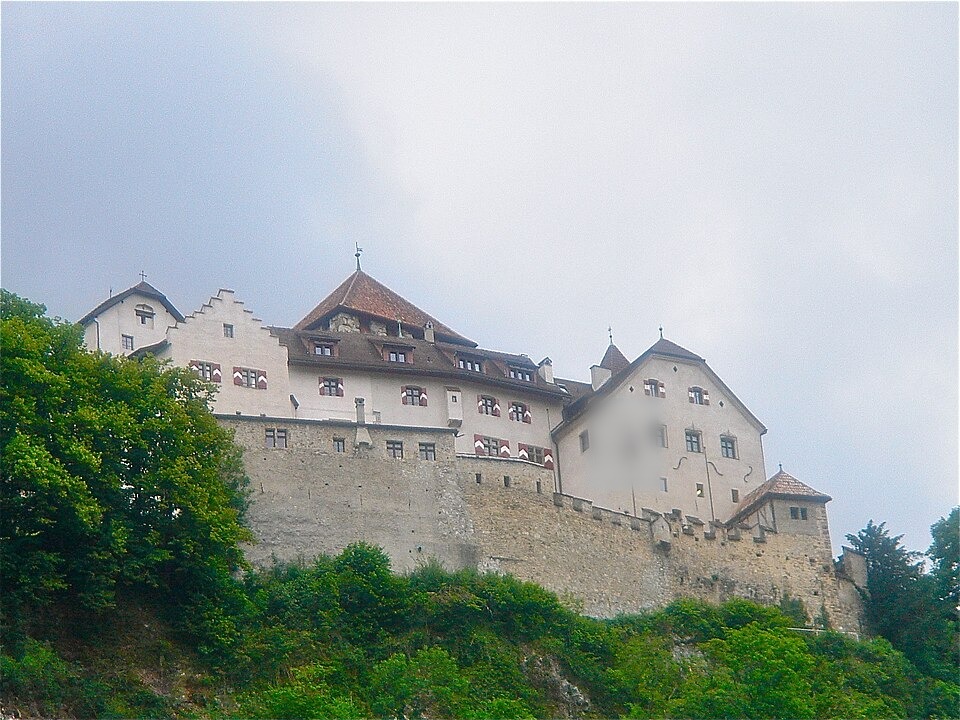
1200
It stands alone on a steep hill immediately above the town, higher than any other building in sight and separated from the streets below by the slope itself.
Vaduz Castle is the official residence of the Prince of Liechtenstein and the seat of the princely family, standing on a hill above the town it gave its name to. Records date it to around 1200, though little else about its early building history survives. It is protected today as a cultural heritage monument in Liechtenstein and continues to serve as the family's residence rather than as a public building.
- The town of Vaduz takes its name directly from the castle that overlooks it.
Photo: Dr Bob Hall from Birmingham, England (CC BY-SA 2.0)
Cathedral of St. Florin
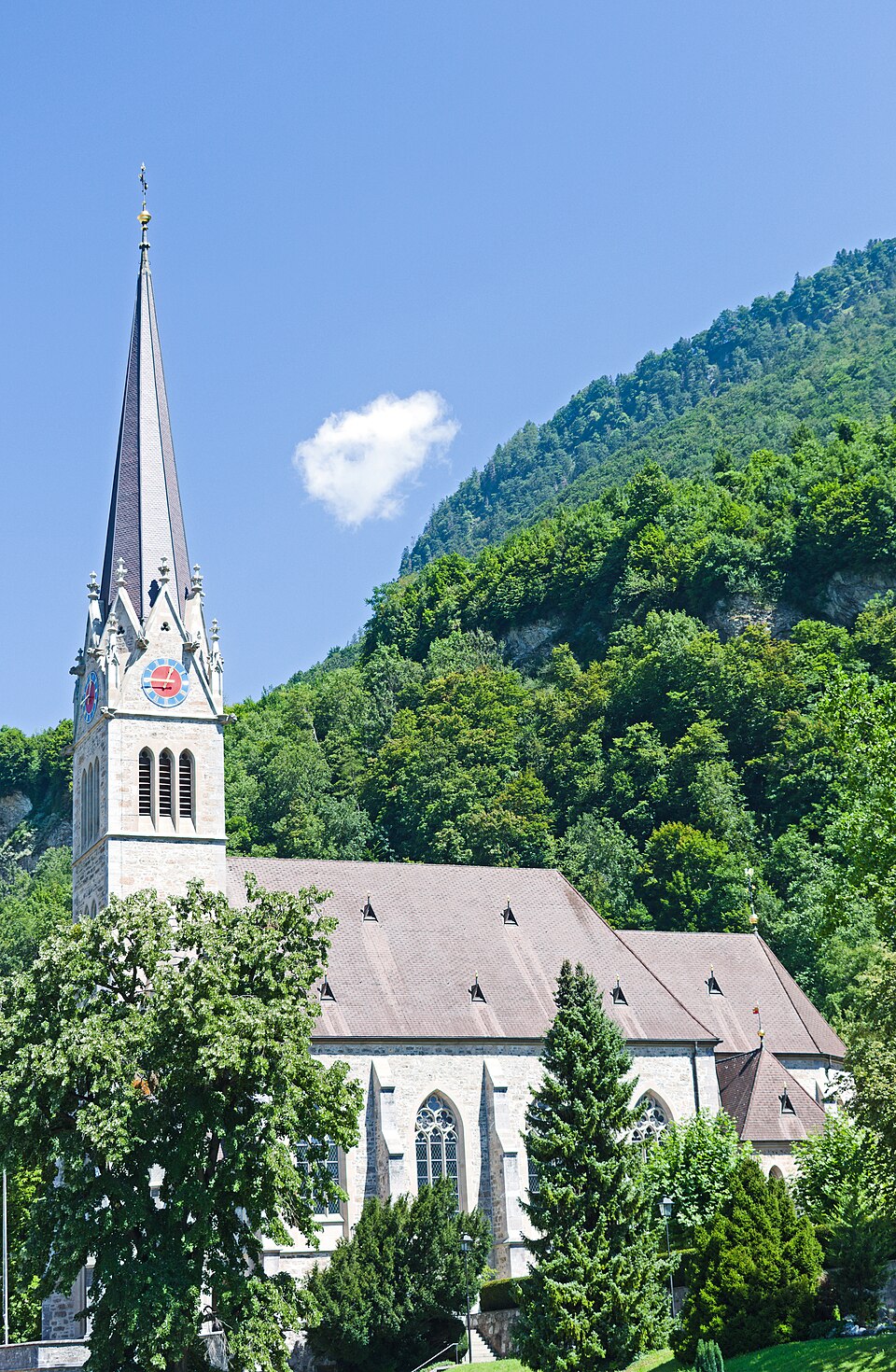
1873 · Friedrich von Schmidt
Pointed-arch windows, steep gables and a tall spire mark it as a Gothic Revival design, in contrast to the neo-Renaissance government building nearby.
Built in 1873 to a design by Friedrich von Schmidt, this Gothic Revival church began life as an ordinary parish church serving Vaduz. It was raised to cathedral status only in 1997, becoming the seat of the newly created Archdiocese of Vaduz more than a century after construction finished. Schmidt, who designed it, died in 1891, decades before the promotion took place.
- It became a cathedral only in 1997, 124 years after it was built.
- Its architect, Friedrich von Schmidt, died in 1891 and never saw it elevated to cathedral status.
Photo: Ymblanter (CC BY-SA 4.0)
Government Building
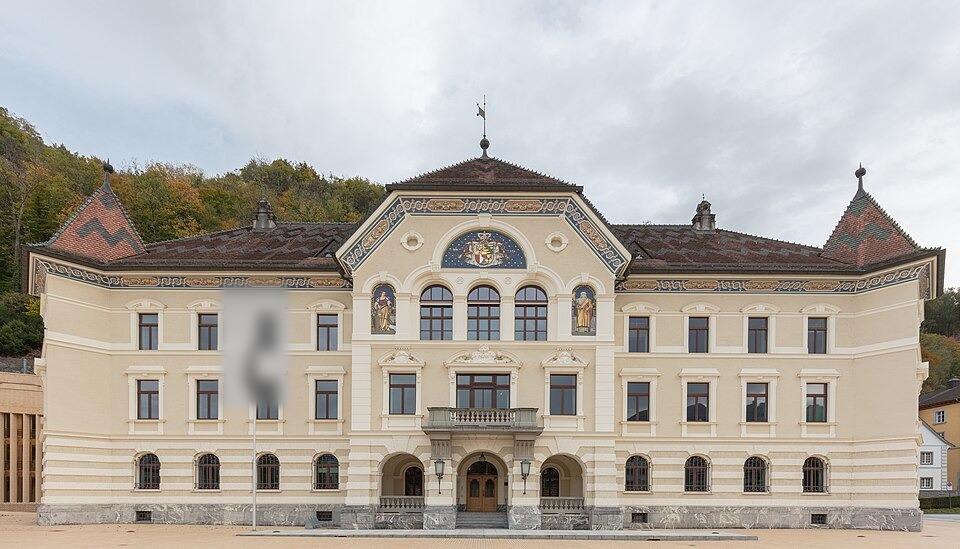
1903-1905 · Gustav Neumann
Its symmetrical, ornamented neo-Renaissance facade stands directly beside a distinctly modern parliament building added next to it in 2007, old and new placed side by side.
Construction began in 1903 to a design by Gustav Neumann, and the building opened on 28 December 1905 as the seat of the Government of Liechtenstein, commissioned by Johann II. Built in neo-Renaissance style, it originally contained the country's first telephone network and central heating, and it served as the meeting place of the national parliament until 2007, when a separate building was constructed beside it. It still houses the office of the prime minister and the government ministries.
- It contained the country's first telephone network and central heating system.
- Parliament met inside it until 2007, when a new building was constructed next door.
Photo: Diego Delso (CC BY-SA 4.0)
Red House
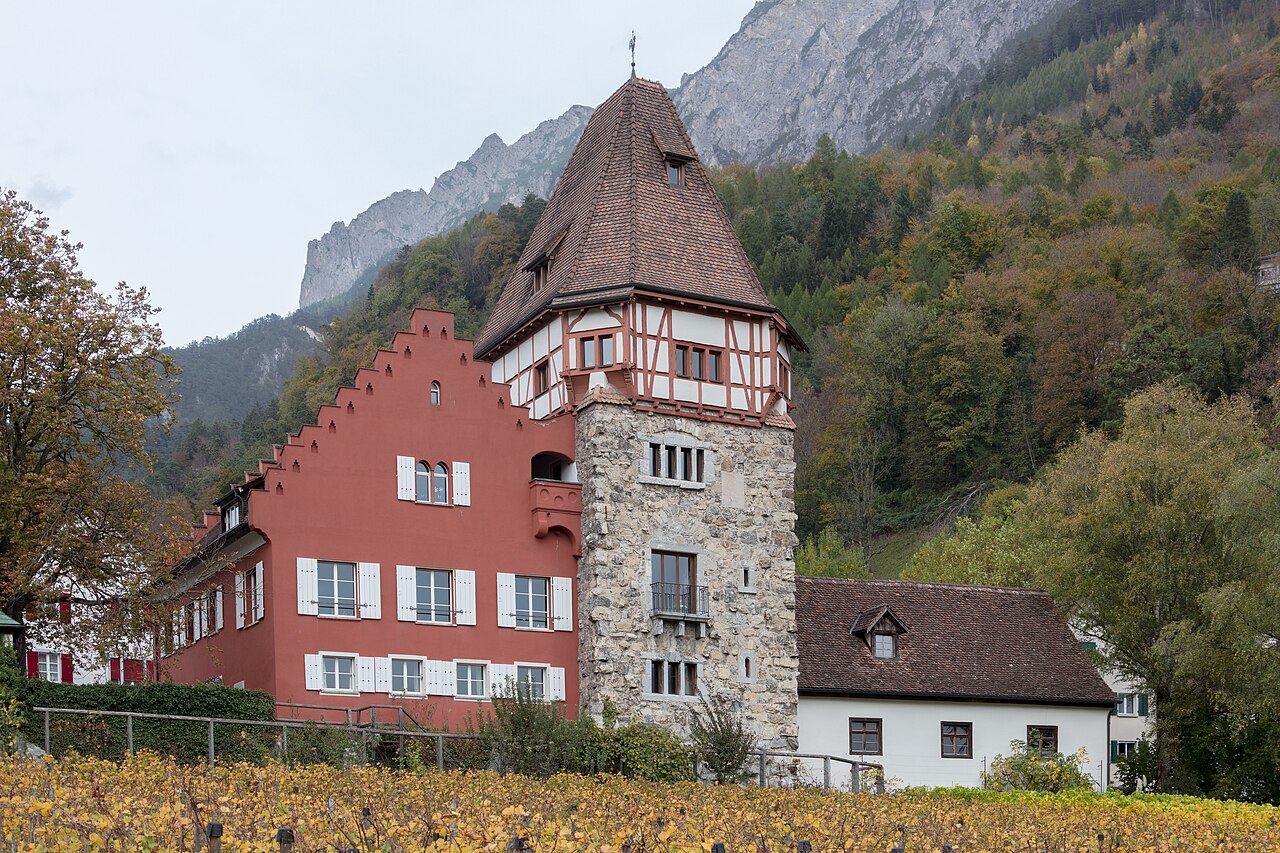
1338
Its long-standing name, Red House, points to a distinctive reddish exterior; no further description of its architecture is recorded.
The Red House is one of the older buildings recorded in Vaduz, with a history traced back to 1338. Wikidata identifies it simply as a building in the town, without detail on its original use or later alterations. Along with the town's other landmarks, it is now listed as a cultural heritage monument in Liechtenstein. Its name is the clearest hint to its appearance, since no architectural description of it has survived in the record.
Photo: Diego Delso (CC BY-SA 4.0)
Kunstmuseum Liechtenstein
The state art museum of Liechtenstein, its building by Swiss architects Meinrad Morger, Heinrich Degelo and Christian Kerez completed in November 2000. It holds international modern and contemporary art alongside the national collection, and gained the Hilti Art Foundation exhibition building in 2015.
Liechtenstein National Museum
The national museum of Liechtenstein, in the capital city of Vaduz.
Postal Museum
A postal museum in Vaduz, run as a branch of the Liechtenstein National Museum.
Rheinpark Stadion
Liechtenstein's national football stadium, on the banks of the Rhine near the Swiss border, opened on 31 July 1998. It seats 5,873, with total capacity of 7,584 including standing room, and cost 19 million Swiss francs to build.
History
The castle above the town is the oldest structure in Vaduz, standing on its hill since around 1200 and giving the settlement below it its name; it remains the residence of the reigning Prince of Liechtenstein. Almost everything else in the town center is far younger. The Cathedral of St. Florin went up in 1873, a Gothic Revival design by Friedrich von Schmidt built as an ordinary parish church; it was raised to cathedral status only in 1997, when the Archdiocese of Vaduz was created. The Government Building followed a generation later: construction began in 1903 and the building opened in December 1905, commissioned by Johann II in neo-Renaissance style, and it introduced the country's first telephone network and central heating. It also housed sittings of parliament until 2007, when a separate building was built beside it.