Landmarks in Stockholm
Fourteen islands of medieval brick and Baroque stone where a lake meets the Baltic Sea.
Stockholm's landmarks sit across the islands where Lake Mälaren meets the Baltic, and each belongs to a different phase of the city's growth. The medieval core on Gamla Stan holds the oldest fabric: Storkyrkan, begun in the thirteenth century and dedicated in 1306, and the former Greyfriars church on Riddarholmen, opened around 1300 and used since as a royal burial place. Facing them across the water on Stadsholmen stands Stockholm Palace, a Baroque quadrangle built over a burned medieval castle and finished in 1754. Two later additions read differently: Stockholm City Hall on Kungsholmen, finished in 1923, mixes Renaissance, Baroque and Art Nouveau motifs under a National Romantic manner, while the Nordic Museum on Djurgården, completed in 1907, houses an ethnographic collection founded decades earlier.
Stockholm City Hall
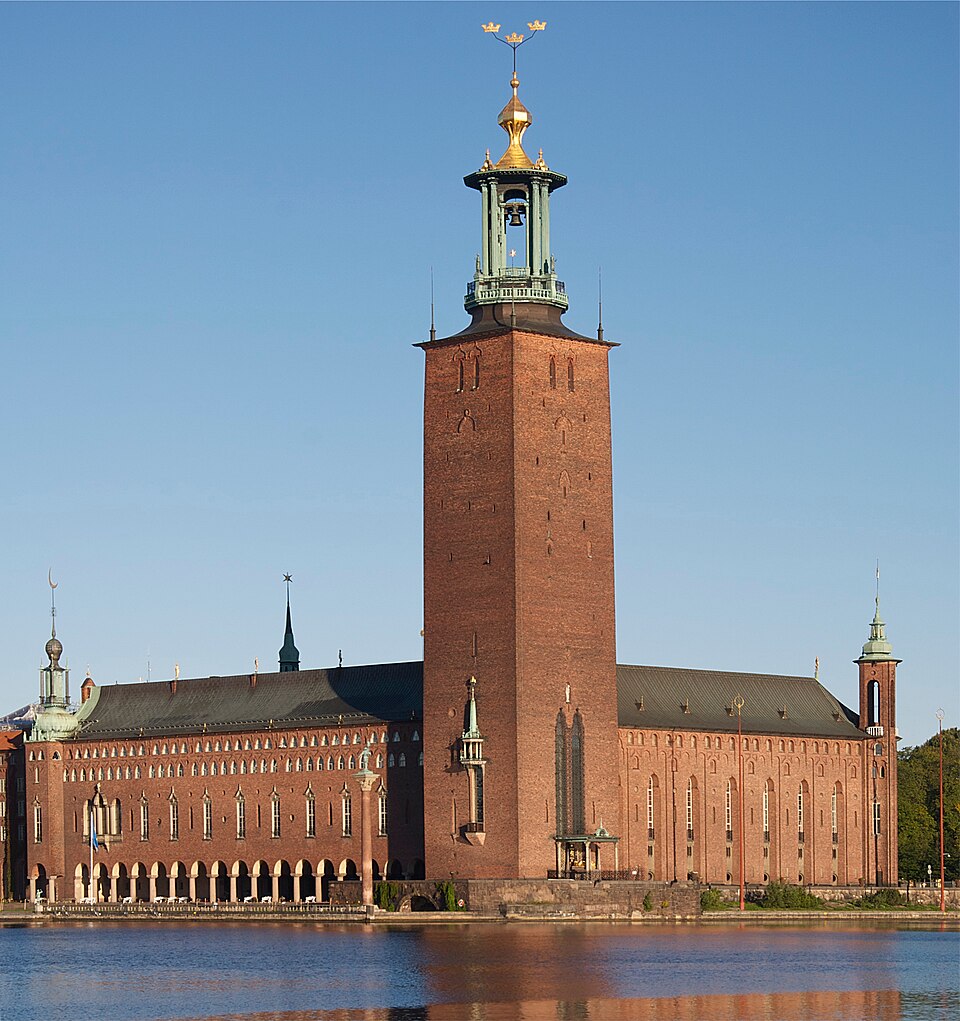
1923 · Ragnar Östberg
Recognisable for its mix of Art Nouveau, Renaissance and Baroque motifs under a National Romantic manner, and for standing right at the water's edge, facing two neighbouring islands across the channel.
Stockholm City Hall is the seat of the municipal council, holding offices, conference rooms and ceremonial halls rather than a single grand chamber. It stands on the eastern tip of Kungsholmen, beside Riddarfjärden, facing Riddarholmen and Södermalm. Designed by Ragnar Östberg and finished in 1923, it blends Art Nouveau, Renaissance and Baroque elements within a National Romantic design. Its ceremonial halls host the Nobel Prize banquet each year, and the building ranks among the city's most visited sites.
- The building also contains a restaurant, Stadshuskällaren.
Photo: Arild Vågen (CC BY-SA 3.0)
Stockholm Palace
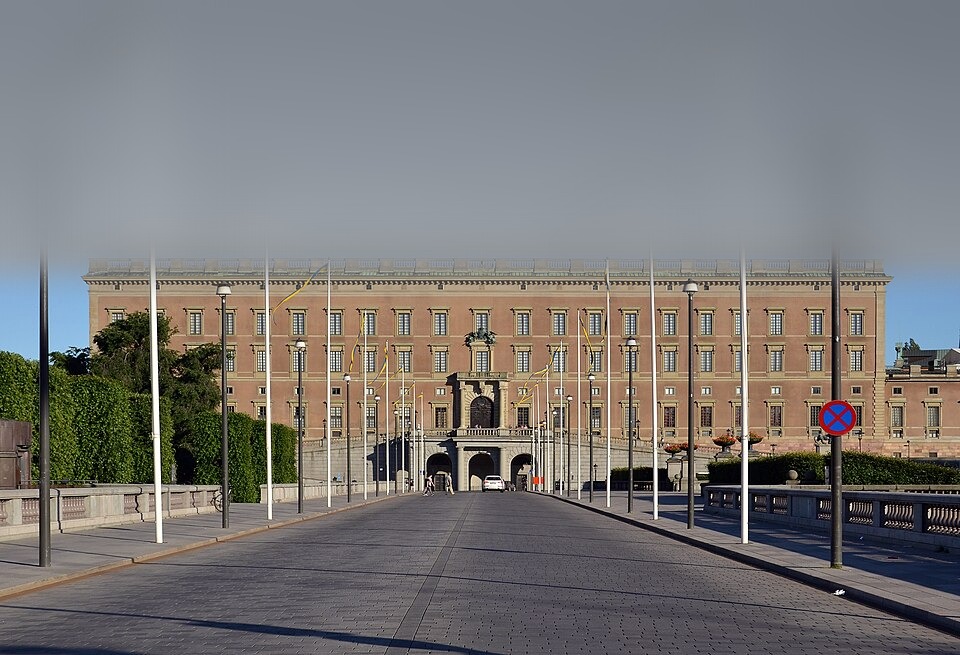
1754 · Carl Hårleman
Recognisable by its uniform Baroque facades enclosing a large quadrangle, its Rococo state interiors, and its position in the old town directly beside the national legislature.
Stockholm Palace is the official residence of the Swedish monarch, though the king and queen actually live at Drottningholm Palace; this building instead houses royal offices and the Royal Court and is used for state occasions. It stands in Gamla stan, next to the Riksdag, on the site of the medieval Tre Kronor Castle, destroyed by fire in 1697. Nicodemus Tessin the Younger designed the replacement; after his death in 1728, Carl Hårleman completed it and added much of its Rococo interior. It was ready for use in 1754.
Photo: Pudelek (CC BY-SA 4.0)
Storkyrkan
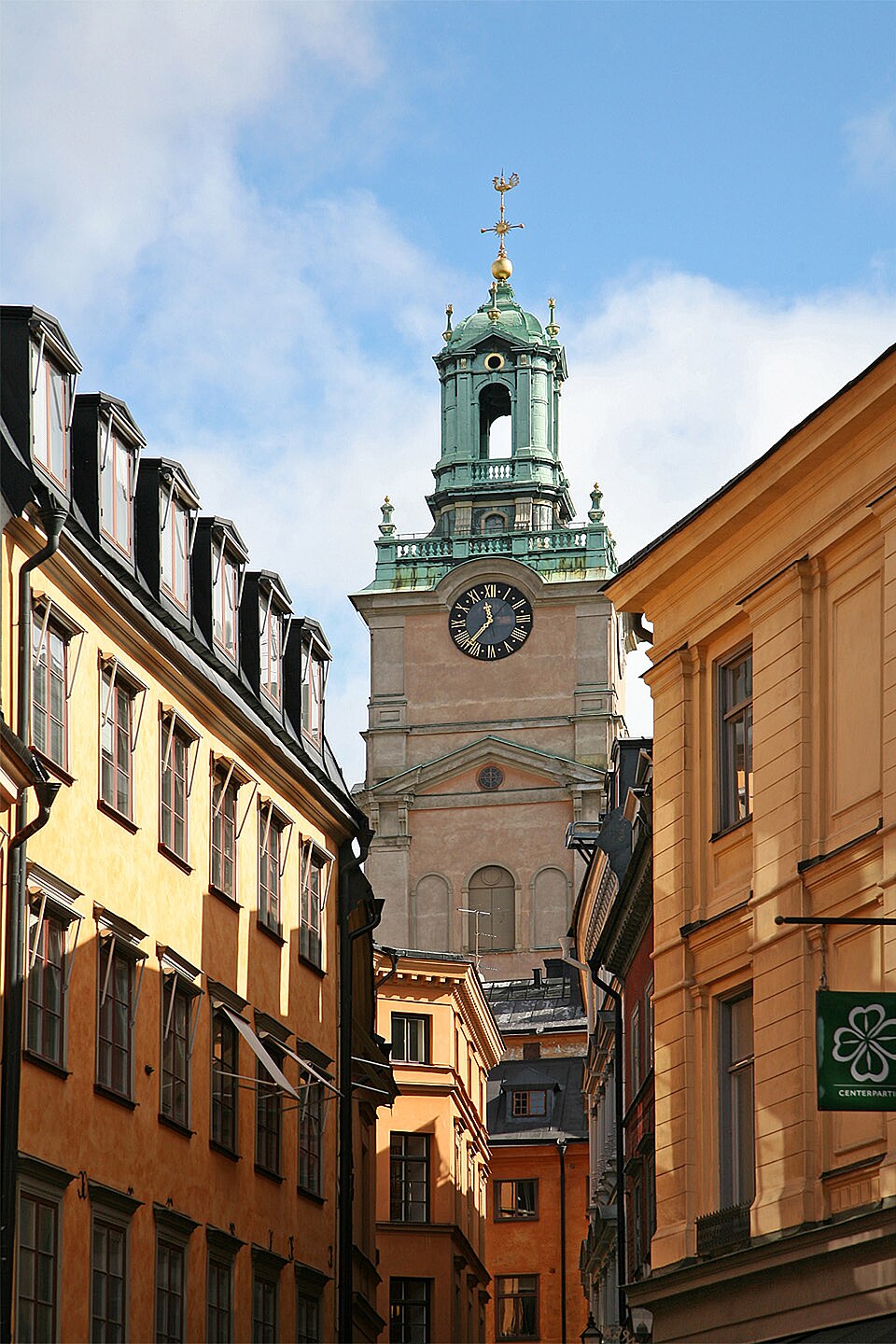
1306
Recognisable for its contrast between old and new: a uniformly Baroque exterior from an eighteenth-century remodelling wrapped around a late-medieval hall-church interior of vaulted brick on brick pillars, set between a royal palace and an old market square.
The oldest church in the city, dedicated to Saint Nicholas in 1306 though construction likely began in the thirteenth century. It stands in Gamla stan between the royal palace and the old main square. The interior keeps its late-medieval hall-church form, with a vaulted ceiling on brick pillars, while the exterior was made uniformly Baroque in eighteenth-century changes. It was the scene of Sweden's first vernacular Mass during the Reformation, became the seat of the Bishop of Stockholm in 1942, and hosted a royal wedding in 2010.
- Crown Princess Victoria married Daniel Westling here in 2010.
- It became the seat of the Bishop of Stockholm only in 1942, despite being the city's oldest church.
Photo: W. Bulach (CC BY-SA 4.0)
Riddarholmen Church
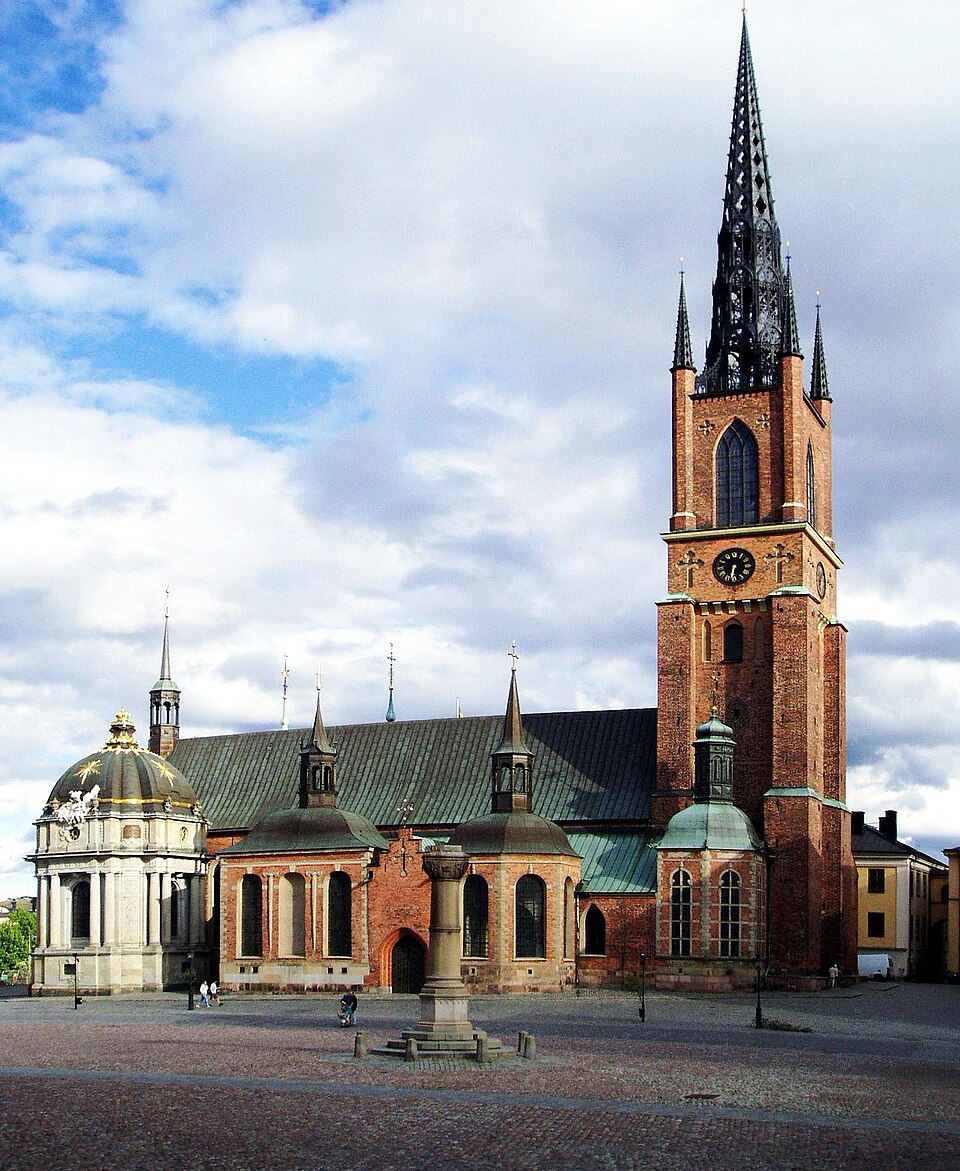
1300
A compact Gothic-style former friary church whose interior is given over to royal tombs and memorials rather than pews, marking it as a mausoleum more than a place of ordinary worship.
Riddarholmen Church began as the church of a medieval Greyfriars monastery and, opening around 1300, is one of the city's oldest buildings. It is built in the Gothic style and has served for centuries as the final resting place of most Swedish monarchs, a role that has defined its interior and its upkeep ever since. Per Axel Nyström, who died in 1868, is the architect credited with the building, though the record here does not specify which part of the structure his work covered.
Photo: Nordelch (CC BY-SA 3.0)
Nordic Museum
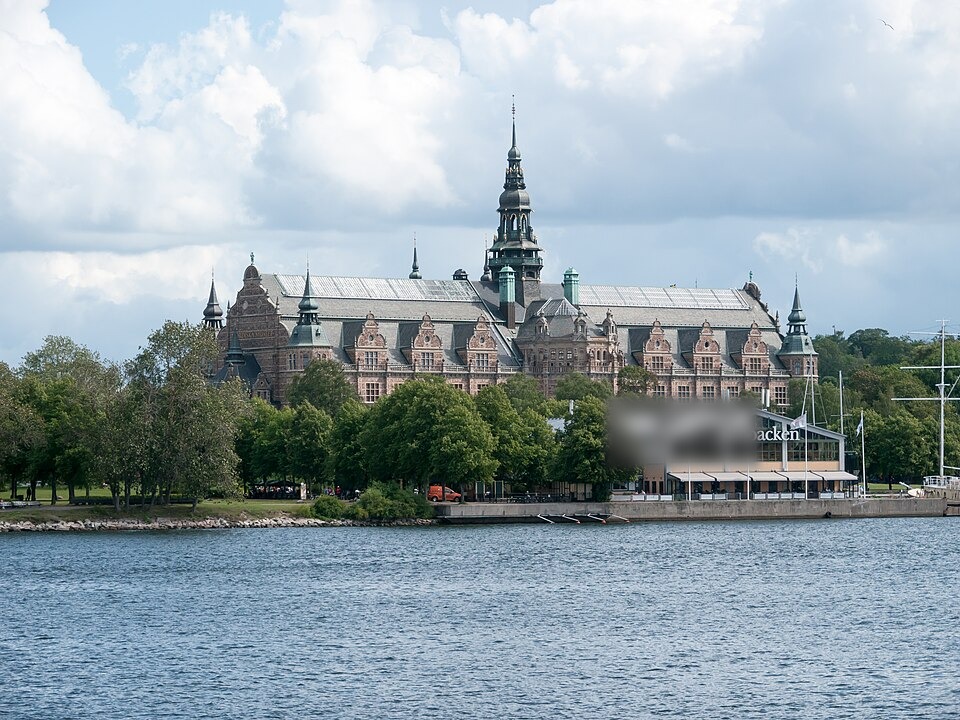
1907 · Isak Gustaf Clason
Identifiable by its setting on an island largely given over to museums and parkland, and by its exhibits devoted entirely to Swedish cultural history and folk life from the early modern period to the present, rather than to any single specialised subject.
The Nordic Museum is devoted to the cultural history and ethnography of Sweden from the early modern period, which in Swedish history is dated from 1520, up to the present. Artur Hazelius founded it in the late nineteenth century on Djurgården, and it long formed part of the open-air museum Skansen, which he also founded, until the two institutions separated in 1963. Its standing building was completed in 1907; Isak Gustaf Clason is credited as architect, alongside Magnus Isæus, who died in 1890.
Photo: Matti Blume (CC BY-SA 4.0)
Vasa Museum
A maritime museum on the island of Djurgården, opened in 1990 to display the warship Vasa, which sank on its maiden voyage in 1628. The 64-gun ship is the only almost fully intact 17th-century vessel ever salvaged.
Nationalmuseum
Sweden's national gallery of fine arts on the Blasieholmen peninsula, founded in 1792 as the Kungliga Museet. Its current building, built between 1844 and 1866 in a northern Italian Renaissance style, opened as the Nationalmuseum the year it hosted a General Industrial Exposition.
Stortorget
The oldest square in Stockholm, in Gamla Stan, around which the medieval city gradually took shape. Visited by tens of thousands of tourists each year, it is also known for its traditional Christmas market of handicrafts and food.
Sergels torg
A major public square built in the 1960s and named after the 18th-century sculptor Johan Tobias Sergel. His workshop once stood just to the north of the square that now bears his name.
House of Nobility
A corporation and building that maintains records on behalf of the Swedish nobility. It also acts as the nobility's interest group today.
German Church
A church in Gamla Stan founded in the Middle Ages, when the surrounding neighborhood was dominated by Germans, giving it its common name. Officially Sankta Gertruds kyrka, it is dedicated to Saint Gertrude of Nivelles (626-659), patron saint of travellers.
Royal Dramatic Theatre
Sweden's national stage for spoken drama, founded in 1788 and housed since 1908 in an Art Nouveau building at Nybroplan designed by architect Fredrik Lilljekvist. Its decorations involved Carl Milles and Carl Larsson, and its acting school trained Greta Garbo and Ingrid Bergman among others.
Grand Hôtel
A five-star hotel founded by Frenchman Jean-François Régis Cadier in 1872 and opened to guests on 14 June 1874, next to the Nationalmuseum. It has hosted every Nobel laureate since 1901 and is the only Swedish member of The Leading Hotels of the World.
Parliament House
The seat of the Riksdag, Sweden's parliament, occupying nearly half of the island of Helgeandsholmen. It sits within the Gamla Stan district of central Stockholm.
Bonde Palace
A palace in Gamla Stan designed by Nicodemus Tessin the Elder and Jean De la Vallée in 1662-1667 for the Lord High Treasurer Gustaf Bonde. Regarded as the era's most prominent monument to the Swedish Empire, it has housed the Supreme Court since 1949.
Arvfurstens palats
A palace at Gustav Adolfs Torg, designed by Erik Palmstedt and built between 1783 and 1794 as the residence of Princess Sophia Albertina. Declared a historical monument in 1935, it has served as the seat of Sweden's Foreign Ministry since 1906.
Moderna Museet
A state museum for modern and contemporary art and design, on the island of Skeppsholmen in central Stockholm. It opened in 1958.
Nobel Prize Museum
A museum in the former Stock Exchange building on the north side of Stortorget, which also houses the Swedish Academy and the Nobel Library. Its permanent display includes artifacts donated by Nobel laureates, presented alongside their personal life stories.
Saint James's Church
A church dedicated to Saint James the Greater, patron saint of travellers, arguably the most central church in Stockholm. Its long construction left a mix of styles including Late Gothic and Renaissance, and its small parish merged into Stockholm Cathedral's in 1989.
Fotografiska
A photography and art museum network founded in Stockholm in 2010, now with locations also in Tallinn, Berlin and Shanghai. It runs a rotating program of temporary exhibitions, some touring globally, alongside cuisine, retail and cultural programming.
Gröna Lund
An amusement park on the seaward side of Djurgården, founded in 1883 by Jacob Schultheis as the first and oldest of its kind in Sweden. Despite its compact 3.8-hectare size, it holds over 30 attractions and hosts popular summer concerts across three event venues.
Hallwyl Museum
A Swedish national museum housed in Hallwyl House at Hamngatan 4, facing Berzelii Park. The house belonged to the Count and Countess von Hallwyl, who donated it to the state in 1920; it opened as a museum in 1938.
Great Synagogue of Stockholm
A Moorish Revival synagogue designed by Fredrik Wilhelm Scholander and completed in 1870, near Kungsträdgården on Norrmalm. Home to a Conservative Jewish congregation, it was classified as a listed building in 1991.
Birger jarls torn
A defensive tower on the northwest corner of Riddarholmen islet, named for Birger Jarl, traditionally credited as Stockholm's founder. The tower was actually built centuries after his time, its name mostly a product of a 17th-century founding myth.
Oscar's Church
A three-aisled hall church holding 1,200 people, with an 80-metre tower, at the junction of Storgatan and Narvavägen in southeastern Östermalm. It stands near the Swedish History Museum, along Narvavägen, one of the city's main boulevards lined with residential palaces.
ABBA The Museum
An interactive museum devoted to the pop band ABBA, opened in Stockholm in May 2013. It showcases the group's collected works in a contemporary setting on Djurgården.
Söder Torn
A 25-floor high-rise on Södermalm, next to Fatbursparken, standing about 86 metres tall including its crown. The tower itself holds 85 apartments and one business, part of a wider complex with 172 apartments and five businesses in total.
History
Stockholm was founded in 1252 by the statesman Birger Jarl on islands where Lake Mälaren drains into the Baltic, and its oldest surviving buildings cluster on Gamla Stan, the original settlement. A royal residence has stood on the same spot by Norrström since the mid-thirteenth century; the medieval Tre Kronor Castle that occupied it burned down in 1697, and its Baroque replacement, delayed for nearly two decades by the Great Northern War, was not ready until 1754. Close by, Storkyrkan and the former Greyfriars church on Riddarholmen carried the city's ecclesiastical life from around 1300, the latter becoming the burial church of most Swedish monarchs. Growth beyond the old islands came later: Stockholm City Hall, seat of the municipal council, was finished on Kungsholmen in 1923, and the Nordic Museum, founded in 1873 to record Swedish cultural history, opened its current building on Djurgården in 1907.