Landmarks in Monaco
A cliffside fortress turned palace and a Belle Époque casino share two square kilometres.
Within just over two square kilometres, the landmarks split between two adjoining quarters. On the old fortified Rock, a twelfth-century Genoese stronghold serves as the princely residence beside a Romanesque Revival cathedral built early in the twentieth century to replace a demolished medieval church; an oceanographic museum, completed in 1910, stands nearby as the public wing of a marine-research institute. To the east, the Monte Carlo quarter holds a Beaux-Arts casino and opera complex finished in 1863, on coastline the principality developed as a gambling resort once its sovereignty was secured. The result is a medieval defensive core, kept fortified long after neighbouring courts had turned to ornamental palace-building, set beside a purpose-built nineteenth-century pleasure district.
Monte Carlo Casino
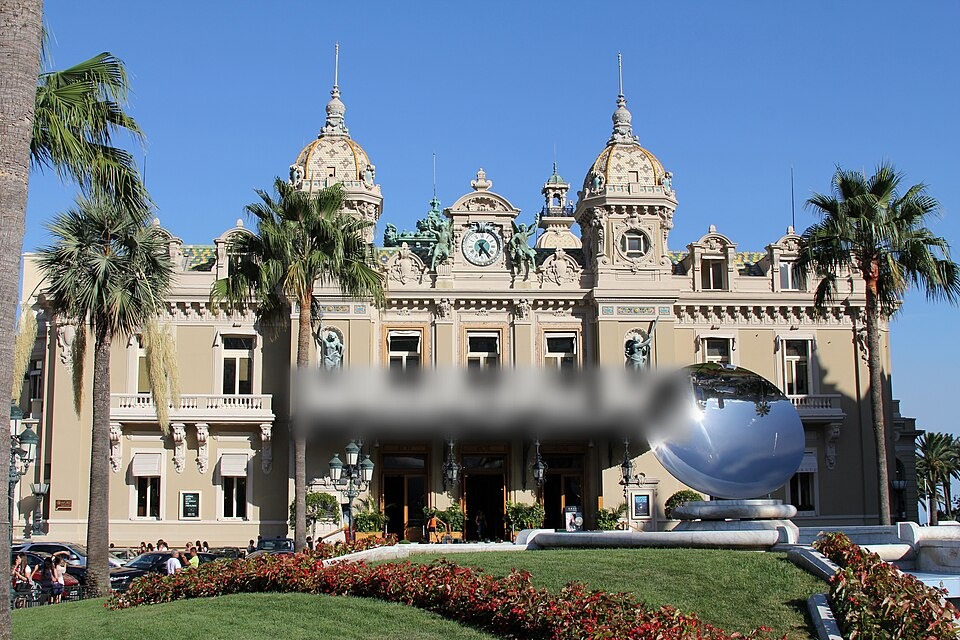
1863 · Charles Garnier
An ornate Beaux-Arts facade of dressed stone, with the symmetry and heavy classical ornament typical of the style, fronts a complex that also holds an opera house and a resident ballet company's offices.
Designed by Charles Garnier, this Beaux-Arts complex was completed in 1863 and combines a casino with the Opéra de Monte-Carlo and the office of a resident ballet company. It is owned and operated by the Société des Bains de Mer, a company in which the government and the ruling family together hold a majority stake. Citizens are forbidden from entering the gambling rooms, a rule introduced on moral grounds by Princess Caroline, acting as regent at the time.
- The company that owns the casino is jointly controlled by the government and the ruling family, who hold a majority stake together.
Photo: Fruitpunchline (CC BY-SA 4.0)
Prince's Palace
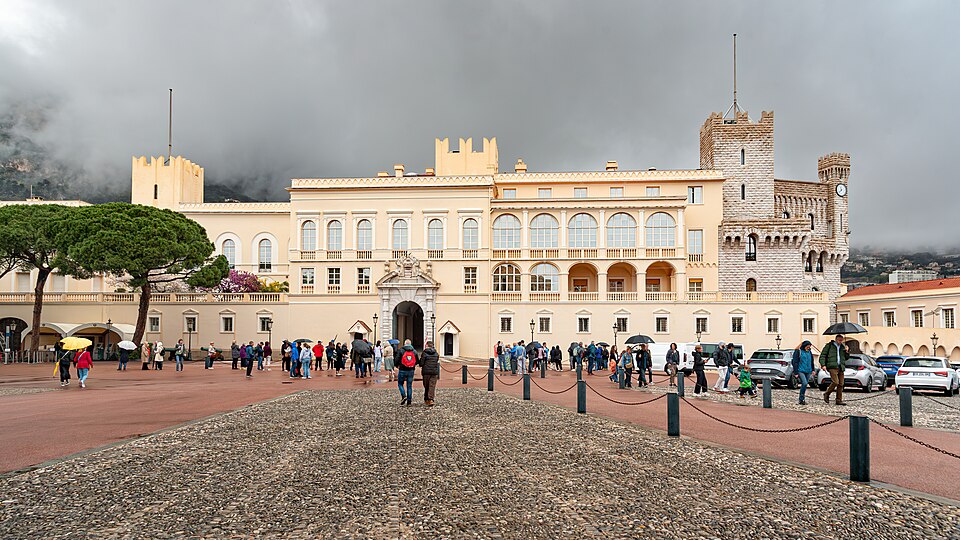
1191
Its ramparts and defensive walls, unusually retained into the era when neighbouring courts were building open Renaissance and Baroque residences, still give the building the profile of a working fortress rather than a stately home.
Raised in 1191 as a Genoese fortress, the building was captured by the Grimaldi family at the end of the thirteenth century and has served as their residence since, with brief interruptions. It was besieged and bombarded repeatedly over the centuries, and only when its fortifications were finally relaxed in the late eighteenth century did French forces seize it, strip it of its treasures, and drive its occupants into an exile of more than twenty years. The same family's continuous use of one residence for over seven hundred years is unusual among European ruling houses.
- French forces seized the palace in the late eighteenth century, stripping it of its treasures and sending its occupants into exile for more than twenty years.
Photo: Jorge Franganillo (CC BY 4.0)
Monaco Cathedral
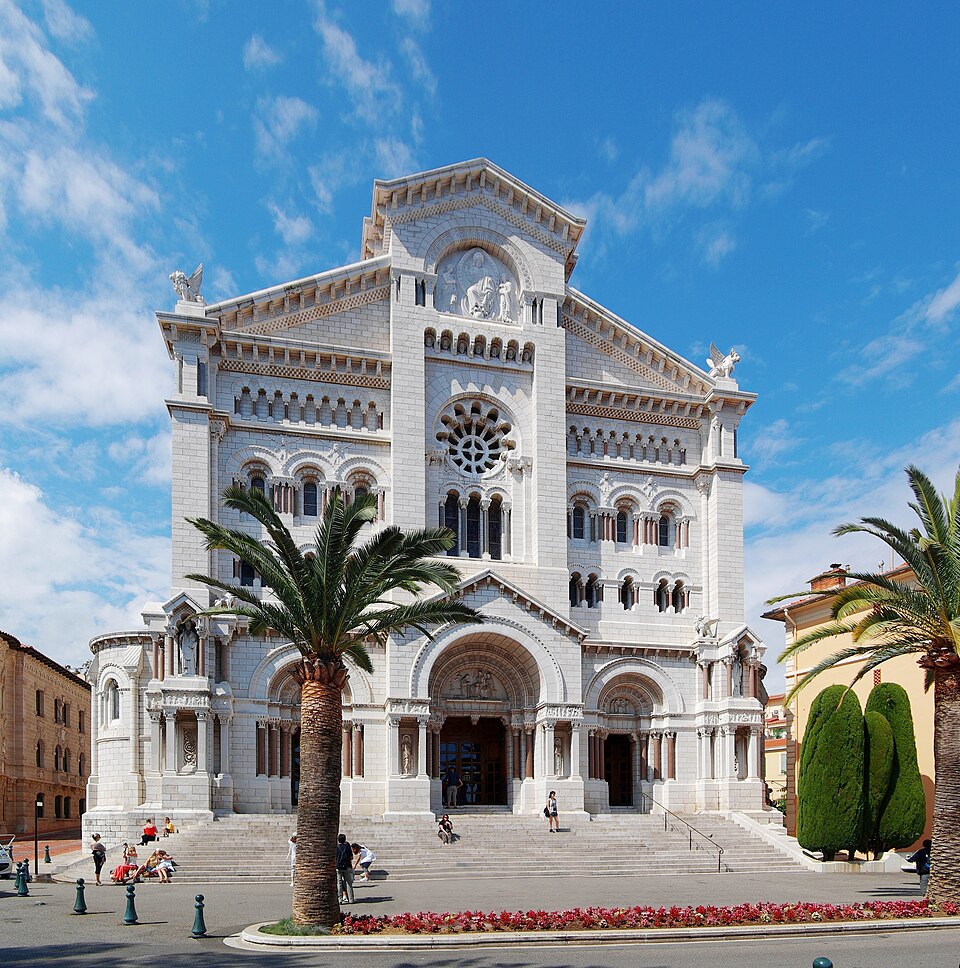
1903 · Montferrand-du-Périgord
Its rounded Romanesque arches and revival-era stonework give it a deliberately archaic profile, standing on the site of the demolished medieval church it replaced.
Completed in 1903 in the Romanesque Revival style, this is the Roman Catholic cathedral of the Archdiocese of Monaco, standing in the Monaco-Ville ward. It replaced an older church dedicated to Saint Nicholas, demolished in 1874, and carries its own dedication to the Blessed Virgin Mary under the title of the Immaculate Conception. Montferrand-du-Périgord is credited as the architect. Informally, it is still known simply as the cathedral of the district it serves.
Photo: User:Berthold Werner (CC BY-SA 3.0)
Oceanographic Museum
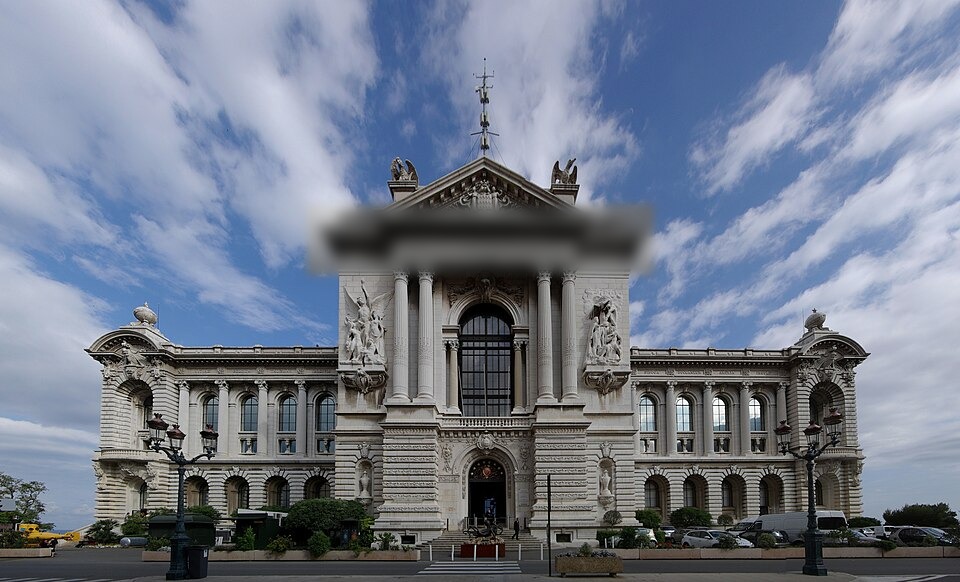
1910 · Paul Delefortrie
The building is identified less by a distinctive facade than by its function as the public wing of the oceanographic institute, its collections and displays drawn directly from the institute's research programme.
Completed in 1910, the year its architect Paul Delefortrie died, this museum of marine sciences forms part of the Institut océanographique, a body committed to sharing knowledge of the oceans. It is catalogued as both a museum and an organisation, reflecting its dual role as a public gallery and a research institution. Wikidata separately records 1889 for the site, a date that more plausibly marks the founding of the institute than the construction of the building that now houses it.
- Its architect, Paul Delefortrie, died in 1910, the same year the museum was completed.
Photo: Berthold Werner (CC BY-SA 3.0)
Opéra de Monte-Carlo
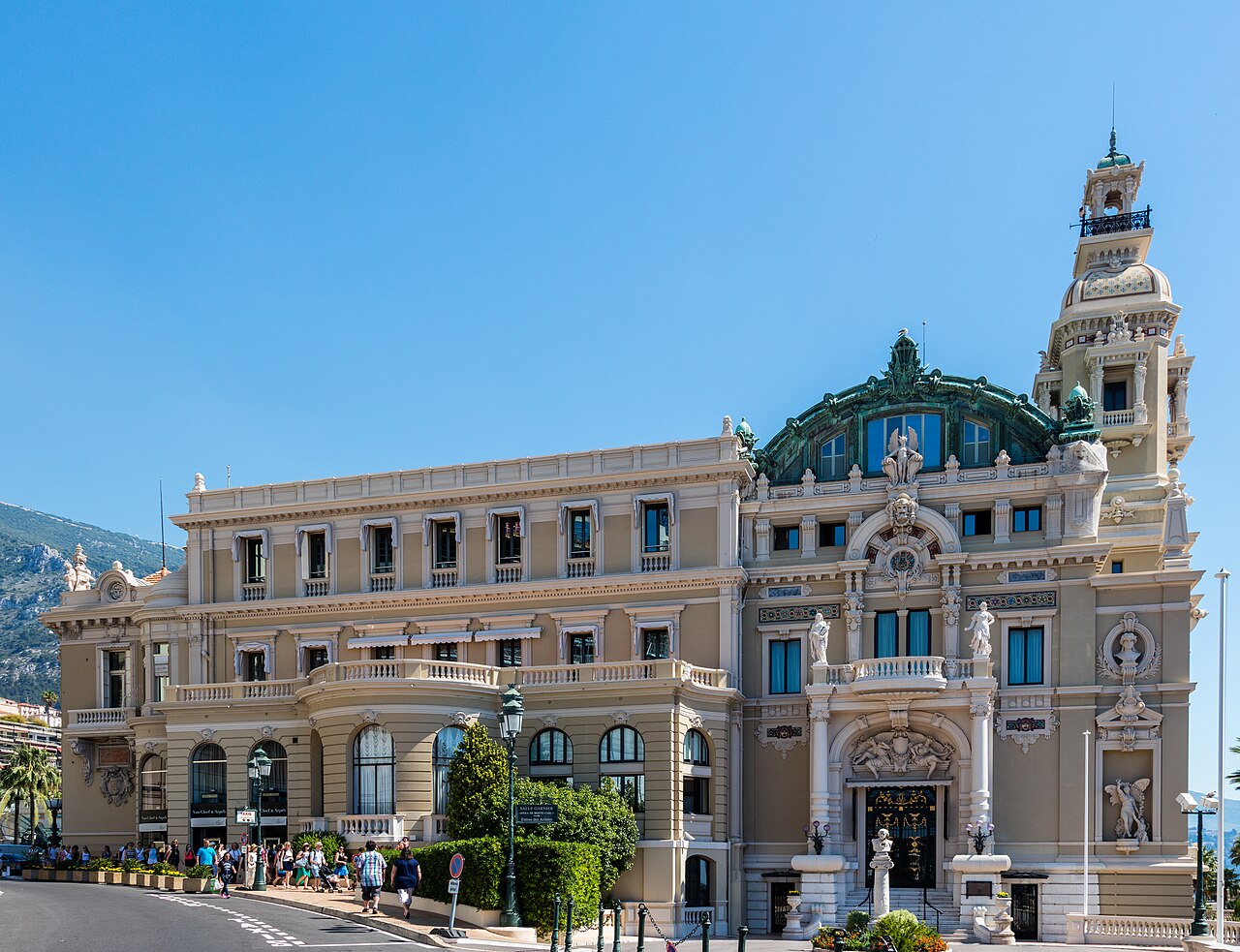
1879 · Charles Garnier
Modelled in miniature on Charles Garnier's much larger Paris opera house, the ornately decorated hall seats only 524 people, a small fraction of the roughly 2,000 the Paris building holds, inside the same building as the casino.
Designed by Charles Garnier and built in under nine months, this opera hall — known as the Salle Garnier — opened on 25 January 1879 within the Monte Carlo Casino complex, at Prince Charles III's initiative to give the principality a cultural life it had lacked. Heavily influenced by Garnier's larger Paris opera house, it seats only 524 people. Though not originally built for opera, it was remodelled in 1898–99 by Henri Schmit to suit the form better, and has since hosted 45 world premiere opera productions, including works by Massenet, Saint-Saëns, and Puccini.
- It was inaugurated in 1879 with a performance by the actress Sarah Bernhardt dressed as a nymph, before any opera had been staged there.
- During a 2004–05 renovation of the hall, the resident company performed instead at the modern Grimaldi Forum nearby.
- The hall has hosted royal galas, including a wedding celebration for Prince Albert II and Princess Charlene and a 2013 fundraising event called the Love Ball.
Photo: Diego Delso (CC BY-SA 4.0)
Hôtel de Paris
A luxury hotel on Place du Casino in Monte Carlo, opened in 1864 by the Société des Bains de Mer. It reopened in March 2019 after a four-year renovation costing $280 million.
Stade Louis II
A stadium in the Fontvieille district, home to AS Monaco and the country's only football and athletics venue. Its nine arches at the away end are its defining feature, and it hosted UEFA Super Cup matches in 1986 and from 1998 to 2012.
Odeon Tower
A 170-metre double-skyscraper inaugurated in April 2015, the first high-rise built in the country since the 1980s. It was the second-tallest building on Europe's Mediterranean coast at completion, behind only the Gran Hotel Bali in Benidorm, Spain.
Port Hercules
The country's only deep-water port, in use since ancient times, with the modern harbour completed in 1926 and expanded in the 1970s. It covers nearly 40 acres and has berths for up to 700 vessels, with water depths reaching 40 metres at the outer piers.
Jardin Exotique
A cliffside botanical garden that opened in 1931, known for its collection of exotic succulent plants. It houses the Museum of Prehistoric Anthropology, whose artifacts were excavated from the garden's grotto; the garden has been closed for renovations since 2020.
Hotel Metropole
A five-star luxury hotel on Avenue de la Madone in Monte Carlo.
Monaco Cemetery
A cemetery located in the La Colle district of Monaco.
Synagogue Edmond Safra
An Orthodox Jewish synagogue on Avenue de la Costa in Monte Carlo, run by the Association Cultuelle Israelite de Monaco. It is named for banker and philanthropist Edmond J. Safra (1932–1999), whose foundation partly or fully funded it.
Grimaldi Forum
An international event venue in the Larvotto ward, inaugurated in 2000 and named for the House of Grimaldi, Monaco's ruling family. It hosts around 120 events a year, drawing some 250,000 visitors.
History
The Grimaldi family has held power, with brief interruptions, since capturing a Genoese fortress here in 1297; that stronghold, raised in 1191, still stands as the princely residence, its ramparts kept in use long after other European courts had turned to ornamental palace-building. French recognition of sovereignty in 1861 freed the principality to build an economy on gambling revenue, and a Beaux-Arts casino and opera complex on the coast opened in 1863, launching the Monte Carlo quarter as a resort. On the older Rock, a church dedicated to Saint Nicholas was pulled down in 1874 and replaced early in the next century by the present Romanesque Revival cathedral. In 1910 a museum devoted to marine science was completed nearby, tying the built landscape to oceanographic research as well as to the casino economy.